
Last updated: October 2026
A compact camera is the easiest honest upgrade a vlogger can buy: a bigger sensor and a real lens than any phone, in a body that still fits a jacket pocket and never needs a lens swap.
The catch is that most compact cameras were designed for holiday photos, not for talking to a lens at arm’s length. The six cameras in this guide were picked the other way round. Every one of them can frame you properly, keep your face in focus, and record vlog-ready 4K. They split on the details that actually decide a vlogging camera: how wide the lens goes, whether you can plug in a microphone, how long it records before heat or battery stops it, and how much of the frame the stabilization crops away.
If you only read one line: buy the Canon PowerShot V1 for the best all-round compact vlogging package, or the Sony ZV-1 II if pocket size matters more than sensor size. The full reasoning, including the one pick with no microphone input at all, is below. For every camera type ranked together, see our best vlogging camera guide.
As an Amazon Associate I earn from qualifying purchases.
Quick picks: the best compact cameras for vlogging
- Best overall: Canon PowerShot V1. The biggest sensor here, full-width 4K, Canon Log 3, a cooling fan, and both mic and headphone jacks.
- Best pocket vlogging compact: Sony ZV-1 II. An 18-50mm zoom, a smart directional mic, a built-in ND filter, and Sony’s proven Eye AF in 292g.
- Best bright-lens compact: Canon PowerShot G7 X Mark III. The brightest lens here at f/1.8, 4K video, and live streaming straight to YouTube. Stock is the catch.
- Best budget / simplest compact: Sony ZV-1F. One fixed ultra-wide lens, very little to set up wrong, and Sony’s easy vlogging modes.
- Best ultra-compact starter: Canon PowerShot V10. A built-in stand, a flip-up screen, and 4K in a 211g body that stands on any table.
- Best superzoom travel compact: Panasonic LUMIX ZS99. A 24-720mm lens for travel days and distant stages. Built-in mic only: there is no mic input.
On this page
- Quick picks
- Comparison table
- The 6 best compact cameras for vlogging
- Sensor size: the quiet spec that decides low-light quality
- Lens width first, zoom second
- Audio: check the mic input before anything else
- Heat, record limits and battery life
- Stabilization and the crop nobody mentions
- Compact camera or gimbal pocket camera?
- Memory cards and the small extras
- FAQs
- The bottom line
- Keep exploring
The best compact cameras for vlogging at a glance
Six fixed-lens compacts, ranked for vlogging first. The Canon PowerShot V1 leads on sensor size and long-take stamina; the Sony ZV-1 II is the best true pocket camera; the Panasonic ZS99 is the travel zoom, with one important audio limitation.
| Camera | Sensor / Video | Standout feature | Best for |
|---|---|---|---|
| Canon PowerShot V1 | 1.4-type CMOS, 4K/30p full width | Largest sensor here, Canon Log 3, and a built-in cooling fan for long 4K takes | Best overall |
| Sony ZV-1 II | 1.0-type CMOS, 4K/30p | 18-50mm zoom, directional 3-capsule mic, and a built-in ND filter | Best pocket vlogging compact |
| Canon PowerShot G7 X Mark III | 1.0-inch stacked CMOS, 4K/30p | Brightest lens here at f/1.8, plus direct YouTube live streaming | Best bright-lens compact |
| Sony ZV-1F | 1.0-type CMOS, 4K/30p | Fixed ultra-wide 20mm lens and the simplest controls in this guide | Best budget / simplest compact |
| Canon PowerShot V10 | 1-inch CMOS, 4K/30p | Built-in stand and a flip-up screen in a 211g pocket body | Best ultra-compact starter |
| Panasonic LUMIX ZS99 | 1/2.3-inch MOS, 4K/30p | 30x zoom reaching 720mm, but no microphone input | Best superzoom travel compact |
The 6 best compact cameras for vlogging, in detail
Each camera below earns its place for a different kind of vlogger. Read the audio and record-limit notes on the cards you are choosing between: those two lines are where compact cameras quietly differ the most.
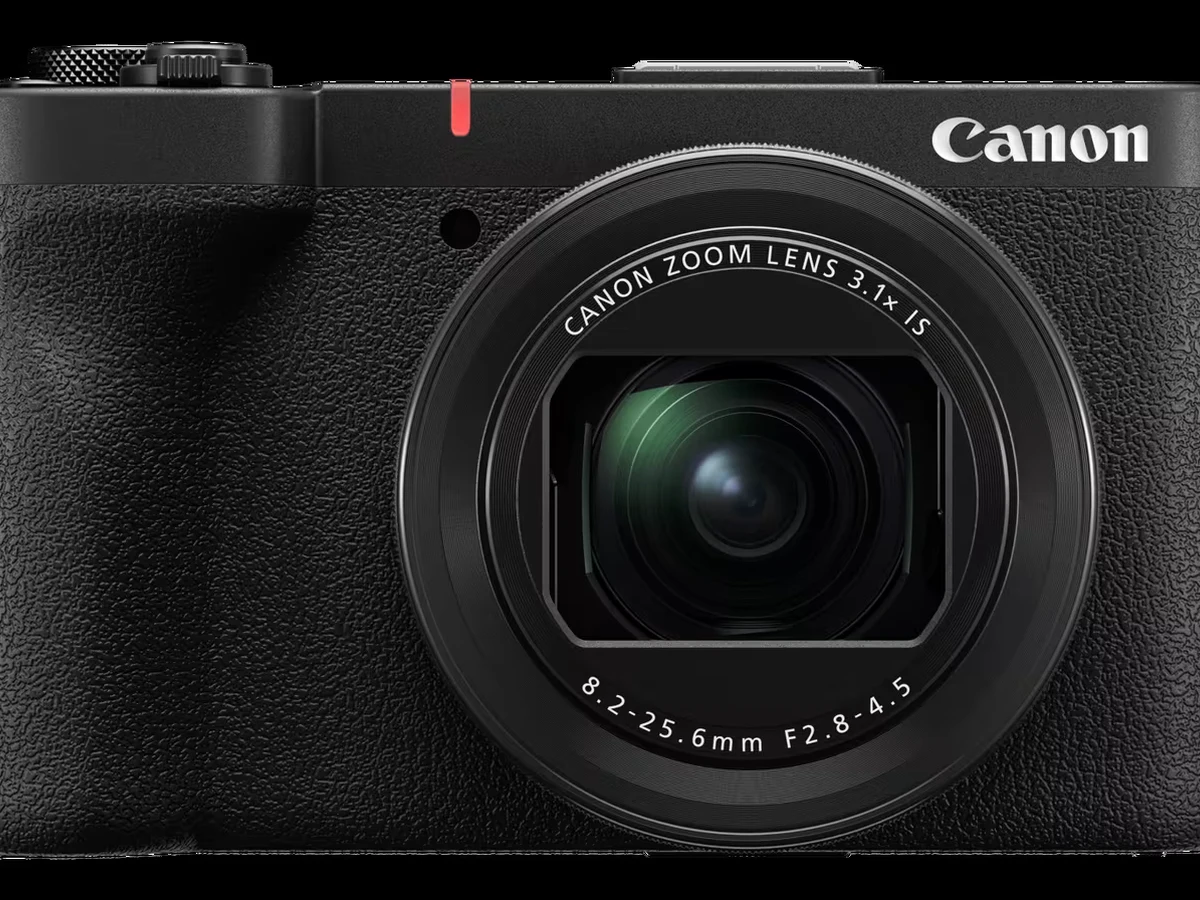
Photo: Canon
1. Canon PowerShot V1
The strongest compact vlogging camera you can buy right now: the biggest sensor in this guide, full-width 4K, and the only cooling fan here, so long takes do not end in a heat shutdown.
Canon’s V1 is built around a 1.4-type sensor, noticeably larger than the 1-inch sensors in the Sony and Canon rivals below. That buys cleaner low-light footage, softer background blur, and more room to grade. It records 4K at 30p using the full sensor width, 4K at 60p with a crop, and Canon Log 3 in 10-bit 4:2:2 if you want a flat profile to color grade. Dual Pixel CMOS AF tracks faces the way Canon’s mirrorless cameras do, which is to say calmly and without hunting.
The detail that sets it apart for working vloggers is stamina. A built-in cooling fan lets it record far longer in 4K than any fanless compact, with a maximum of up to 6 hours per clip on paper; the real limit on a shoot is the battery, at roughly 70 minutes of 4K/30p per charge in Canon’s testing. Audio is fully covered too: built-in stereo mics, a 3.5mm mic input, and a headphone jack so you can actually hear what you recorded before you wrap.
Technical features
- 1.4-type CMOS sensor (18.4 x 12.3mm), 22.3MP stills
- 16-50mm equivalent zoom for stills (17-52mm in 4K), f/2.8-4.5
- 4K/30p full width, 4K/60p cropped, Full HD 120p
- Canon Log 3 and HDR PQ, 10-bit 4:2:2
- Dual Pixel CMOS AF with subject detection
- Lens optical image stabilization
- Built-in stereo mics, 3.5mm mic input, 3.5mm headphone output
- 3.0-inch touchscreen, approx. 1,040,000 dots
- Built-in cooling fan; up to 6 hours per clip
- LP-E17 battery, approx. 1 hr 10 min of 4K/30p per charge (Canon test conditions)
Pros
- Largest sensor here: the cleanest low-light footage of the six
- Cooling fan ends the overheating worry for long 4K takes
- Mic input and headphone monitoring, which most compacts skip
- Canon Log 3 in 10-bit for creators who grade
Cons
- The largest and heaviest body in this guide
- 4K/60p is cropped, so the frame tightens at the smoothest setting
- Battery is the real long-take limit, so budget for a spare
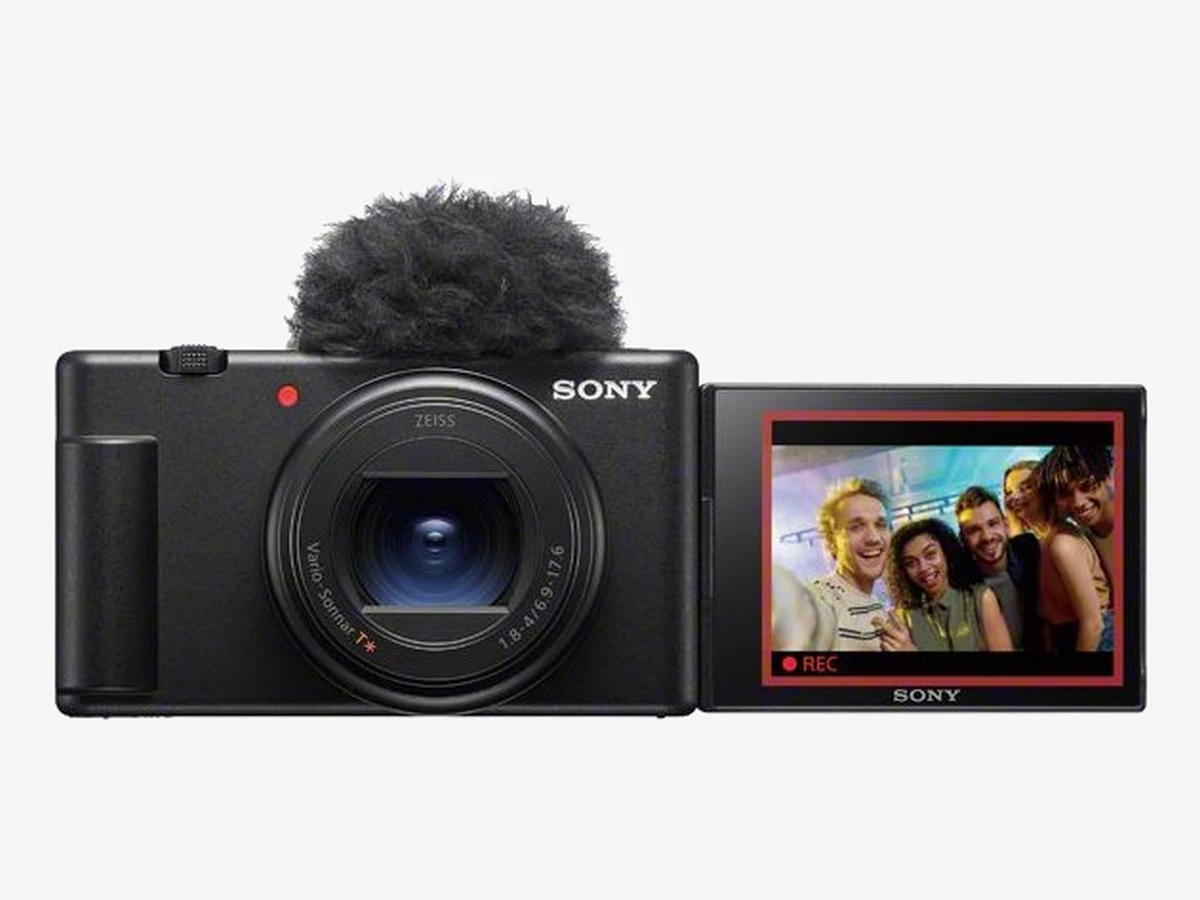
Photo: Sony
2. Sony ZV-1 II
The best compact if size is the whole point: a wide 18-50mm zoom, Sony’s smart directional mic, and a built-in ND filter, in a camera that genuinely disappears into a pocket.
The ZV-1 II fixes the original ZV-1’s biggest vlogging flaw by going wider. The 18-50mm equivalent zoom frames you and a friend at arm’s length, then punches in for product shots and details, all on a bright f/1.8-4 lens over a 1.0-type sensor. Sony’s Fast Hybrid AF with Eye AF is the most forgiving autofocus here for solo creators, and the vari-angle touchscreen flips to the side, so a mic on the shoe never blocks your view of yourself.
Two thoughtful touches matter more than they sound. The Intelligent 3-Capsule Mic, with the supplied wind screen, picks up your voice from the front and rejects noise behind the camera, and the built-in ND filter lets you keep a natural shutter speed in bright sun without a screw-on filter. The honest weakness is battery: plan on roughly 45 minutes of actual recording per charge, so a spare NP-BX1 belongs in the same pocket.
Technical features
- 1.0-type Exmor RS CMOS sensor, 20.1MP stills
- 18-50mm equivalent zoom, f/1.8-4.0
- 4K/30p XAVC S, Full HD 120p slow motion
- Fast Hybrid AF with Eye AF for people and animals
- Electronic stabilization (Active mode crops the frame)
- Intelligent 3-Capsule Mic with supplied wind screen
- 3.5mm mic input and Multi Interface Shoe
- Built-in ND filter
- 3.0-inch vari-angle touchscreen, 921,600 dots
- S-Log3 and S-Cinetone picture profiles
- NP-BX1 battery, approx. 45 min actual recording per charge
- 292g with battery and card
Pros
- Widest useful zoom here for arm’s-length framing
- Best built-in mic of the six, with a wind screen in the box
- Built-in ND filter for bright-day filming
- Side-flipping screen never hides behind a shoe mic
Cons
- No 4K/60p option at any crop
- Active stabilization crops the frame and is off at 120p
- Short battery life: around 45 minutes of real recording
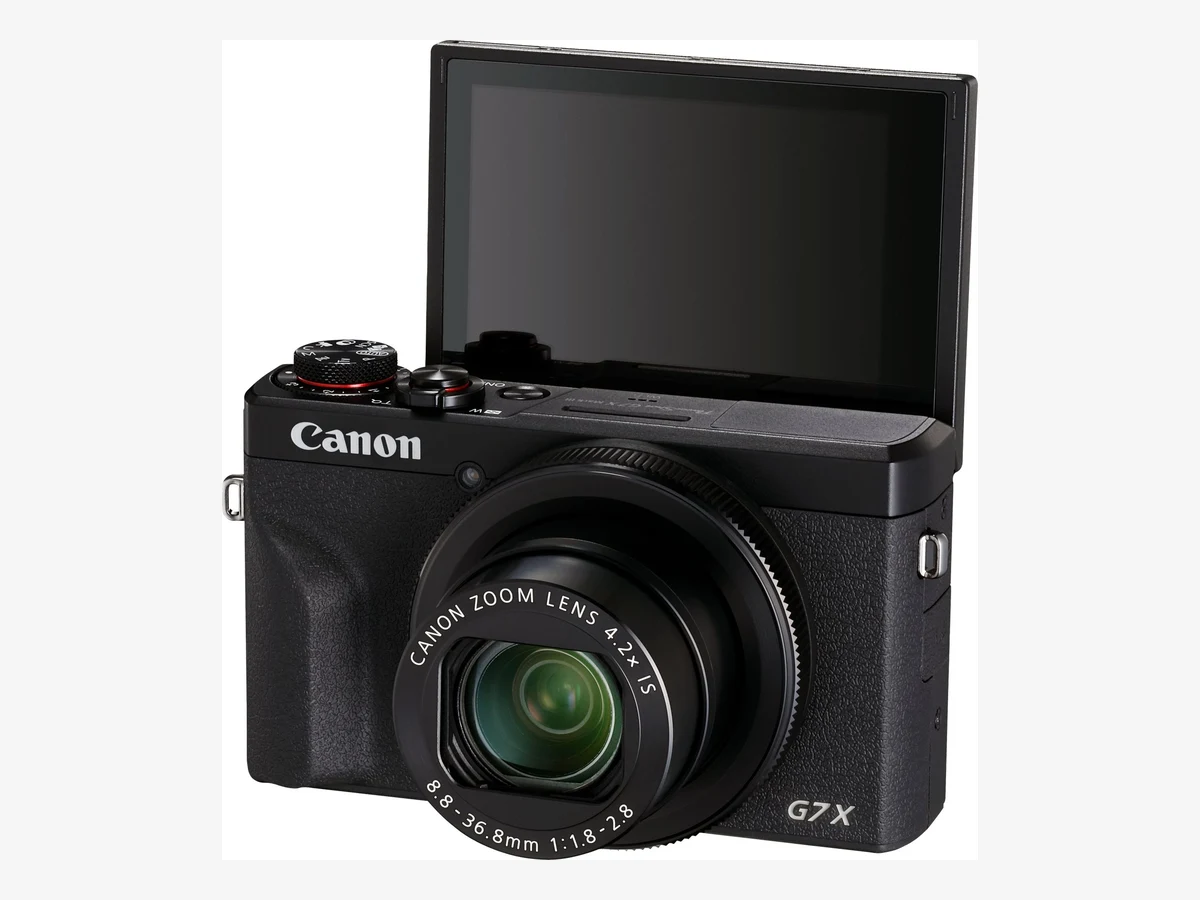
Photo: Canon
3. Canon PowerShot G7 X Mark III
The low-light pick: an f/1.8 lens that keeps evening and cafe footage clean, 4K video, a mic input, and live streaming straight to YouTube. Just know that buying one takes patience.
The G7 X Mark III became the default vlogging compact for years because of one number: f/1.8 at the wide end of its 24-100mm zoom. That bright lens, on a 1.0-inch stacked sensor, is why it still beats newer rivals after sunset and in dim interiors. It shoots 4K at 30p, has a proper 3.5mm mic input, streams directly to YouTube without a computer, and supports vertical video for Shorts and Reels. The screen tilts up over the top for self-facing shots rather than flipping to the side.
Be clear-eyed about two things. In 4K, a single clip stops at 9 minutes 59 seconds, so it suits snappy vlog segments, not long sit-down recordings. And stock is a genuine problem: Canon’s own US store lists it out of stock, it is frequently out of stock at authorized dealers too, and third-party sellers often ask above the list price when Canon has none. If you buy one, buy from a seller you trust and check the warranty is a Canon US one, not a grey import.
Technical features
- 1.0-inch stacked CMOS sensor, 20.1MP, DIGIC 8
- 24-100mm equivalent zoom, f/1.8-2.8
- Optical Image Stabilizer
- 4K/30p (single clips up to 9 min 59 sec), Full HD 120p
- 3.5mm microphone input
- 3.0-inch tilt touchscreen, approx. 1.04 million dots
- Live streaming direct to YouTube
- Vertical video support
- USB-C charging, Wi-Fi and Bluetooth
- 304g with battery and card
Pros
- Brightest lens here: the best evening and indoor footage
- Mic input, which many cameras in this class still skip
- Streams to YouTube with no computer in between
- Useful 24-100mm range for travel and detail shots
Cons
- 4K clips stop at 9 minutes 59 seconds
- Frequently out of stock at Canon USA and often sold above list
- 24mm wide end is tighter at arm’s length than the Sonys
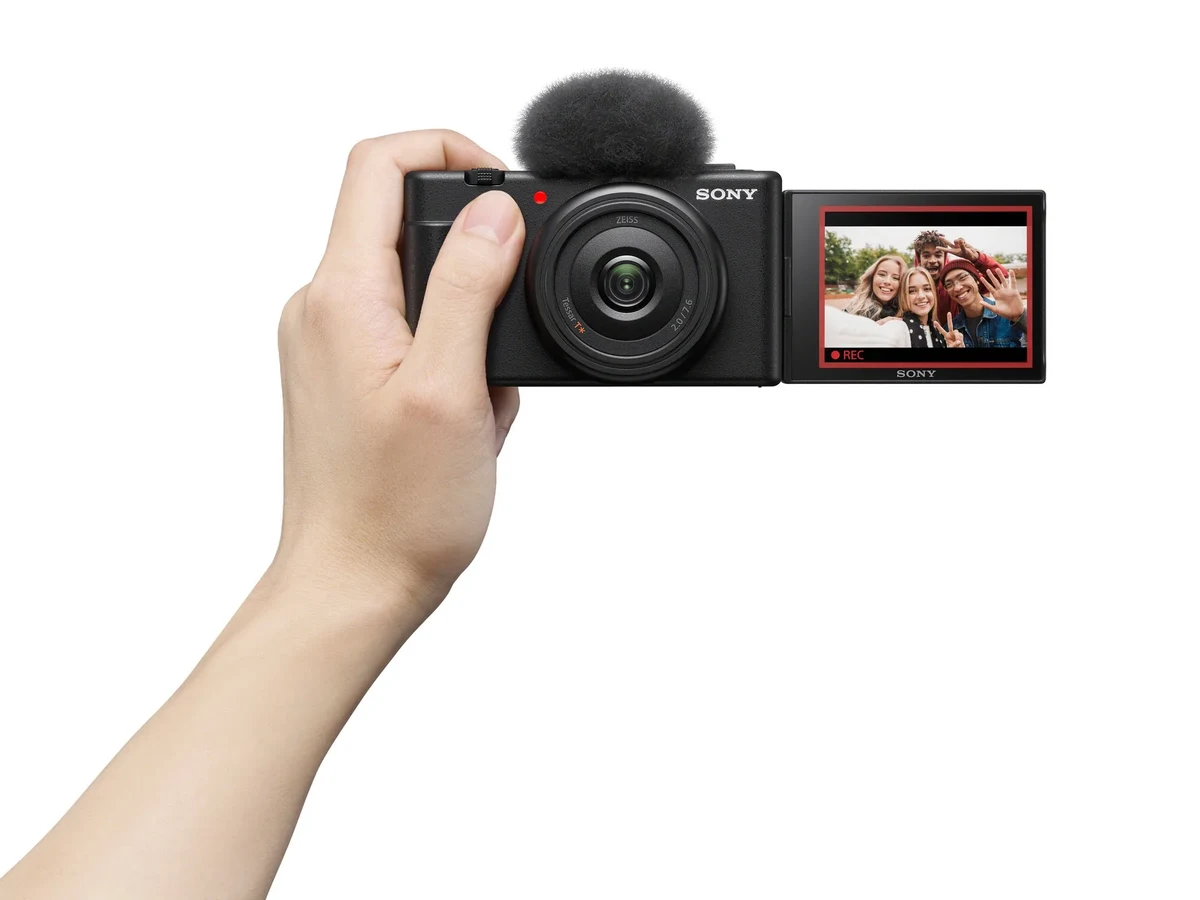
Photo: Sony
4. Sony ZV-1F
The simplest route into proper vlogging: one fixed ultra-wide lens, Sony’s friendly vlog modes, and almost nothing to set up wrong. It is the easiest camera here to just pick up and post with.
Instead of a zoom, the ZV-1F fixes a 20mm equivalent f/2.0 lens to its 1.0-type sensor. That sounds limiting until you vlog with it: 20mm is wide enough to hold at arm’s length and still fit your surroundings, and never having to zoom is one less thing to think about mid-sentence. The vlogger shortcuts do the rest: Product Showcase snaps focus to whatever you hold up, a Background Defocus button blurs or clears the background, and Face Priority AE keeps your exposure right as light changes.
Audio is better than the price suggests, with the same Directional 3-Capsule Mic idea as its bigger brother, a wind screen in the box, and a 3.5mm mic jack for a lav or shotgun later. The trade-offs are the fixed lens (your feet are the zoom), contrast-only autofocus that is a step behind the ZV-1 II, and electronic stabilization that crops the frame. For a first camera, those are the right trade-offs.
Technical features
- 1.0-type Exmor RS CMOS sensor, 20.1MP
- ZEISS Tessar T* fixed lens, 20mm equivalent, f/2.0
- 4K/30p, Full HD 120p
- 425-point contrast-detection AF with Eye AF
- Electronic stabilization
- Directional 3-Capsule Mic with supplied wind screen
- 3.5mm microphone jack
- 3.0-inch vari-angle touchscreen, 921,600 dots
- Product Showcase and Background Defocus switch
- NP-BX1 battery
- 256g with battery and card
Pros
- Ultra-wide fixed lens is made for arm’s-length vlogging
- Hard to use badly: the beginner modes genuinely help
- Good built-in mic plus a mic jack for later upgrades
- The lightest Sony here at 256g
Cons
- No zoom at all: framing means moving yourself
- Contrast-only AF is a step behind the ZV-1 II
- No built-in ND filter for bright sun
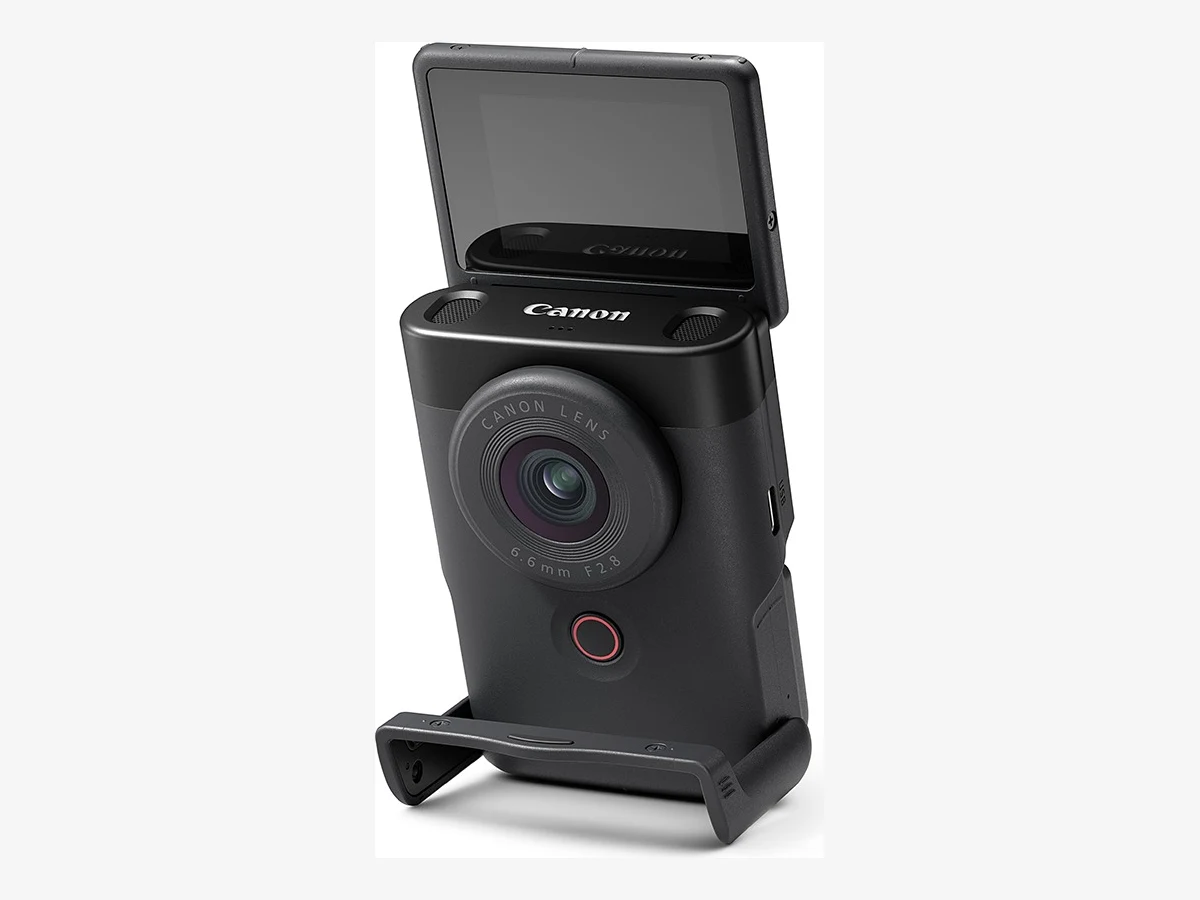
Photo: Canon
5. Canon PowerShot V10
The smallest proper camera here: a 1-inch sensor, a flip-up screen, and a stand built into the body, in something closer to a chunky phone than a camera. Set it on any table and start talking.
The V10’s party trick is that it needs nothing else. A stand folds out of the body, the 2.0-inch screen tilts up to face you, and the fixed wide lens (19mm equivalent for movies) frames a talking-head shot from a cafe table or a hotel desk without a tripod, a grip, or a balancing act. At 211g it is the camera most likely to actually be in your bag on the day something worth filming happens.
It is a starter camera, and it behaves like one in the right ways: simple menus, decent built-in stereo mics, and, unusually at this size, a 3.5mm mic input for a wireless lav. The limits are real too. The screen is small, the lens is fixed, and the 1-inch sensor works harder in low light than the V1’s bigger chip. Think of it as the camera that gets a channel started, not the one that finishes the journey.
Technical features
- 1-inch high-sensitivity BSI CMOS sensor
- Fixed lens, 19mm equivalent for movies (18mm for stills), f/2.8
- 4K UHD at 29.97/25/23.98 fps
- Movie Digital IS
- Built-in stereo microphones
- 3.5mm stereo microphone input
- 2.0-inch tilting touchscreen, tilts up approx. 180 degrees
- Built-in stand
- Approx. 211g
Pros
- Built-in stand: no tripod needed for desk and table shots
- Tiny and light enough to live in a jacket pocket
- A mic input at this size and price is rare
- Simple enough for a complete beginner
Cons
- Small 2.0-inch screen is fiddly for checking focus
- Fixed lens, no zoom and no upgrade path
- Low-light footage is a step behind the V1 and the Sonys
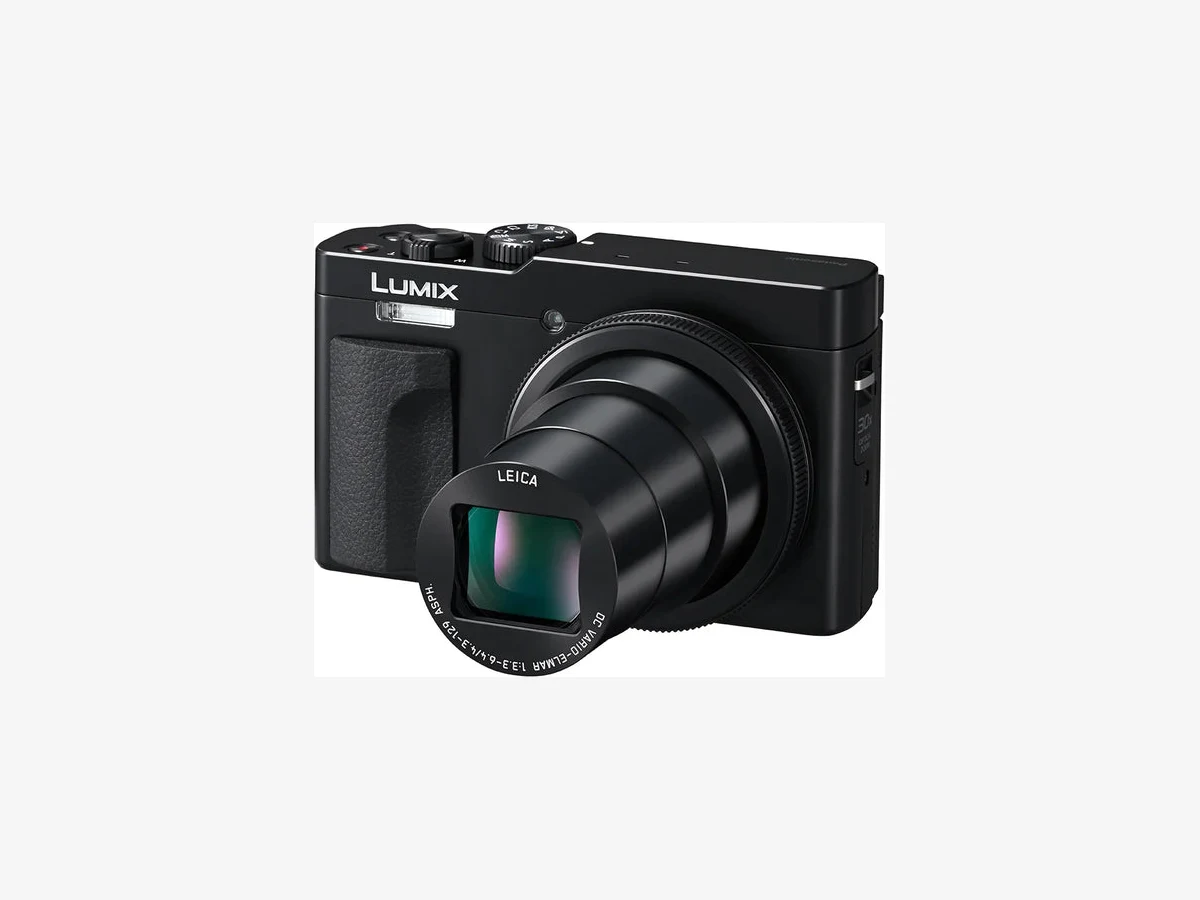
Photo: Panasonic
6. Panasonic LUMIX ZS99
The travel zoom of the group: a 24-720mm lens that pulls distant stages, wildlife, and landmarks close from a pocket camera. Buy it for the zoom, and only if the built-in mic is genuinely enough for you.
Nothing else here does what the ZS99 does. Its LEICA DC lens runs from 24mm wide to 720mm equivalent, a 30x zoom that turns a far-off stage, a press conference, or a bird on a branch into a full-frame shot, with 5-Axis HYBRID O.I.S.+ working to keep that long end steady. It shoots 4K at 30p, grabs 4K PHOTO bursts, records HD at 120fps for slow motion, and its screen tilts up for self-facing pieces. For travel vloggers who film as much scenery as themselves, it is a real tool.
Now the warning, stated plainly because most roundups skip it: the ZS99 has no microphone input. The body offers USB-C and Micro HDMI only, so audio means the built-in stereo mic, or recording sound separately on a phone or recorder and syncing it later. Its 1/2.3-inch sensor is also the smallest here, so low-light footage is the weakest of the six. If your vlogs are mostly you talking to the camera, buy one of the Sonys or Canons above. If your vlogs are mostly the world in front of it, this is your camera.
Technical features
- 1/2.3-inch MOS sensor, 20.3MP
- LEICA DC 24-720mm equivalent 30x zoom, f/3.3-6.4 (60x iZoom)
- 4K/30p video and 4K PHOTO bursts
- Full HD 120fps high-speed video
- 5-Axis HYBRID O.I.S.+ stabilization
- 3.0-inch tilting touchscreen, approx. 1,840,000 dots
- Built-in stereo microphone
- No microphone input (USB-C and Micro HDMI only)
- USB-C charging, Wi-Fi and Bluetooth 5.0
- 322g with battery and card
Pros
- 30x zoom: reach nothing else in this guide comes close to
- Strong stabilization, which matters most at full zoom
- Tilting screen works for self-facing segments
- USB-C charging suits travel light
Cons
- No microphone input: built-in mic or separate audio only
- Smallest sensor here: the weakest low-light footage
- Contrast-based focus is not built for fast action
Sensor size: the quiet spec that decides low-light quality
Bigger sensor, cleaner footage after dark. The PowerShot V1’s 1.4-type sensor leads this group, the 1-inch cameras sit in the middle, and the ZS99’s small 1/2.3-inch sensor is the price of its huge zoom.
Sensor size decides how a compact handles the light you actually vlog in: kitchens, cafes, evening streets, hotel rooms. A larger sensor gathers more light per pixel, so footage stays clean at higher ISO and skin tones hold up instead of going muddy. It also blurs backgrounds more at the same framing, which is the look most viewers read as “proper camera.”
In this guide the order is clear. The V1’s 1.4-type sensor is the one to beat. The 1.0-type and 1-inch sensors in the ZV-1 II, G7 X Mark III, ZV-1F, and V10 are the sweet spot for pocket cameras and handle indoor light well. The ZS99’s 1/2.3-inch sensor is phone-sized: fine in daylight, visibly noisier at night, and the reason its zoom comes with a warning label. If most of your filming happens indoors, sensor size should outrank zoom range on your list every time.
Lens width first, zoom second
For vlogging, the wide end of the lens matters more than the telephoto end. Anything 20mm equivalent or wider frames you comfortably at arm’s length; 24mm works, but leaves less room for a second person or a busy background.
A vlogging lens lives at its widest setting. The ZV-1F’s fixed 20mm and the ZV-1 II’s 18-50mm zoom are framed for exactly that: you, at arm’s length, with the place you are in still visible around you. The V1’s 16-50mm is wider still. At 24mm, the G7 X Mark III and ZS99 need a longer arm, a selfie stick, or a step backwards to fit two people.
Zoom earns its place for everything that is not you: food close-ups, street details, stages, scenery. That is where the ZS99’s 720mm reach and the G7 X Mark III’s 100mm telephoto pull away from the fixed-lens cameras. Decide which kind of shot fills your videos, talking or showing, and let that order your shortlist. A flip screen guide check belongs here too: every camera in this guide can show you yourself while filming, by a vari-angle screen, a tilt-up screen, or the V10’s flip-up panel.
Audio: check the mic input before anything else
Five of these six cameras take an external microphone through a 3.5mm input. The Panasonic ZS99 does not have one at all. If you plan to use a wireless lav or a shotgun mic, that single fact decides your shortlist.
Viewers forgive soft footage and abandon muffled audio. The built-in mics on the Sonys are genuinely good for pieces to camera, with directional capsules and wind screens in the box, and the Canons and Panasonic record clean stereo. But every built-in mic sits at camera distance, and camera distance is where room echo and handling noise live. A 3.5mm input is what lets you clip a lav to your collar or mount a shotgun later, and it is the cheapest upgrade path any camera can offer.
So run this check before you fall for a zoom range or a sensor: does it have a mic input? The V1 goes further with a headphone jack for monitoring, which none of the others match. The ZS99, to say it once more, has no mic input: its ports are USB-C and Micro HDMI. Owners film around it with a separate recorder, but if plug-in audio matters to you, it should rule the camera out, however good the zoom looks. Our guide to recording better vlog audio covers what to plug in first.
Heat, record limits and battery life
Compact cameras stop recording for three reasons: a per-clip limit, heat, or a flat battery. The V1’s cooling fan removes the heat problem; the G7 X Mark III stops 4K clips at 9 minutes 59 seconds; and every camera here needs a spare battery for a full day.
Per-clip limits are design choices, and they vary more than buyers expect. Canon rates the V1 for up to 6 hours per clip, which in practice means the battery decides. The G7 X Mark III caps a 4K clip at 9 minutes 59 seconds, which suits vlog segments but not a long podcast-style sit-down. Heat is the second limiter on fanless bodies in warm rooms: our camera overheating guide covers the workarounds, from dropping to 1080p for long takes to keeping a body out of direct sun.
Battery is the limit you will actually meet. Sony rates the ZV-1 II at roughly 45 minutes of real recording per charge, and Canon’s own figures put the V1 at about 70 minutes of 4K/30p. Neither is a flaw; small bodies hold small batteries. It does mean a spare battery, or a USB power bank for the cameras that charge over USB-C, is part of the real cost of every pick here.
Stabilization and the crop nobody mentions
Every camera here stabilizes video, but the method changes your framing. Optical stabilization keeps the full frame; electronic stabilization steadies the shot by cropping it, so your wide lens quietly gets less wide.
The V1 and G7 X Mark III stabilize optically, in the lens, with no crop. The ZS99’s 5-Axis HYBRID O.I.S.+ combines optical and electronic correction, which it needs at 720mm. The ZV-1 II, ZV-1F, and V10 lean on electronic stabilization: effective for walking shots, but the Active mode on the ZV-1 II narrows the field of view, and it switches off entirely at 120p.
Practically: if you film walking pieces to camera, check the stabilized width, not the headline lens width. An 18mm lens with an electronic crop can frame tighter than a 20mm lens without one. And for locked-off or slow-moving shots, a small tripod still beats every stabilization system here; our gimbal guide covers when a gimbal is worth its weight instead.
Compact camera or gimbal pocket camera?
Choose a compact camera for image quality, zoom, and mic inputs. Choose a gimbal pocket camera for the smoothest walking footage and the smallest carry. They solve different problems, and this guide only ranks the cameras.
Gimbal pocket cameras, the DJI Osmo Pocket line above all, put a tiny camera on a mechanical gimbal. The result is walking footage smoother than any stabilization in this guide, from a device smaller than all of them. What you give up is just as clear: a much smaller sensor, no real zoom, limited audio options without add-on receivers, and no upgrade path.
One buying note if you go that way: the current Pocket model has had no official US launch, and US listings are third-party imports rather than DJI’s own US stock, so check warranty terms carefully before paying import prices. For most creators who film a mix of talking, travel, and product shots, a compact from this guide is the more flexible single camera. For pure walk-and-talk travel days, the gimbal camera is the specialist tool. Plenty of channels end up owning one of each, in that order.
Memory cards and the small extras
All six cameras record to SD cards. A UHS-I card rated U3 or V30 covers 4K on most of them; the V1’s highest bit-rate modes ask for a faster V60 card. Buy the card once, and buy a spare battery with it.
Card speed only matters when it is too slow, and then it stops your recording mid-take. Match the card to the camera’s fastest mode you will actually use, and format cards in the camera. Our SD card guide explains the V30, V60, and V90 ratings in plain terms.
Round out the kit with a spare battery (essential on the Sonys), a mini tripod or grip for the cameras without the V10’s built-in stand, and a small case. Watch for seasonal pricing in our Black Friday camera deals guide, and if the budget is the deciding factor, the cross-category picks in our vlogging cameras under $500 guide are worth a look before you decide.
Compact camera questions, answered
The questions creators actually ask before buying a compact camera for vlogging.
What is the best compact camera for vlogging overall?
The Canon PowerShot V1. It has the largest sensor in this class, full-width 4K at 30p and cropped 4K at 60p, Canon Log 3 in 10-bit, both a mic input and a headphone jack, and a built-in cooling fan so long 4K takes do not end in a heat shutdown. If pocket size matters more, the Sony ZV-1 II is the better carry.
Canon PowerShot V1 or Sony ZV-1 II: which should I buy?
Buy the V1 for image quality, long recordings, and grading headroom: bigger sensor, fan cooling, headphone monitoring. Buy the ZV-1 II for size and simplicity: it is lighter, its 18-50mm zoom is wider at the long end than it sounds, its built-in mic is better, and its ND filter is made for bright days. Talking-head creators lean Sony; creators who film long or grade their footage lean Canon.
Do I need a microphone input on a compact vlogging camera?
If you ever plan to use a wireless lav or a shotgun mic, yes. Built-in mics are fine at arm’s length in quiet rooms, but a mic input is the only way to get your voice close to the microphone in noisy places. Five of the six cameras here have one. The Panasonic ZS99 does not, which is the main reason it is a specialist pick rather than a general recommendation.
Which of these compact cameras has no mic input?
Only the Panasonic LUMIX ZS99. Its body has USB-C and Micro HDMI ports but no microphone socket, so audio is the built-in stereo mic or a separate recorder you sync in the edit. Every other camera in this guide, including the tiny PowerShot V10, has a 3.5mm mic input.
Do compact cameras overheat when recording 4K?
Some do, in warm rooms and long takes. The PowerShot V1 is the exception here because Canon built in a cooling fan. Fanless compacts manage heat with clip limits and shutdowns instead: the G7 X Mark III, for example, stops a 4K clip at 9 minutes 59 seconds. Shooting 1080p for long segments, keeping the camera out of direct sun, and letting it rest between takes all help. See our overheating guide for the full playbook.
Compact camera or DJI Osmo Pocket: which is better for vlogging?
Different tools. A gimbal pocket camera gives you the smoothest walking footage and the smallest carry, but a much smaller sensor, no real zoom, and weaker audio options. A compact camera from this guide gives you better image quality, a zoom or a fast lens, and a mic input. One caution on the Pocket: the current model has no official US release, so US listings are third-party imports. Check the warranty before you buy.
How wide a lens do I need to vlog at arm’s length?
Around 20mm equivalent or wider is comfortable for one person with background context, and safer for two people side by side. The ZV-1F is fixed at 20mm, the ZV-1 II zooms from 18mm, and the V1 from 16mm (17mm in 4K). At 24mm, like the G7 X Mark III and ZS99, expect a tighter frame: use a selfie stick or hold the camera further away, and remember that electronic stabilization crops the frame further.
Is the Sony ZV-1F too basic for serious vlogging?
No. Basic here means fewer decisions, not worse footage: the sensor is the same 1.0-type size as the ZV-1 II’s, the lens is a fast f/2.0, and it records the same 4K/30p. What you give up is the zoom, phase-detection autofocus, and the ND filter. Channels that film talking-head and lifestyle content at arm’s length may never miss them.
Can these compact cameras shoot vertical video for Shorts and Reels?
Yes. Every camera here can be turned on its side for 9:16, and some help more than others: the G7 X Mark III has a dedicated vertical video mode, and the Sonys tag vertical clips so they import the right way up. Our vertical video guide covers framing and settings for Shorts, Reels, and TikTok.
How long will a compact camera record on one battery?
Less than you hope. Sony rates the ZV-1 II at about 45 minutes of actual recording per charge, and Canon rates the V1 at roughly 70 minutes of 4K/30p under its test conditions. Real days mix recording and standby, but a spare battery is standard kit for every camera in this guide, and USB-C charging models can top up from a power bank between locations.
Why is the Canon G7 X Mark III so hard to find in stock?
Demand has outrun Canon’s supply for a long time, and Canon’s own US store lists it out of stock. When authorized dealers sell out, third-party sellers often list it above the official price, and some of those listings are grey imports without a Canon US warranty. If you buy one, use the search results to compare sellers, and confirm the warranty is Canon US before paying a premium.
What memory card do these compact cameras need?
All six use SD cards. A UHS-I card rated U3 or V30 handles 4K recording on most of them; the PowerShot V1’s highest bit-rate modes call for a V60 card. Buy from a known brand and seller, since a slow or fake card stops recordings and can cost you footage. The ratings are explained in our SD card guide.
The bottom line
For most vloggers, the Canon PowerShot V1 is the compact to buy, and the Sony ZV-1 II is the one to carry everywhere. Match the pick to how you film, and check the mic input before you check anything else.
Compact cameras ask you to choose your compromise. The V1 trades size for the best footage and the longest takes. The ZV-1 II trades 4K/60p for the best pocket package. The G7 X Mark III trades availability for the brightest lens. The ZV-1F trades a zoom for simplicity, the V10 trades screen size for a camera that stands by itself, and the ZS99 trades audio flexibility for a zoom nothing else here can touch.
If you are choosing your very first camera, our best cameras for YouTube beginners guide widens the field beyond compacts, and our mirrorless camera guide covers the step up when interchangeable lenses start to make sense. Whichever compact you pick from this page, you are getting a real camera with a real lens, and that is the upgrade your channel will actually feel.
This guide is research-based curation: we compared manufacturer specifications, published reviews, and current prices. Read how we choose.