Last updated: October 2026
Somebody always asks. You are filming a street scene, the camera is rolling, and a voice behind you wants to know whether you are allowed to do that. The honest answer is usually yes, with limits that depend on where you are standing, who is in the frame, and what you plan to do with the footage. This guide walks through them in plain language. It is general information for working creators, not legal advice, and the rules genuinely differ between countries, so treat it as a map of the right questions rather than a court ruling.
On this page
- Start here: filming in public is usually legal
- Expectation of privacy is the line that matters
- Filming children calls for extra care
- Private property and shops play by the owner’s rules
- Monetizing the video changes the analysis
- Releases in plain English: the simple written OK
- Filming police and officials
- Permits: when a solo vlogger actually needs one
- Drones are a separate rulebook
- When somebody challenges you on the street
- The habit to build: ask first when it costs nothing
- Filming legality questions, answered
- Keep exploring
Start here: filming in public is usually legal
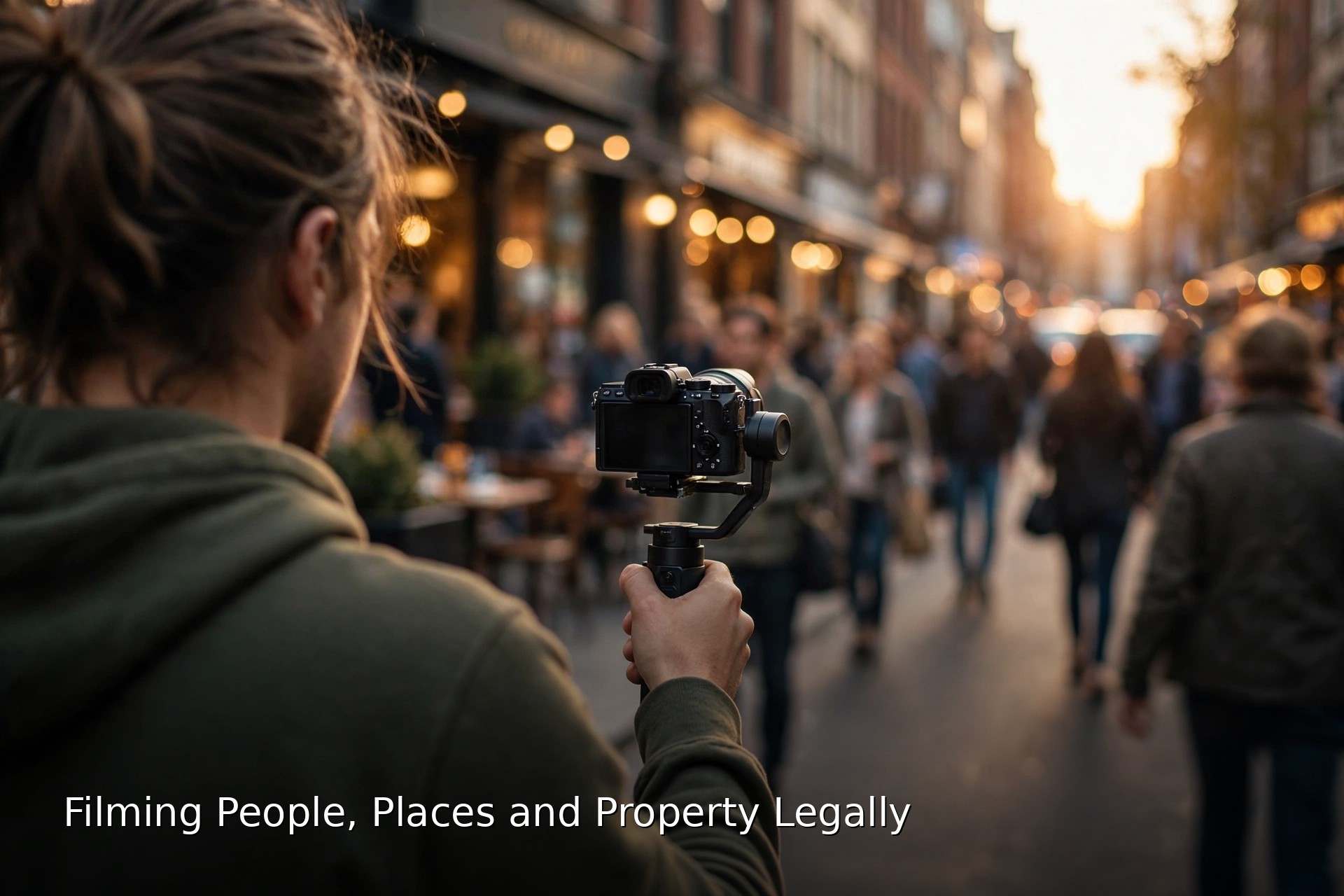
In most genuinely public places in the US, the UK, and much of Europe, filming people who happen to be there is legal, because people out in public have little or no expectation of privacy. The limits gather around private spaces, harassment, commercial use of somebody’s image, and local permit rules, and the details differ by country.
The American position grows out of the First Amendment. Courts treat filming in streets, parks, and sidewalks as part of gathering information and speaking, so a person in a public place can generally be filmed without their permission. The UK lands in a similar place by a different route: no general law bans filming people in public, and police guidance for England and Wales has said for years that officers cannot stop it or order footage deleted.
Mainland Europe is patchier. Germany protects a person’s right to their own image, so publishing a recognizable portrait of a stranger can need consent even when filming it was fine. France protects image rights more strongly still. A lingering close up of one stranger is where the questions start. This matters even more if you film while traveling, because your home rules stop applying the moment you land. Our guide to starting a travel vlog covers the planning side of shooting away from home.
Expectation of privacy is the line that matters
The legal line is rarely about the camera itself. It is about whether the person filmed had a reasonable expectation of privacy where they were. Bathrooms, changing rooms, and the inside of a home sit on the protected side of that line. A busy sidewalk does not.
Expectation of privacy explains most real disputes. Filming a crowd on a plaza is one thing. Filming through somebody’s living room window with a long lens is another, even from a public street, because the person at home reasonably expects privacy there. Changing rooms, toilets, medical settings, and places of worship during services carry the same protected quality. If a space feels like somewhere people let their guard down, treat it as off limits without clear permission.
Audio has its own rules, and vloggers trip over them because the camera mic is always on. In the US, recording a conversation you are part of is allowed under federal law and in most states, but a group of states require every party to consent. Aiming a microphone at a private conversation you are not part of is a different and riskier act. The working rule: your own narration and chats you are part of are normal vlogging; deliberately capturing strangers’ private conversations is not.
Filming children calls for extra care
Filming in a public place does not normally become illegal just because children are somewhere in the frame, but schools, pools, clubs, and events often have their own rules, and parents react faster and harder than anyone else you will meet with a camera. The safe habit is simple: never make an unknown child the subject of a shot.
There is a gap here between what is legal and what is wise, and smart vloggers live on the wise side of it. A wide shot of a beach or a festival with children in the crowd is ordinary footage. Following one child with the camera, singling children out in swimwear or distress for close or lingering shots, or filming through a school fence are things no vlogger should do, whatever the local law technically allows. Venues add their own layer: many pools, soft play centers, and youth sports leagues ban filming outright as a safeguarding policy, and those rules bind you while you are on their property.
If a parent asks you to stop or to delete a clip their child is in, the practical answer is to agree, show them the delete if that settles it, and move on. You may well be within your rights to refuse in a public park. Winning that argument costs you twenty heated minutes and a crowd of onlookers filming you, all to keep four seconds of background footage. It is never worth it.
Private property and shops play by the owner’s rules
A shop, mall, station, or museum can be open to the public without being a public place in law. The owner or operator sets the filming rules there, staff can ask you to stop or to leave, and refusing to leave can turn a simple content question into a trespassing problem.
The confusing category is space that feels public but is privately owned or privately controlled: shopping centers, station concourses, university campuses, even some city squares that turn out to be privately managed. On that land, your right to be there is a license the owner can withdraw. Staff do not need to quote a law at you: if they say no filming, your options are to stop, film from genuinely public ground outside, or leave. Filming the same building from the public sidewalk across the street is generally fine in the US and UK, because you are back on public land. The window exception above still applies: do not aim into private windows.
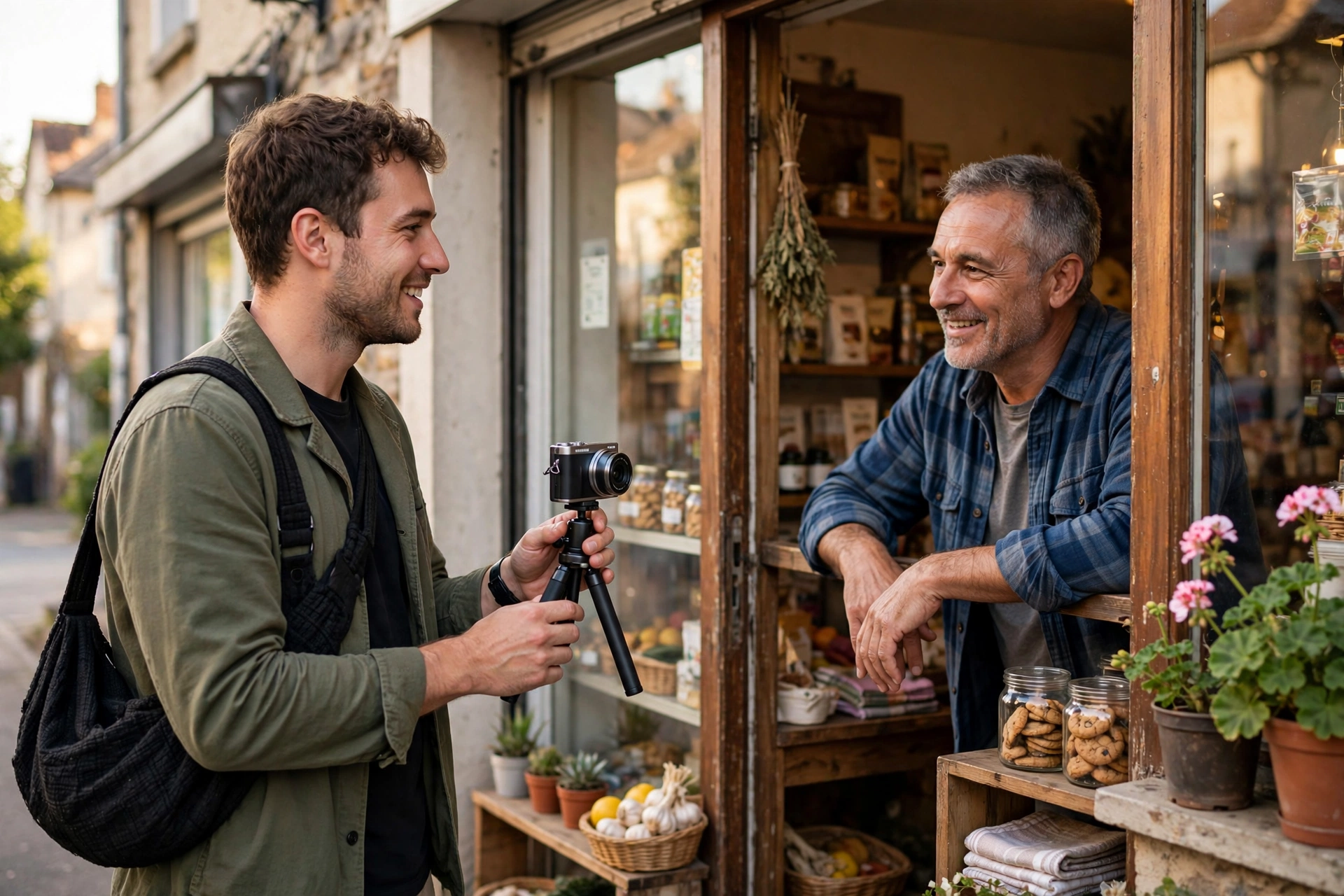
None of this means shops are closed to vloggers. It means the camera goes away until you have asked. Plenty of independent shops, cafes, and market stalls say yes to a polite thirty second explanation, especially if the video shows the business in a good light. Asking first also produces better footage: the owner moves the clutter, tells you the interesting detail, and stops hovering nervously at the edge of frame.
Monetizing the video changes the analysis
Editorial use, like a travel vlog, a review, or a news-style report, gets the widest protection in most places. Using a recognizable person’s face to sell something, in an ad, a thumbnail designed as promotion, or an endorsement, is where publicity and image rights bite, and where releases start to matter.
In the US, most states recognize a right of publicity: a person’s name and likeness cannot be used commercially without their consent. A monetized vlog sits in a gray but usually comfortable zone, because the video itself is editorial content even though it earns money. The zone gets uncomfortable at the edges. Putting a stranger’s face on your thumbnail to sell the video, cutting their reaction into an ad for a sponsor, or implying that somebody endorses a product they have never heard of all push toward commercial use of their image.
European image rights reach further, and in France and Germany a recognizable person can object to publication of their image in contexts the US would shrug at. The practical translation: background faces in honest editorial footage are low risk almost everywhere. One identifiable person carrying your thumbnail, ad, or sponsor segment means get their permission or pick a different frame.
Releases in plain English: the simple written OK
A model release is written permission from a recognizable person to use footage of them, and a location release is the same idea signed by a property owner. For interviews, featured guests, private locations, and anything commercial, a short signed note, or at minimum a clear yes recorded on camera, is what protects you.
You do not need releases for a crowd. Nobody signs a form to walk through a train station shot. Releases matter when a person is a feature of the video rather than part of the scenery: the guest you interview, the trainer who leads your workout video, the homeowner whose kitchen becomes your set. They also matter when a sponsor or a stock library is involved, because brands and libraries ask for them as a condition of using the footage.
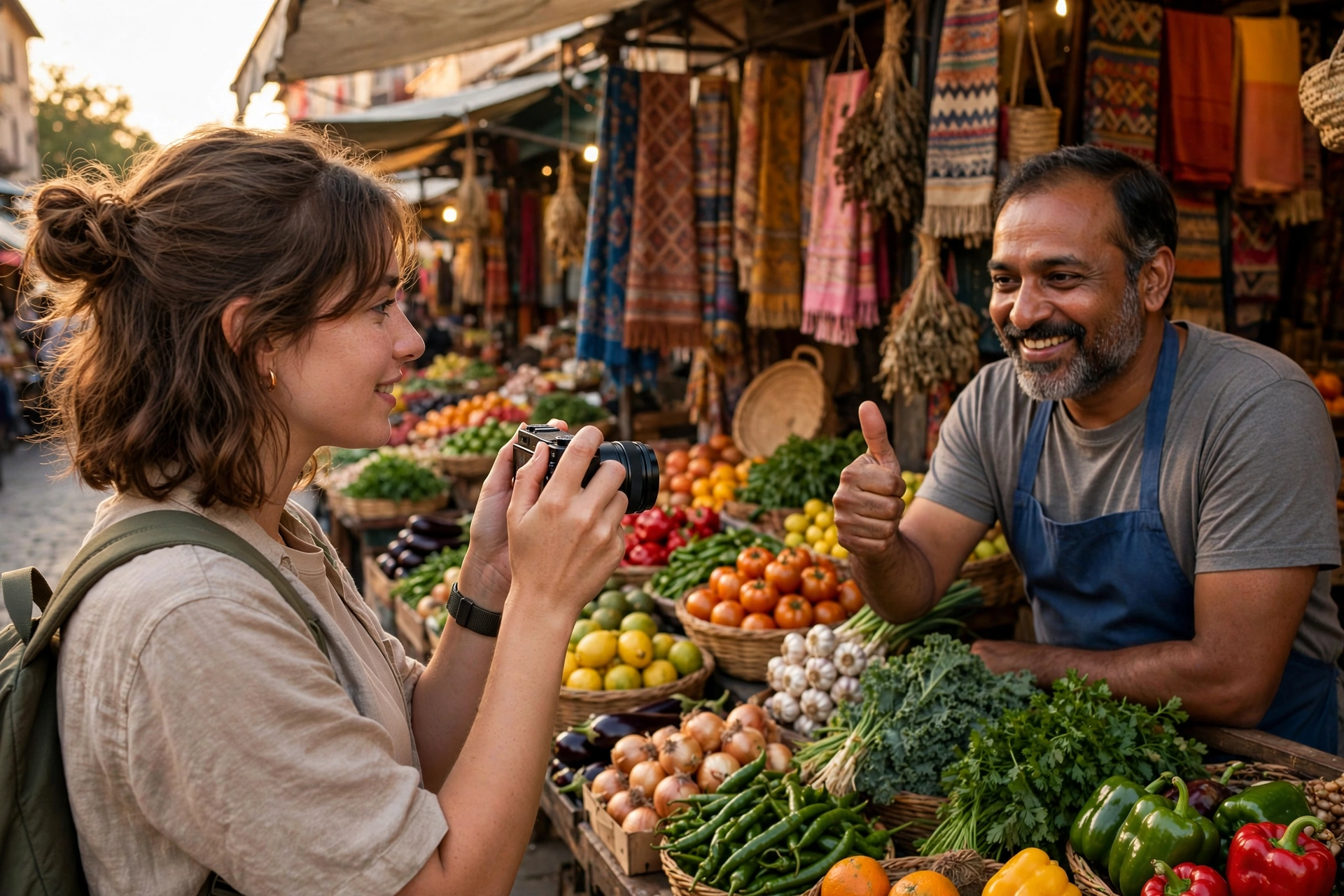
A simple release needs no lawyer’s letterhead. It should say who is giving permission, what footage it covers, that the creator may use it in videos and promotion including monetized use, and the date, with a signature; for a child, a parent or guardian signs. Keep the files with the project footage. When a form feels too heavy for the moment, ask on camera at the start of the clip: state your name, the channel, and that the video may be monetized, and record the yes. A recorded yes is weaker than a signature and far stronger than a memory of a nod.
Filming police and officials
In the US, federal courts have recognized a right to record police officers doing their job in public, and UK police guidance accepts filming in public places too. The right comes with conditions everywhere: keep your distance, do not interfere with what officers are doing, and follow lawful orders about where to stand.
The American right was cemented by the 2011 First Circuit decision in Glik v. Cunniffe, involving a bystander arrested for recording an arrest on his phone in Boston; the court held that recording police in public is protected, and other federal circuits have agreed since. UK police guidance tells officers the same in practice: filming in public is not an offense, and they have no power to delete footage or seize a camera simply because it was recording. The same public-place principle covers other officials working in public view; the line is the same public-place line, not the person’s job title. Officials inside government buildings are a different setting: many public buildings restrict filming inside for security reasons, and staff can enforce those rules on the premises.
Technique matters more than doctrine here. Record openly, stay far enough back that nobody can claim you obstructed anything, and if an officer tells you to move back, move back while keeping the camera rolling if you want the footage. Demands to delete footage are, in most US and UK situations, demands the person making them has no authority to enforce, but the street is not the place to litigate that. Comply with instructions about your physical position, keep your footage, and sort the argument out later if it still matters.
Permits: when a solo vlogger actually needs one
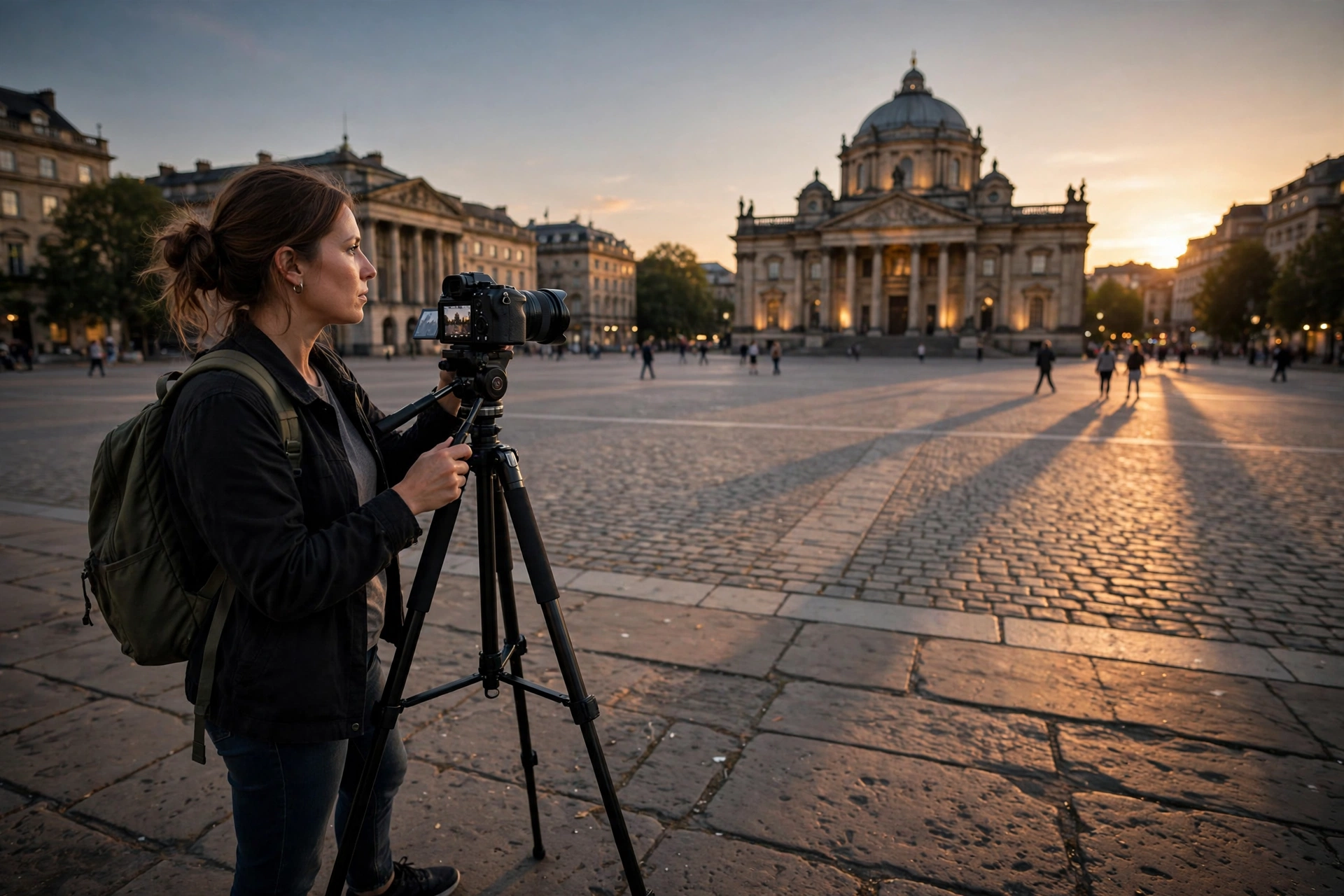
A solo creator with a handheld camera rarely needs a permit on a public street. Permits show up when a shoot grows: a tripod blocking the sidewalk, a crew, lighting rigs, vehicles, or a commercial production. Cities run film offices for exactly that level of shoot, and some famous locations have their own rules.
The pattern is consistent across countries even though the paperwork is not. Handheld and unobtrusive usually means no permit. Occupying space is what triggers one: in Spain, a tripod on a busy street can require an occupation permit; in Berlin, anything beyond handheld shooting can need approval; many US cities require permits when a production blocks pavement or uses city property as a set. Parks are the classic trap: national and city parks often run their own commercial filming rules on top of the street rules, and a sponsored shoot in a US national park is exactly what those systems were built for.
The cheap way to stay safe is to check the location before the shoot day: search the city or park name plus film permit and note what the rules say about handheld filming. If a permit is needed, a one-person crew permit is usually inexpensive next to a ruined shoot day or a fine. If the rules look heavy for a one-off location, the simplest permit of all is a different backdrop.
Drones are a separate rulebook
Drone filming answers to aviation rules first and privacy rules second, with registrations, weight classes, altitude limits, and no fly zones that change by country. It gets one short section here because the full detail lives in your country’s aviation rules, not in vlogging guides.
The short version: a drone is an aircraft, not a camera that happens to fly, and regulators treat it that way. Where you can film freely with a handheld camera, the same shot from the air may need registration, a minimum distance from people, or be banned outright near airports, crowds, and government buildings. A drone also sees into gardens and through upper windows, the exact places where people expect to be unobserved. If drones are part of your kit, work through our guide to the best drones for vlogging, which covers the filming side, and check your national aviation authority for the current rules before you fly anywhere new.
When somebody challenges you on the street
Most confrontations end quickly if you stay calm. Lower the camera, explain what you are filming in one sentence, offer to keep the person out of the video or to delete the clip they are in, and stay willing to walk away. Being legally right is worth less than a ruined day, a broken camera, or footage of you arguing.
The script that works is boring on purpose. Smile, say you are filming a video about the area for your channel, and that the camera was pointed at the street, the market, the building, not at them personally. Many challenges are really people checking they are not the subject. If they are in the shot and want out, agree on the spot: pan away, reshoot the segment, or delete the clip in front of them. That offer defuses nearly everything, because most people want respect, not a legal victory.
Know the boundary lines without turning them into a confrontation: in the US and UK, neither a stranger nor a security guard can lawfully demand your memory card or force a deletion, and police powers are limited too, as the section above explains. But a person who follows you, blocks you, or grabs at the camera has left the world of filming law and entered the world where you simply leave, and report it if it was serious. The confidence side of this, holding a camera in public without flinching, is a learnable skill: our guide to vlogging in public works through the practical habits that make these encounters rarer in the first place.
The habit to build: ask first when it costs nothing
Most filming trouble is social, not legal. The vloggers who rarely get challenged share one habit: they ask first whenever asking costs nothing: a shop, a stall, a featured face, a quiet courtyard. They save their rights for the wide public scenes where asking is impossible.
Hold the whole topic in proportion. Millions of hours of vlog footage are filmed in public every year, and the overwhelming majority bothers nobody. The risk concentrates in predictable places: private property treated as public, children treated as scenery, one stranger’s face carrying a thumbnail, and arguments escalated out of pride. Avoid those four and you have avoided most of the real danger. For anything commercial, unusual, or valuable enough that losing the footage would hurt, get the release, check the permit rules, and if the situation is genuinely unclear, get proper legal advice for your country before the shoot, not after the complaint. Filming law rewards the prepared and the polite, in roughly that order.
Filming legality questions, answered
Quick answers to the questions vloggers ask most about filming people, places, and property. Everything here is general information, not legal advice, and local rules can change the answer.
Is it legal to film people in public without their permission?
Usually yes in the US and UK, where people in public have little or no expectation of privacy. Parts of Europe protect image rights more strongly, so publishing a recognizable close up of a stranger can need consent in countries like France and Germany. Crowds and wide scenes are the safest ground everywhere.
Can somebody make me delete my footage?
In most US and UK situations, no. A member of the public or a security guard has no authority to order a deletion, and police powers to seize or delete footage are tightly limited. That said, deleting a clip voluntarily often ends a confrontation in seconds. Treat deletion as a de-escalation tool you can offer, not an order you must obey.
Can I film inside a store or shopping mall?
Only with the operator’s permission. Shops and malls are private property open to the public, so the owner sets the rules and staff can ask you to stop or leave. Ask at the door or the counter first. Many independent businesses say yes to a polite request, and filming from the public sidewalk outside is a separate matter.
Is it legal to film children in public?
Children appearing incidentally in public footage is generally lawful in the US and UK, but this is where vloggers should apply the most restraint. Never make an unknown child the subject of a shot, respect venue rules at pools, schools, and clubs, and if a parent asks you to stop or delete, doing so is almost always the smart move.
Can I monetize a video that shows strangers?
Normally yes. A monetized vlog is still editorial content in most analyses, and background strangers rarely create a claim. The risk rises when one identifiable person’s image is used to sell something: a sponsor segment, an ad, or a thumbnail trading on their face. That is the point where consent or a release becomes the safe route.
Do I need a model release for everyone in my vlog?
No. Crowds and background passersby do not need releases. Get one when a person is featured, interviewed, or identifiable as a main subject, when the footage will be used commercially or by a sponsor, and when filming identifiable people on private property. A clear on camera yes is a workable fallback when a form is impractical.
Is it legal to record the police?
In the US, federal appeals courts have recognized a First Amendment right to record officers performing duties in public, and UK police guidance accepts filming in public places. The right is not a license to interfere: keep a sensible distance, do not obstruct, and follow instructions about where to stand. Some government buildings restrict filming inside their premises.
Do I need a permit to vlog on a public street?
A solo vlogger with a handheld camera almost never needs one. Permits appear when a shoot occupies space or scales up: tripods blocking sidewalks, crews, lighting, vehicles, or commercial productions. Parks and famous landmarks often run their own rules on top of city rules, so check the location’s film permit page before a planned shoot there.
Can I record conversations for my vlog?
Recording your own narration and conversations you are taking part in is normal vlogging and is lawful in many places, but US states split between one party and all party consent, and other countries have their own versions. Deliberately capturing a private conversation between strangers is risky almost everywhere. When in doubt, keep the mic pointed at yourself and your willing guests.
What should I do if somebody confronts me while filming?
Lower the camera, smile, and explain in one sentence what you are filming. Offer to keep the person out of the video or to delete the clip they appear in, and be ready to move on. Most challenges are about respect rather than law, and a calm response settles them. If someone becomes physical or follows you, leave and treat it as a safety matter, not a filming one.
Do I need to register my drone before filming with it?
Often yes, but the requirement depends on your country and on the drone’s weight and use. Many aviation authorities require an operator registration, an operator ID on the aircraft, or a basic competency test, and some draw a line between recreational and commercial flying. Check your national aviation authority’s current rules before your first flight, and recheck them when you fly somewhere new.
Keep exploring
Filming legally is one part of shooting outside your home studio. These guides cover the channel basics and the travel and drone work where these questions come up most.