
Last updated: October 2026
TikTok can find a vlogger an audience faster than any other platform, and it can also leave that vlogger with a pile of views and no channel to show for it. The difference is not luck, and it is not one viral clip. It is whether the account is built like a vlog in short form: a clear promise, a series viewers can follow, clips cut for a phone screen rather than shrunk from a long video, topics people are already searching for, and a plain route from a 30 second clip to a full vlog. This guide builds that system, step by step, for a vlogger who already films longer videos and wants TikTok to feed that work instead of replacing it.
Key takeaways
- Grow a vlog account, not a clip account. One clear vlog promise, repeated across a series, beats a mixed feed of trends, jokes, and one-off clips.
- Series do the retaining. A day-in-the-life, a travel-day, or a behind-the-scenes series gives a stranger a reason to follow, because the next episode is already promised.
- Cut for TikTok, do not shrink for TikTok. Hook first, vertical reframe, captions a viewer can read with the sound off, and a clean export with no watermark from another app.
- Search is the second engine. Feed views fade in days. A clip that answers a typed question can keep being found for weeks, if the spoken words, the on-screen text, and the caption all say the same thing.
- Measure the funnel, not just the views. Profile visits, follows, and clicks through to a full vlog tell you whether TikTok is growing your channel. Views alone do not.
On this page
- What growing on TikTok means for a vlogger
- Three series formats that carry a vlog account
- How to cut a long vlog into TikTok-native clips
- The vlog-topic search research workflow
- The TikTok-to-YouTube conversion funnel
- A weekly system one filming day can feed
- Stall diagnostics for a vlog account
- Mistakes that stall vlog accounts
- TikTok questions vloggers actually ask
What growing on TikTok means for a vlogger
For a vlogger, TikTok growth means strangers who have never seen your channel start watching your kind of day, keep watching the next episode, and then follow through to a full vlog. Follower count alone is a weak version of that goal, because a follower who never watches the next clip has added nothing.

Start by naming the promise in one sentence a stranger can repeat back. Not “I post vlogs.” Something with a subject, a place or a craft, and a payoff. “A week in the life of a food vlogger in a small city.” “Travel days filmed on foot, with the real costs and the wrong turns left in.” “Behind the scenes of a solo creator learning to film better each week.” The sentence does three jobs at once. It tells TikTok what kind of viewer to test each clip on. It tells a profile visitor what the next ten clips will be about. And it gives you a filter for ideas: if a clip does not fit the sentence, it goes in a notes file, not on the account.
TikTok reaches viewers through two different systems, and a vlog account needs both. The For You feed shows clips to people who did not ask for them, based on what they watched, liked, shared, commented on, or skipped, plus the caption, sound, hashtags, and account settings around the clip. That is the discovery engine, and it is where a new account can be seen without any followers at all. Search is the second system. A viewer types a question, and TikTok returns clips that match it. Feed clips live for hours or days. Search clips can keep being found for weeks, because the question keeps being typed. The practical result is simple: a clip should work for a scroller who was not looking for it, and it should also answer a question a searcher typed in plain words. That second job is where most vlog accounts lose out, because their captions describe a mood (“a perfect morning”) instead of a topic a person would type (“morning routine in a small flat” or “what to pack for a day trip by train”).
Set the profile to do the same job as the promise. The bio states the vlog promise and the posting rhythm in plain words, not a slogan nobody would search for. Pin two or three clips that show the series at its best: one that shows the vlog style, one that answers a common question in your niche, and one that points to a full vlog. Use a playlist for each series once you have enough episodes, so a new viewer can watch in order instead of hunting through a grid. A profile visit is a conversion moment. If the visitor cannot tell in three seconds what the account is and what comes next, the view that brought them there is wasted.
For the phone-screen basics that sit under everything in this guide, including vertical framing and safe zones, see our vertical video guide for vloggers.
Three series formats that carry a vlog account
A series turns one good clip into a reason to follow. The three formats that suit a vlog account best are day-in-the-life, travel-day, and behind-the-scenes, because each one already exists inside the longer vlog you film, and each one promises a next episode without inventing a new show.

Series work because they lower the decision a viewer has to make. A single clip asks: did I like this? A series asks: do I want the next one? That second question is far easier to say yes to, and it is the question that produces a follow. It also trains the account. When every episode shares a topic, a look, and a structure, TikTok has a clearer picture of who should see the next one, and viewers who find episode five can binge back through episodes one to four. That binge is the best signal a vlog account can send: it says the account is not one lucky clip, it is a place worth staying in.
Day-in-the-life: one day, one thread, one payoff
A day-in-the-life clip fails when it tries to show the whole day. It works when it follows one thread through the day. Pick the thread before you film: the first solo shoot in a new city, a filming day that goes wrong and gets saved, a routine built around one craft, such as cooking, training, or editing. Open on the thread, not on waking up. “I gave myself one day to film a whole travel guide on foot” is a thread. “Here is my morning” is not, because it promises nothing that the next hour will resolve.
Structure each episode the same way so viewers learn how to watch it. First seconds: the thread and the stake, spoken and on screen. Middle: three or four beats that move the thread forward, each one a new shot or a new place, with no beat repeated. Close: the payoff of the thread, plus one line that points to the next episode. “Tomorrow I edit this into the full vlog, and one shot nearly broke the whole day.” That closing line is the open loop: it finishes this clip honestly, and it leaves one question unanswered on purpose. Keep the run short enough to finish. Five to ten episodes is a strong first run. If it works, run a second season with a new thread. If it does not, you have learned something in weeks, not months.
Travel-day: the day as a route, not a montage
A travel-day series works when the day has a route a viewer can follow: a start point, a problem or a choice, and an arrival. “One day, three markets, one train, no plan” is a route. A montage of pretty shots with music over it is not, because a viewer cannot tell what happened, what changed, or why the next episode matters. Film the decisions, not just the sights: the wrong turn, the closed door, the cheaper option, the local tip that changed the plan. Those moments are what make a travel clip feel like a vlog rather than a slideshow, and they are what viewers comment on.
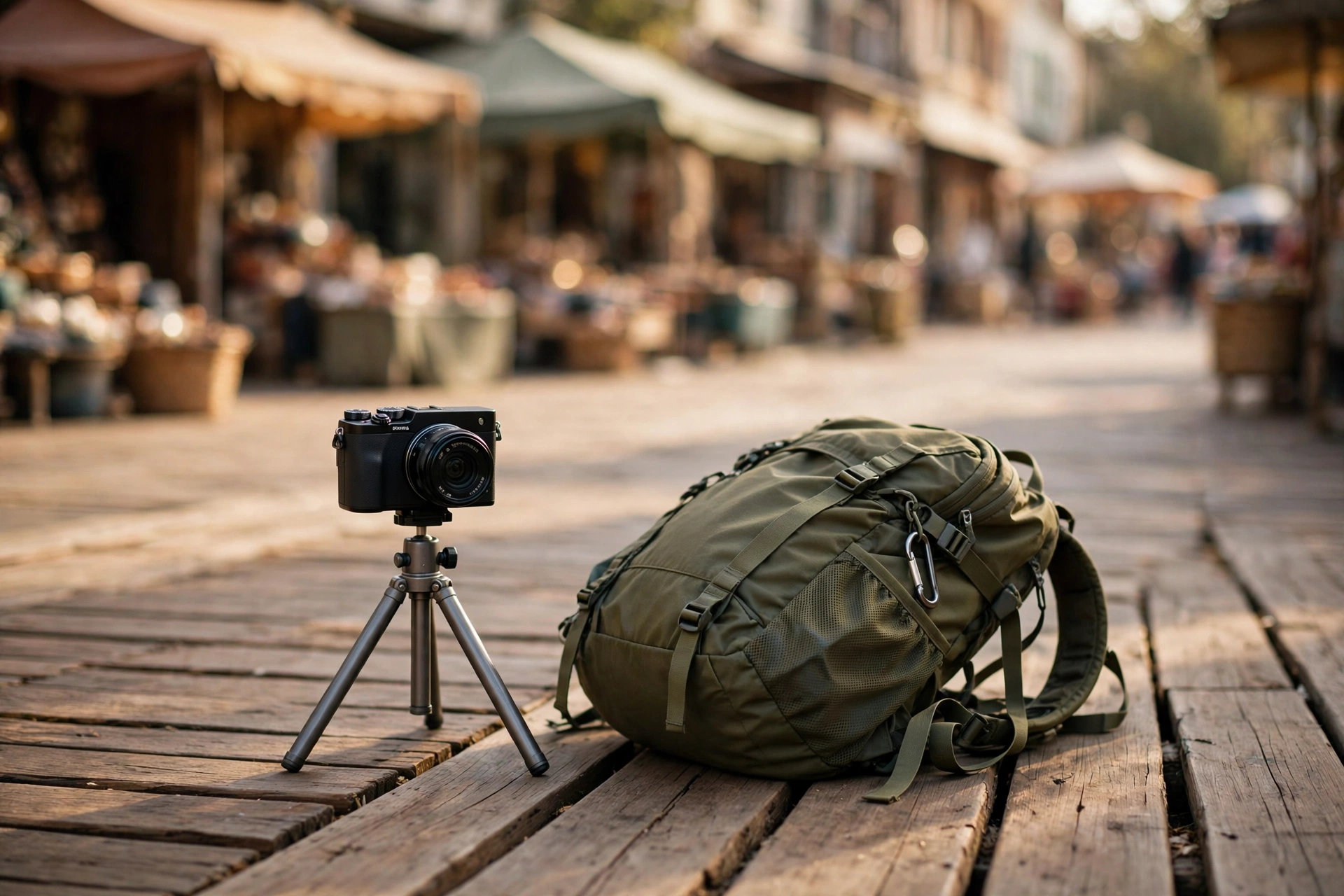
Each travel-day episode should stand alone and still belong to the trip. A stranger who finds episode three should enjoy it without episode one, and should still want episode four. The way to do both is to open each episode with its own small payoff in the first seconds, then carry one longer thread across the trip, such as a budget, a challenge, or a question the trip is trying to answer. End each episode with the next stop, not with a generic sign-off. Viewers follow routes. Give them the next stop.
Behind-the-scenes: the work behind the vlog
Behind-the-scenes is the series most vloggers underuse, because it feels less glamorous than the finished vlog. It is also the series that builds trust fastest, because it shows the work a viewer never sees: setting up a shot, fixing bad audio, cutting a scene that did not work, packing for a shoot, or learning a new skill on camera. A behind-the-scenes clip answers the question viewers of a vlog always have, which is how the thing they just watched was made.
Keep behind-the-scenes honest and specific. “How I light a face in a dark room with one window” teaches something. “A day of editing” teaches nothing, because it shows no decision. Film the mistake and the fix together. A clip that only shows a perfect setup feels like an advert. A clip that shows the first setup failing, then the change that fixed it, feels like a lesson, and lessons get saved and shared. Saves matter here: a viewer who saves a behind-the-scenes clip is saying they want to use it later, which is a stronger signal than a passing like.
Three rules keep any series alive. First, keep the look consistent: the same opening line pattern, the same caption style, the same kind of first frame, so a viewer recognises the series in a scrolling feed before reading a word. Second, expect the middle dip. Episode one often does well because it is new. Episodes two and three can dip while TikTok and viewers learn what the series is. Quitting at episode three is the most common way a good series dies. Judge a series after five episodes, not after two. Third, use comment replies as episodes. When a comment asks a real question about the series, answer it as the next clip, with the comment on screen. That turns the audience into the planning team, and it gives the next episode a built-in viewer: the person who asked.
How to cut a long vlog into TikTok-native clips
A TikTok-native clip is not a long vlog made smaller. It is one moment from the vlog, re-cut so the hook lands in the first seconds, the subject fills a vertical frame, and a viewer with the sound off can still follow it. Cutting this way is what turns one filming day into a week of TikTok content without filming a second vlog.
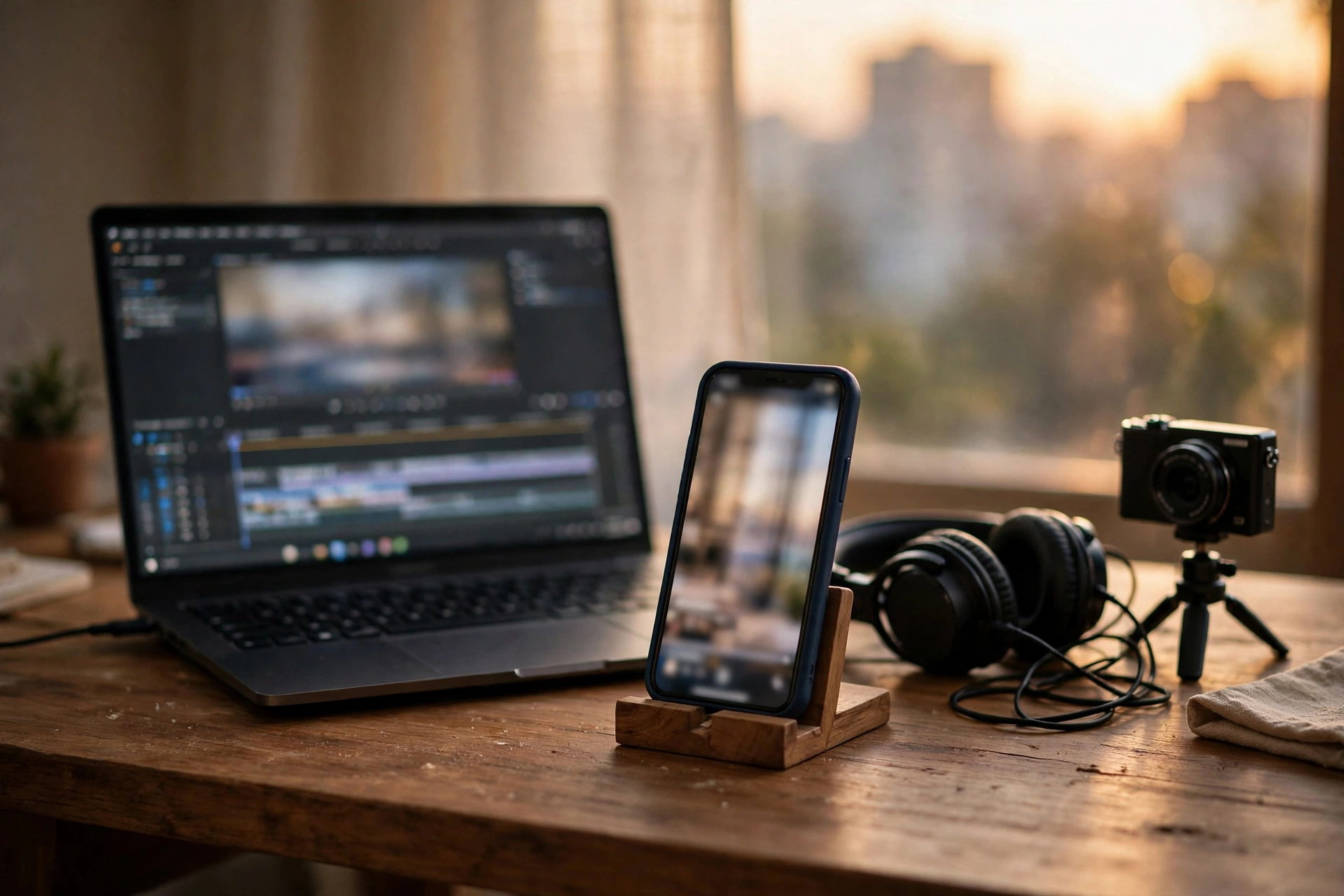
Start from the long vlog, not from a blank idea list. Watch the finished vlog once with a pen in hand and mark every moment that already has a hook: a surprising result, a mistake, a decision, a before and after, a question answered, a place revealed. A ten minute vlog usually holds three to five such moments. Each one is a clip. Moments that only make sense inside the full story stay in the full vlog. That filter is the whole method: a clip must work for a stranger who has never seen the vlog, or it is not a clip yet.
Re-cut each moment in five steps. First, lead with the payoff or the problem, not with the setup. Move the strongest shot or the sharpest line to the very start, even if it sat in the middle of the long vlog. A viewer decides in the first seconds whether to stay, and a slow opening hands that decision to the scroll. Second, reframe for vertical. Do not just crop the middle of a wide shot and hope the subject survives. Reframe shot by shot, keeping faces and hands inside the frame, and repositioning the crop when the subject moves. If a shot cannot survive a vertical reframe, cut it and use a different moment. Third, make the clip caption-led. Put the topic in on-screen text in the first frame, in words a viewer would type as a search, and keep captions short, large, and clear of the edges where TikTok puts its buttons and captions. A large share of viewers start with the sound off, and they decide whether to turn it on from what they can read. Fourth, cut the dead air. Remove pauses, repeated explanations, and any line the picture already shows. A clip that says in 20 seconds what the long vlog says in two minutes is not rushed. It is edited. Fifth, export clean for TikTok. Export from your editor or from a clean master, not by saving a video out of another app with its watermark on it. A watermark from another platform tells TikTok the clip was made for somewhere else, and it tells viewers the same thing.
For the wider repurposing habit this method sits inside, including how one vlog becomes several formats without repeating the same clip everywhere, see our guide to repurposing video content. And for the hook craft itself, including how to hold viewers past the opening seconds, see our guide to hooks and retention editing.
| Long vlog moment | TikTok-native version | What changes in the cut |
|---|---|---|
| A slow morning that sets up a travel day | The one decision that shaped the day | Open on the decision, cut the routine that led to it |
| A five minute walk through a market | The best find, the price, and the mistake to avoid | One stall, one payoff, captions carrying the facts |
| A long explanation of a filming setup | The before shot, the one change, the after shot | Show the change, do not describe it for a minute first |
| A full day of filming, edited as one story | Three separate moments, posted on different days | Each clip stands alone, each points to the full vlog |
The vlog-topic search research workflow
Search research for a vlog account is a 30 minute weekly habit, not a one-off keyword hunt. You collect the exact phrases viewers type into TikTok, check which ones have interest but thin answers, and turn the best ones into vlog topics before you film, so the clip is built around a real question from the start.
Work through five steps, in order, once a week. Step one: open TikTok search and type your broad vlog topic, such as travel vlogging, food vlogging, or filming in a city. Read the suggested searches that appear before you press enter. Those suggestions are TikTok showing you what people actually type, and they are more useful than any guess about wording. Write down the suggestions that fit your vlog promise, in the exact words TikTok shows them, not in your own polished version. Step two: open the top clips for three or four of those phrases and read the comments first, not the clips. Comments are where viewers ask the follow-up questions the clip did not answer. A question asked three times in three different comment sections is a topic with proven demand. Step three: check TikTok’s own Creator Search Insights, which you reach through the search field. Look for the content gap view, which surfaces topics with search interest and comparatively little content answering them. Treat a gap as a lead, not a promise: it says people are asking and few creators have answered well, not that your clip will succeed. Step four: sort what you found into three piles. Answer now: a question you can answer from footage you already have. Film next: a question that needs a new shoot, planned into your next filming day. Ignore: a question outside your vlog promise, however popular it looks. Two more sources feed the same sort: your own clip analytics, which show which topics earned saves, shares, and profile visits, and questions viewers ask you directly, which are series episodes with a built-in audience. Ignore a viral clip that does not fit the series, and requests to cover unrelated topics. That third pile is the discipline. Chasing a popular question outside your promise confuses the account and wastes a filming day. Step five: write each kept topic as a full question, in the viewer’s words, and build the clip around it. The question becomes the spoken opening line, the on-screen text in the first frame, and the first words of the caption. TikTok reads all three layers, spoken audio, on-screen text, and caption, so saying the same topic three ways is not repetition. It is how the clip becomes findable.
The table below lists every source those five steps draw on.
| Research source | What to take from it | What to ignore |
|---|---|---|
| Search suggestions in the TikTok search bar | Exact phrases viewers type, in their words | Your own polished wording for the same idea |
| Comments on top clips for a phrase | Follow-up questions the clip left unanswered | Arguments and jokes that lead nowhere |
| Creator Search Insights, content gap view | Topics with interest and thin answers | Any gap outside your vlog promise |
| Your own clip analytics | Which topics earned saves, shares, and profile visits | One viral clip that does not fit the series |
| Questions viewers ask you directly | Series episodes with a built-in audience | Requests to cover unrelated topics |
For the search side of your longer videos, including how titles and descriptions match what viewers type, see our YouTube SEO basics for vloggers.
The TikTok-to-YouTube conversion funnel
The funnel is simple, and that is why it works: a TikTok clip gives a complete small payoff, then points to a full vlog that answers the bigger question the clip raised. A clip that only teases, with no payoff of its own, does not convert. It just annoys the viewer it was meant to move.
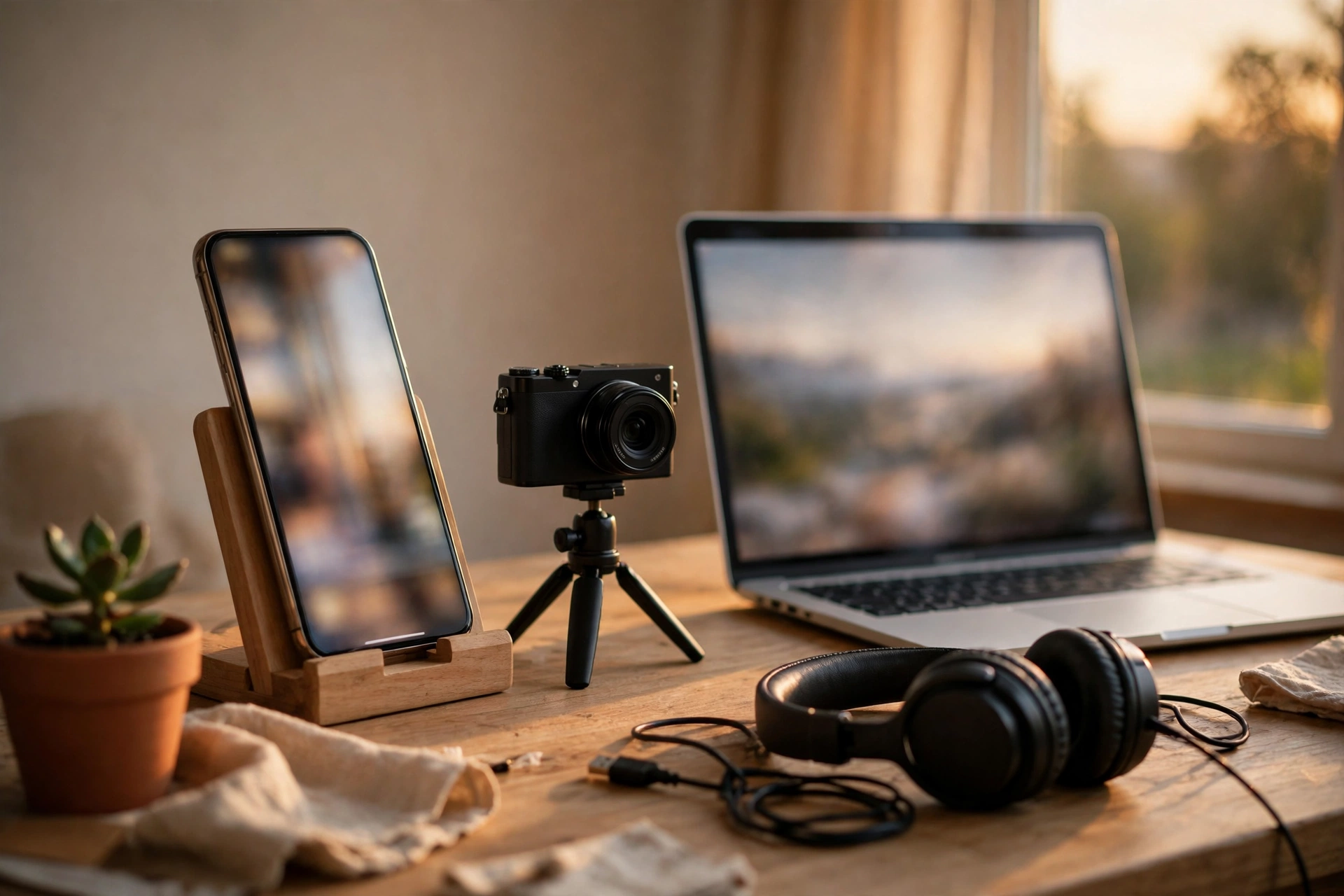
Think of the funnel in four stages, and give each stage its own job. Stage one is discovery: a stranger sees a clip on the For You feed or in search, watches it through, and understands your vlog promise in one clip. Stage two is return: the same viewer sees a second and third clip from the same series, and the account starts to feel familiar. Stage three is profile: the viewer visits your profile, watches a pinned clip or a playlist episode, and follows. Stage four is the move: the viewer clicks through to a full vlog on YouTube, watches it, and subscribes there. Most vlog accounts only plan stage one, then wonder why stage four never happens. The funnel fails at the stage you did not design for, so design all four.
The bridge between TikTok and YouTube is a specific clip, not a generic instruction to check a link. Build three kinds of bridge clips. First, the payoff plus the bigger question: a clip that fully answers a small question, then names the larger question the full vlog answers. “This is the one street that made the trip worth it. The full day, including the place that nearly ruined it, is the new vlog.” Second, the part two that lives somewhere else: a series episode that ends at a natural break, with the continuation in the full vlog. Use this sparingly, and only when the TikTok clip is already satisfying on its own. A clip that stops mid-sentence to force a click feels like a trap, and viewers treat it like one. Third, the comment answer: when viewers ask for the full story under a clip, answer with a clip that shows a moment from the full vlog and names it plainly. That clip converts the exact viewers who already asked.
Make the click easy and the destination obvious. Keep your channel name the same, or as close as TikTok and YouTube allow, so a viewer who searches for you finds you instead of a similar name. Put one clear link in your bio once your account can carry one, and point it at the full vlog or the series playlist that matches the clips you are posting that week, not at a generic home page where a new viewer has to hunt. In the clip itself, say where the full vlog lives in plain words and show it in the caption. “Full Lisbon travel day on YouTube” beats a vague pointer, because it names the vlog itself, not just the platform, and tells the viewer what they will get and where it is. On YouTube, return the favour: mention the TikTok series in the full vlog, and pin a comment that points new viewers back to the short clips. A funnel that only runs one way leaks viewers at both ends.
Measure the funnel at each stage, not just at the top. Count profile visits per clip, follows per clip, and, on the YouTube side, how many new viewers arrive in the days after a TikTok bridge clip goes out. If clips get views but no profile visits, the clips are entertaining strangers without promising a next step. Add the series thread and the pinned clips. If profile visits grow but follows do not, the profile is not answering the promise fast enough. Tighten the bio and the pinned clips. If follows grow but YouTube clicks do not, the bridge is too vague. Name the full vlog, show a moment from it, and point to one link. If YouTube clicks grow but viewers leave the full vlog fast, the full vlog is not delivering what the clip promised. That is a vlog structure problem, and our guide to structuring a vlog covers the fix. Each diagnosis points at a different fix, which is why counting only views tells you nothing useful.
For starting the YouTube side of this funnel from scratch, including channel setup and first videos, see our guide to starting a YouTube channel.
A weekly system one filming day can feed
One filming day should produce one full vlog and a week of TikTok clips. The way to do that without burning out is to plan the TikTok moments before you film, cut them in one batch session, and post them on a rhythm you can hold for months.

Plan before filming, not after. When you plan a vlog, start from the questions your research day produced, then list three to five TikTok moments you will film deliberately: the opening decision, the best location, the mistake or surprise, the payoff, and one behind-the-scenes setup. Film each one with a vertical version in mind, even if your main camera shoots wide: hold the shot a beat longer, keep the subject centred, and record a clean line you can use as the clip opening. A moment filmed with TikTok in mind cuts in minutes. A moment discovered by accident in the edit can take an hour to rescue, and often cannot be rescued at all.
| Day | Job | Output |
|---|---|---|
| Research day | Run the 30 minute search workflow and pick the topics for the next vlog | Three to five questions, in viewers’ words, feeding the filming-day moment list |
| Filming day | Film the vlog plus the planned TikTok moments | One vlog and three to five marked moments |
| Editing session | Cut the full vlog first, then the TikTok clips from it | One vlog plus three to five native clips |
| Posting days | Post clips on a steady rhythm, not all at once | Three to five clips across the week |
| Review day | Check profile visits, follows, saves, and completion, plus YouTube arrivals in the days after each bridge clip | One decision: what to repeat, what to drop |
Stall diagnostics for a vlog account
Diagnose a stall by its shape, not by its feeling. A single dead clip, a whole account going quiet, and a slow decline over weeks are three different problems, and each one has a different fix. Check the shape first, then touch the content.

Start with the two checks TikTok itself provides, before changing anything about how you post. Open Account check in TikTok Studio, which scans your account and recent posts for restrictions and for posts that are not eligible for the For You feed. Then open the analytics for the post that stalled and look for a feed eligibility notice, which TikTok shows there when a post has been kept out of recommendations, with a chance to appeal if you think the decision is wrong. A clean result on both checks moves the diagnosis to retention and reach, which is where most stalls actually live. A flag on either check is the answer: deal with the flagged post, appeal if you have a case, and do not rebuild your content strategy around a problem that was never about content.
Learn the difference between a violation and ineligibility, because creators mix them up and then fix the wrong thing. A violation removes a post and can add a strike. Ineligibility leaves the post up but stops recommending it, with no strike. A post can be ineligible for reasons that have nothing to do with breaking a rule in the obvious sense: a caption that promises something the clip does not deliver, a visible watermark from another app, or a commercial mention without the proper disclosure setting. If a post stalls and its analytics carry an ineligibility note, read the reason before posting again. Posting five more clips in the same style while the reason sits unread is how a single flagged pattern becomes an account pattern.
| What you see | Most likely cause | What to do first |
|---|---|---|
| One clip stalls early, the rest are normal | That clip lost its first test audience on retention | Leave it up, learn from its opening, and post the next clip stronger |
| A new clip sits at no views at all | Upload review, or an account that cannot reach the feed | Wait, check Account check, and do not delete and repost at once |
| Everything since a certain date is quiet | A post near that date became ineligible, or an older post was re-reviewed | Run Account check, then open the analytics of the post at the boundary |
| Views fall slowly over weeks, no clean break | Falling retention across recent clips | Compare completion on the last ten clips with the ten before them |
| Views arrive but follows do not | No series thread, or a profile that does not promise a next step | Tighten the bio, pin series clips, and end clips with the next episode |
| Follows grow but YouTube clicks do not | The bridge to the full vlog is vague or missing | Name the full vlog, show a moment from it, and point to one link |
For a retention stall, the fix lives in the first seconds and in length. Open your analytics for the stalled clips and find where viewers leave. If they leave in the first seconds, the hook is the problem: the clip opened on setup instead of payoff, or the first frame did not say what the clip was about. If they leave halfway, the clip is longer than its idea: cut the middle, not the ending. If completion is healthy but views are still low, the topic may be too narrow, or the clip may be competing with your own recent clips on the same topic. Space similar clips apart, and give each one a distinct search phrase. Do not fix a retention stall by posting more of the same. One strong clip that viewers finish does more for an account than five clips that stall early, because every early exit is a data point TikTok remembers about the account.
Mistakes that stall vlog accounts
Most vlog accounts do not stall because TikTok is against them. They stall because of a handful of repeatable mistakes, and every one of them is fixable without buying anything, joining anything, or starting over.
The first mistake is posting a mixed feed. A travel clip, a cooking clip, a joke, and a gear review in one week tell TikTok four different things about the account, and they tell a profile visitor nothing. The fix is the vlog promise from the first section, applied as a filter. If a clip does not fit the promise, it waits for a different account or a different season. The second mistake is shrinking the long vlog instead of re-cutting it. A wide shot cropped to vertical with tiny captions and a slow opening is not a TikTok clip. It is a long vlog seen through a keyhole, and viewers leave it for exactly that reason. The third mistake is chasing every trend. A trend can give a clip a short spike, but a trend that has nothing to do with your vlog brings viewers who will not watch the next episode, and those viewers dilute the account’s signal. Use a trend only when it can carry your vlog topic honestly, such as a sound that fits a travel moment you actually filmed.
The fourth mistake is buying the appearance of growth. Bought followers, engagement groups that trade likes and comments, and follow-for-follow deals all produce the same result: a follower base that does not watch, which drags down the rates TikTok actually uses to judge a clip. TikTok treats coordinated inauthentic engagement as a policy matter, not as a shortcut, and the clean-up costs more than the shortcut ever gained. The fifth mistake is a misleading hook. A caption or opening that promises something the clip never delivers may hold a viewer for a few seconds, but it costs the save, the share, the follow, and sometimes the feed eligibility itself. Promise only what the clip shows, and let the next episode carry the rest.
The sixth mistake is ignoring the viewer who is already talking to you. Comments are not a chore at the end of posting. They are the cheapest research a vlog account has, and replying to them with video answers is the fastest way to turn a commenter into a regular viewer. The seventh mistake is filming for TikTok and forgetting the vlog. If every filming day becomes a hunt for short clips, the full vlog gets thinner, and the funnel has nowhere to send anyone. Protect the long vlog first. TikTok clips are cut from it, not instead of it. For filming in public, including the confidence and permission habits that make street and travel filming sustainable, see our guide to vlogging in public.
If only one habit survives this guide, make it this one: every week, film one real vlog moment well, cut it for a phone screen with a hook first and captions a viewer can read with the sound off, post it as part of a series a stranger can follow, and point the viewers who want more to the full vlog. Repeat that for three months, review what the numbers actually say each week, and change one thing at a time. That is how a vlog account grows on TikTok, and it is also how it keeps growing after the first good month.
TikTok questions vloggers actually ask
Quick answers to the questions vloggers ask most about growing a vlog account on TikTok, including the ones general growth guides answer for other kinds of creators.
How do I grow on TikTok as a vlogger?
Build the account around one vlog promise and one series at a time, cut clips from your longer vlogs so the hook lands first and the captions work with the sound off, and answer real search questions in your niche. Post on a rhythm you can hold for months, review profile visits and follows each week, and point viewers who want more to a full vlog. Growth follows the system, not a single viral clip.
Do I need to post on TikTok every day to grow?
No. Three to five strong clips a week is a realistic rhythm for a vlogger who also films and edits longer videos. Daily posting only helps if every clip is strong and batched in advance. Five weak clips a week teach TikTok that viewers leave your clips early, which hurts more than a quieter week of strong clips.
Why is my TikTok video stuck at very few views?
Most often, the clip lost its first small test audience on retention: viewers left in the first seconds, or did not finish. Check where viewers leave in analytics, then fix the opening and the length on the next clip. Before changing your strategy, run Account check and check the post analytics for a feed eligibility notice, because a flagged post needs a different fix than a weak hook.
Should I delete TikTok videos that perform badly?
Usually no. A low performing clip still tells TikTok what your account is about, and it gives you a record of what did not work. Delete only for a clear reason, such as a factual error or a privacy problem. For a normal stall, keep the clip, learn from its opening, and make the next clip stronger.
Can I post the same clip on TikTok, Shorts, and Reels?
Yes, if each version is exported clean for that platform, with no watermark from another app, and with its caption and opening adapted to that platform. Do not save a video out of one app and re-upload it with that app’s watermark on it. Keep one clean master and export a native version for each platform from it.
How long should a TikTok clip from a vlog be?
As long as the moment needs, and no longer. A single tip or payoff can work in under 20 seconds. A travel-day moment or a behind-the-scenes fix can run longer if every beat moves the story forward. Judge by completion, not by length: a short clip viewers abandon early is worse than a longer clip viewers finish.
Do hashtags still matter for TikTok growth?
Hashtags help TikTok categorise a clip, but they do not carry growth on their own. A few relevant hashtags are enough. What matters more is the topic itself: the spoken opening, the on-screen text in the first frame, and the first words of the caption, all saying the same thing in the words a viewer would type.
How do I turn TikTok viewers into YouTube subscribers?
Give each clip a complete small payoff, then point to a specific full vlog that answers the bigger question the clip raised. Keep your channel name consistent, point one bio link at the matching vlog or playlist, and name the full vlog in the clip and the caption. Measure profile visits and YouTube arrivals, not just TikTok views, to see whether the bridge is working.
Do I have to show my face to grow a vlog account on TikTok?
No, but the account still needs a recognisable presence. A voice, a consistent style, a place, or a craft can carry a vlog account without a face on camera in every clip. What does not work is anonymity with no thread: clips with no voice, no place, and no series promise give a viewer nothing to follow. Pick the presence you can sustain, and keep it consistent.
Is TikTok search worth the effort for a vlogger?
Yes, because search clips keep being found after feed clips fade. A clip that answers a typed question in your niche can collect views for weeks from viewers who were already looking for that answer. Use the weekly research workflow in this guide, build clips around real questions, and check search views over weeks rather than judging a clip on its first day.
This guide is research-based: we compared published guidance and creator resources.