
Last updated: October 2026
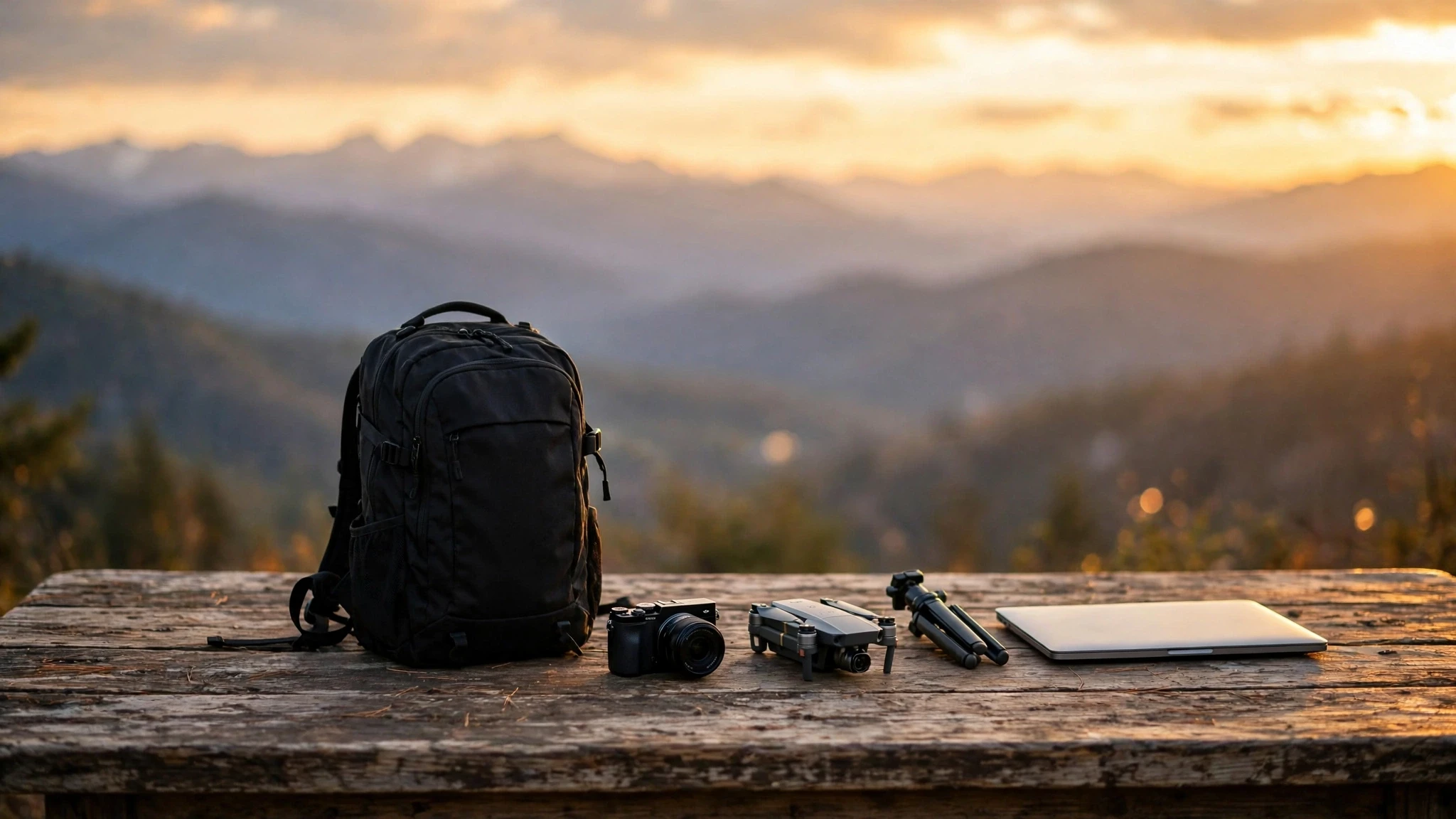
The best camera backpack for creators is the one that swallows your whole filming kit, not just your camera. So instead of judging these six backpacks on litres and marketing photos, we judged every one of them against a single, complete vlogger loadout: a mirrorless camera and lenses, a laptop, a folding drone, a wireless mic kit, a travel tripod and the chargers, batteries and drives that keep a channel running.
That one test changes the rankings. Some famous names turn out to be camera bags with laptop sleeves bolted on. Others are built like luggage for a full production day. Below you will find which is which, what each bag really fits based on the dimensions its maker publishes, what the bundle prices hide, and which current generation to buy, because two of these product lines are still being sold in older versions that look almost identical.
As an Amazon Associate I earn from qualifying purchases. When you buy through links on this page, we may earn a commission at no extra cost to you.
Quick picks
- Peak Design Everyday Backpack 30L for the best all round creator carry, with the fastest top access here and dividers that fold to fit odd shaped vlogging gear.
- WANDRD PRVKE 31L V4, Photography Bundle for travel and bad weather, a weather resistant roll top pack whose bundle includes the camera cube you actually need.
- PGYTECH OneMo 2 35L for the biggest kit, the only pick whose front compartment is shaped to swallow a mirrorless gimbal whole, with a shoulder bag and rain cover in the box.
- WANDRD PRVKE 21L V4, Photography Bundle for a small everyday kit, the same weatherproof thinking as its big brother in a personal item friendly size.
- Lowepro ProTactic BP 450 AW III for long professional shoot days, with four access points, a proper waist belt and an all weather cover included.
- Ulanzi BP10 Hardshell Camera Backpack 35L for budget hardshell protection, a rigid front that shrugs off knocks and a 25L body that expands to 35L.
On this page
- Quick picks
- The vlogger loadout every pick was judged against
- The 6 backpacks compared
- The 6 best camera backpacks for creators, pick by pick
- How each pick handles the full loadout
- Filming solo: getting the camera out with one hand
- Buy the current generation: AW III, PRVKE V4 and the Peak Design code
- What is actually in the box: bundles, cubes and rain covers
- Flying with these bags: carry-on sizes in plain terms
- How to choose the right size and style
- Frequently asked questions
- The bottom line
The vlogger loadout every pick was judged against
One fixed kit, checked against every bag: a mirrorless camera with a 24-70mm zoom fitted, two extra lenses, a 16 inch laptop and charger, a folding drone, a wireless mic kit in its charging case, a travel tripod, plus spare batteries, an SSD and cables. A bag only earned its place if the makers own published dimensions say that kit fits with room to work.
Most backpack roundups test a camera and call it done. Vloggers do not travel that light. A typical shooting day for a creator now means the camera body, a standard zoom, a fast wide prime for talking to camera, and very often the drone work in our guide to the best drones for vlogging. Add the laptop you edit on, the wireless microphone kit that lives in its charging case, and a tripod, and you have a kit that defeats most fashion first camera bags.
Here is the exact loadout used throughout this guide. Camera: a mirrorless body with a 24-70mm zoom attached. Lenses: a fast wide prime and a compact telephoto. Computer: a 16 inch laptop and its charger. Air: a folding drone of the Mini class, in its case, with spare batteries. Audio: a two transmitter wireless mic kit in its charging case, plus a small recorder. Support: a travel tripod, folded. Power and data: four camera batteries, a power bank, an SSD, card reader and cables. For the two biggest bags we also ask whether a mirrorless gimbal joins the loadout, using the fit notes in our gimbal guide.
Every fit judgement in this article is made against the capacity, compartment and dimension figures each manufacturer publishes for its own bag. Where a maker gives a maximum gimbal size or a laptop limit, we quote it. Where a maker stays silent, we say so rather than guessing, and the cards below mark those gaps clearly.
The 6 backpacks compared
The short version: the Peak Design and the two WANDRD packs are the commuter friendly shapes, the PGYTECH and Lowepro are the full production haulers, and the Ulanzi is the hard case on a budget. Weights below are the makers own figures, and note how differently each brand counts them.
| Backpack | Capacity | External size | Weight | Laptop | Access | Rain cover | Price |
|---|---|---|---|---|---|---|---|
| Peak Design Everyday Backpack 30L | 22 to 30L | 52 to 62 x 36 x 19.8 cm | 1.76 kg, 2.11 kg with dividers | Up to 15 inch, fits 16 inch MacBook Pro | MagLatch top, dual side | None, weatherproof shell | Check Price |
| WANDRD PRVKE 31L V4 Photography Bundle | 31 to 35L | 47 x 30.5 x 16.5 cm | 1.49 kg, makers listed weight | Up to 16 inch | Side, clamshell, roll top | Not included, sold separately | Check Price |
| PGYTECH OneMo 2 35L | 35L, front expands 7 to 10L | 54 x 33 x 23.5 cm | 2.42 kg with partitions | Up to 16 inch MacBook Pro | Top, side, full rear | Included | Check Price |
| WANDRD PRVKE 21L V4 Photography Bundle | 21 to 25L | 43.2 x 27.9 x 15.9 cm | 1.3 kg, makers listed weight | Up to 16 inch | Side, clamshell, roll top | Not included, sold separately | Check Price |
| Lowepro ProTactic BP 450 AW III | 28L total, 25L device | 51 x 34.5 x 23 cm | 2.95 kg | Up to 16 inch | Dual side, top, full back | AW Cover included | Check Price |
| Ulanzi BP10 Hardshell 35L | 25L, expands to 35L | 47 x 32.5 x 21.5 cm | 2.09 kg, 2.65 kg with dividers | Up to 17 inch per Ulanzi | Dual side, full rear | None, hardshell front | Check Price |
Two honest warnings before the cards. First, litres are not standardised: one brands 30L is another brands roomy 25L, which is exactly why this guide leans on published dimensions and stated compartment sizes instead. Second, weights are counted differently everywhere, and the table preserves each makers own basis rather than pretending they match. Peak Design and Ulanzi state weights with and without their dividers, PGYTECH includes its partitions and lists the shoulder bag separately, and WANDRD publishes one figure per bag without saying whether the cube is inside.
The 6 best camera backpacks for creators, pick by pick
Start with the Peak Design if you want one bag for almost everything. Choose the WANDRD 31L for travel, the PGYTECH for a gimbal based kit, the WANDRD 21L for light daily carry, the Lowepro for heavy professional days, and the Ulanzi when budget and hard protection matter most.
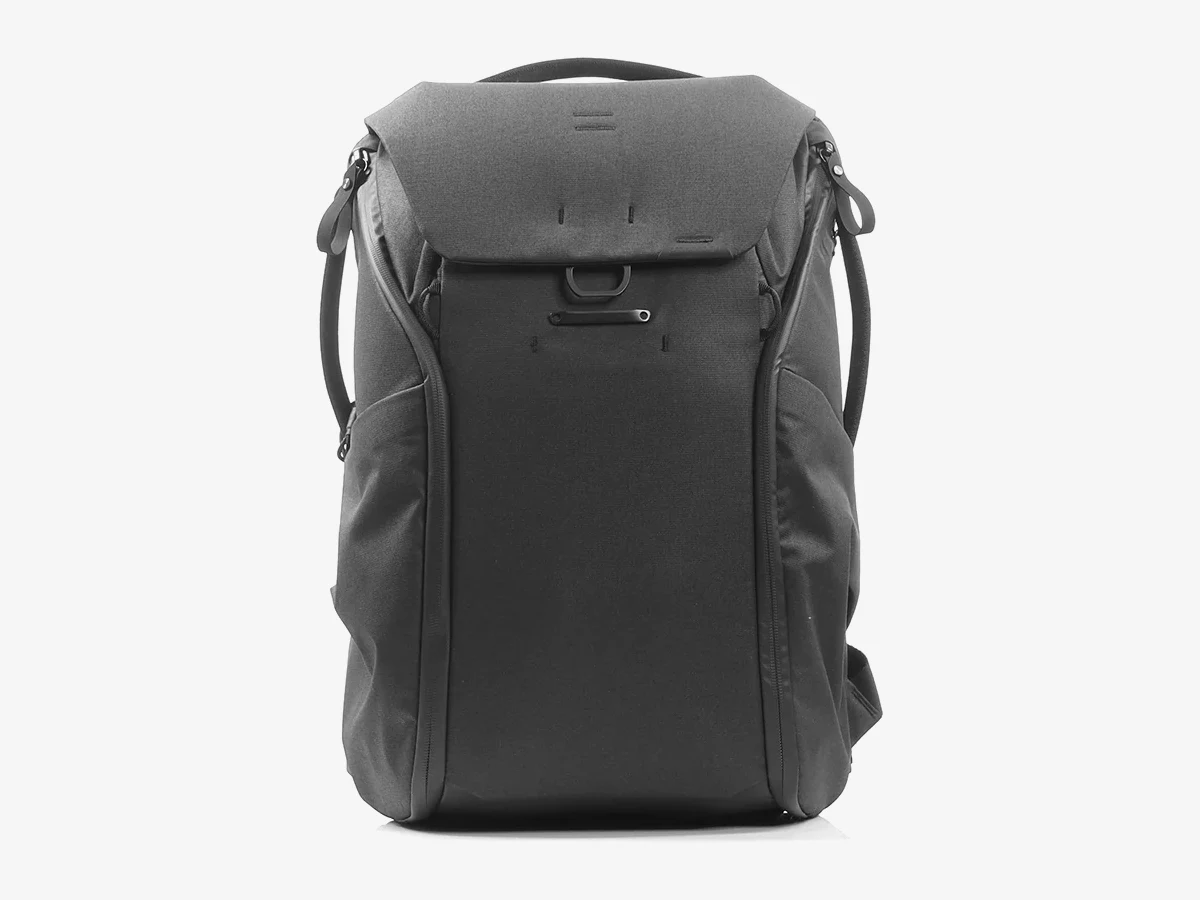
Photo: Peak Design
Best overall
1. Peak Design Everyday Backpack 30L
The Everyday Backpack 30L is the easiest bag here to live with every day: the fastest top access in the group, dividers that fold around awkward vlogging gear, and a shell that shrugs off rain without a cover. It takes the full loadout, as long as the tripod rides in a side pocket and the gimbal stays home.
The MagLatch top is the feature you will use a hundred times a day. It opens one handed, closes on any of four rungs, and those rungs are also the expansion system: 22 litres nipped down for a light day, 30 litres at the top rung for the full loadout. Inside, the three included FlexFold dividers fold and origami themselves around odd shapes, which suits vlogging kits full of mini tripods, mic cases and action cameras far better than rigid cubes do. Dual side zips mean the camera comes out from either shoulder without putting the bag down.
Against the loadout: body and three lenses fit the divider system easily, the drone case sits on a folded divider shelf, and the mic charging case gets its own folded pocket where it will not vanish into the bottom of the bag. The laptop sleeve takes a 15 inch machine, or a 16 inch MacBook Pro by the makers own sizing, with a tablet sleeve behind it. The honest limits are support gear: the tripod goes in an expandable side pocket with a Cord Hook strap, which is secure but external, and there is no gimbal sized compartment, so gimbal shooters should look at the PGYTECH below.
Weather handling is a philosophy rather than an accessory: a recycled 400D nylon canvas shell with weatherproof UltraZips and a waterproof bottom liner, and no rain cover in the box or offered as the answer. For city vlogging in showers that is fine. For hours in real rain, note that the two WANDRD packs and the Lowepro take weather further, in different ways.
Technical features
- MagLatch top access on four rungs, expanding the bag from 22L to 30L
- Dual side access through weatherproof UltraZips
- Three FlexFold dividers included, folding to fit irregular gear
- Laptop sleeve for up to a 15 inch laptop or 16 inch MacBook Pro, max 40.6 x 27.4 x 3.8 cm, plus a 12.9 inch tablet sleeve
- 100 percent recycled 400D weatherproof nylon canvas shell, 900D waterproof bottom liner
- Luggage pass through for rolling suitcase handles
- Four Cord Hook external carry straps included
- Expandable side pockets carry a tripod or water bottle
- Sternum strap included, hip belt sold separately
- No rain cover: weather protection comes from the shell and zips
Pros
- Fastest top access here, genuinely one handed
- FlexFold dividers adapt to mic cases, drones and mini tripods
- Expands and compresses with the days kit, 22 to 30L
- Both weights published honestly, with and without dividers
Cons
- No rain cover and no hip belt in the box
- Tripod carry is external, in a side pocket
- At the top MagLatch rung it outgrows many carry-on sizers
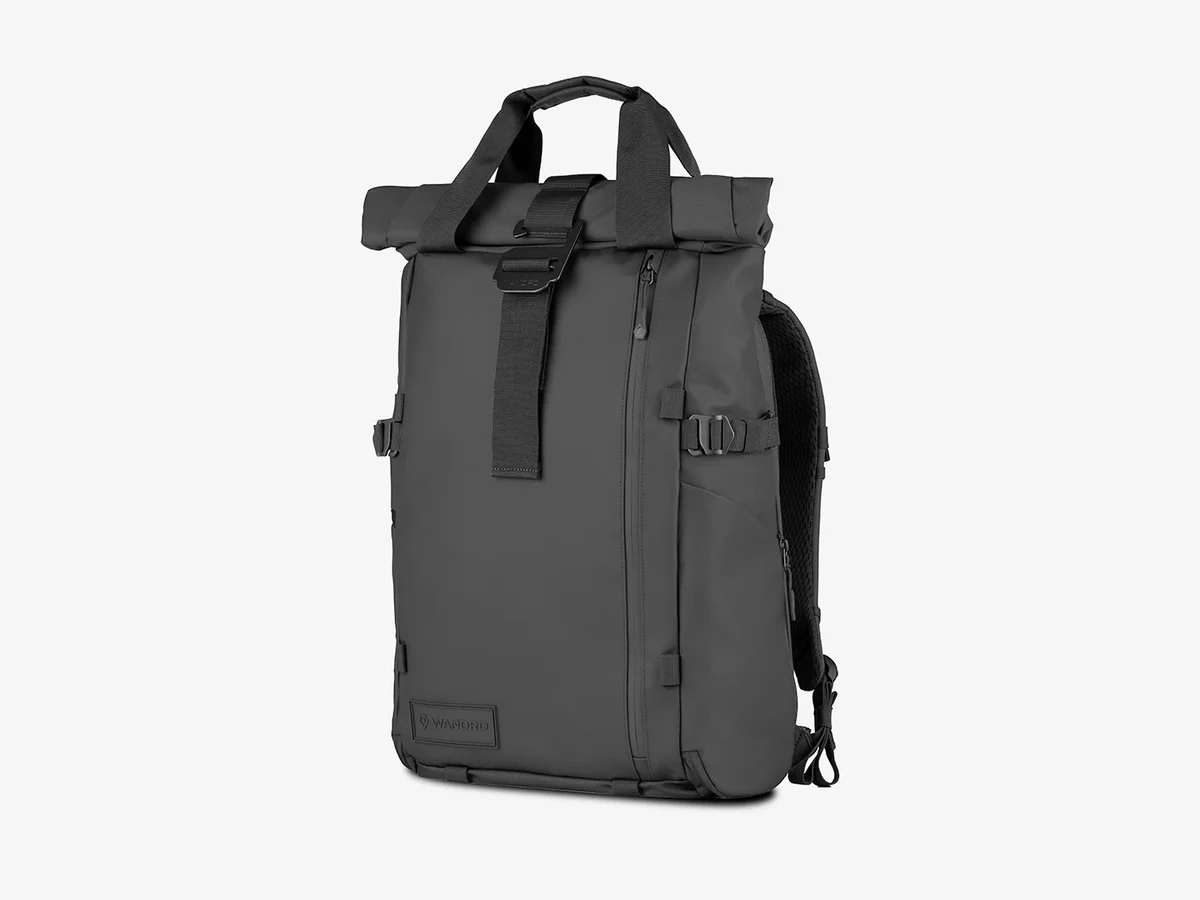
Photo: WANDRD
Best travel and bad weather pack
2. WANDRD PRVKE 31L V4 Photography Bundle
The PRVKE 31L V4 is the travel pick: a weather resistant roll top backpack that WANDRD itself rates as carry-on sized, with quick side access for the camera, a clamshell opening for packing, and a Photography Bundle that includes the Essential Plus Camera Cube and accessory straps. Buy the bundle, not the bare bag.
The V4 layout gives you three ways in. The side opening is a quick draw slot sized for a camera body, the back panel opens clamshell style so the bag packs like a suitcase, and the roll top swallows overflow or a jacket, stretching the bag from 31 to 35 litres. A newer detail on the V4 is a zippered opening into the roll top section, so the top compartment is no longer a dark tube you fish around in. Materials are the weather story: P900D tarpaulin and N840D ballistic nylon with weather resistant YKK zips. That is serious weather resistance, but WANDRD is clear it is not waterproof, and the Rain Fly is a separate purchase.
Against the loadout: the Essential Plus cube takes the body, zoom and both spare lenses, the drone case rides in the roll top section, and the laptop sleeve is rated to 16 inches. The wireless mic case fits the cube or the top section neatly, and the expandable side pocket plus straps handle the tripod. Height is the quiet win here: at 47 cm tall it is the shortest of the big bags, which is why it behaves so well in overhead bins.
The bundle question matters with this bag. Bag Only is a backpack with no camera protection inside at all, and WANDRD says so itself. The Photography Bundle adds the cube and the accessory straps, and it is the version this guide recommends and links.
Technical features
- Photography Bundle includes the Essential Plus Camera Cube and Accessory Straps
- Roll top expansion from 31L to 35L, plus a zippered roll top opening on the V4
- Quick draw side access, opening 25.4 x 13.9 cm, and a full clamshell opening
- Laptop sleeve 34.3 x 26.7 x 2.5 cm, rated up to a 16 inch laptop
- P900D tarpaulin and N840D ballistic nylon with YKK weather resistant zippers
- Weather resistant, not waterproof: Rain Fly sold separately, no cover included
- Hidden passport pocket and integrated AirTag sleeve
- Luggage pass through and magnetic tote handles
- Expandable water bottle and tripod pocket
- WANDRD lists the 21L, 31L and 41L PRVKE as within carry-on size
Pros
- Three access routes, all genuinely useful
- Shortest tall bag here, very overhead bin friendly
- Bundle includes the cube and straps the bag needs
- Tough, weather resistant shell materials
Cons
- Rain Fly costs extra, no cover in the box
- Makers listed weight does not state whether the cube is counted
- Bag Only version has no camera protection inside
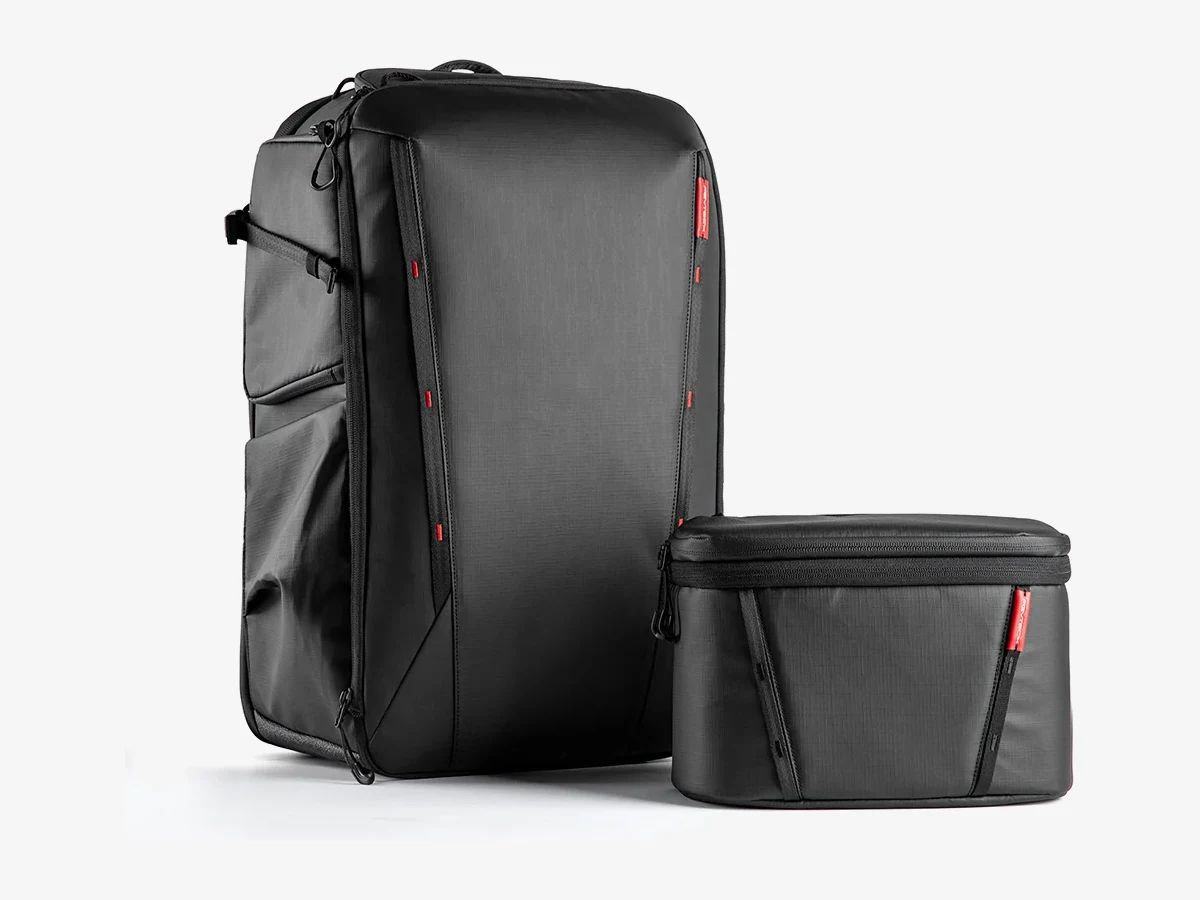
Photo: PGYTECH
Best big kit hauler
3. PGYTECH OneMo 2 35L
The OneMo 2 35L is the hauler: the only bag here whose front compartment is built to take a mirrorless gimbal, with a rear opening that lays flat for packing, an included shoulder bag that doubles as a drone bag, and a rain cover included. If your vlogging kit includes a gimbal, this is the shortlist of one.
PGYTECH publishes the numbers gimbal users actually need. The front compartment fits stabilisers smaller than 490 x 290 x 100 mm, and the maker names the class itself: Ronin SC and RS models and the Crane 3 series. That compartment also expands, by 7 litres in a V shape for a gimbal or 10 litres in an H shape for flatter loads. The main compartment is quoted with real kits: three cameras and six lenses including a 200-600mm, or two cameras, five lenses and a Mavic 3. Our loadout is smaller than any of those examples.
The system thinking continues in the box. The included shoulder bag is a real second bag, rated by the maker to carry a Mavic 3 combo on its own, and it nests inside the backpack for travel. The rain cover is included and lives in a zipped pocket in the front compartment, so it is there on the day the weather turns. Splash proof coatings and splash proof YKK zips handle the rest. Access is a top opening, one right side quick access, and the wide rear opening, which is the packing layout we would choose for a bag this size.
The costs are size and weight. At 54 cm tall and 23.5 cm deep it is the biggest footprint here, and the full system with partitions and shoulder bag is 2.92 kg before a single camera goes in. PGYTECH says it fits an overhead bin, and at these dimensions most full size airline sizers agree, but it is the pick most likely to be gate checked on smaller regional aircraft.
Technical features
- 35L main capacity, front compartment expands by 7L in V shape or 10L in H shape
- Front compartment fits gimbals smaller than 490 x 290 x 100 mm, Ronin SC and RS and Crane 3 class per the maker
- One top access, one right side quick access, and a wide rear opening that lays flat
- Shoulder bag included, expands to hold a Mavic 3 combo, rated to 3.5 kg
- Rain cover included, stored in the front compartments zipped pocket
- Splash proof PU coated material with splash proof YKK zippers
- Laptop compartment for a 16 inch MacBook Pro, maximum laptop size 45 x 31 x 3 cm, plus a 12.9 inch iPad slot
- Weight 1.96 kg without partitions, 2.42 kg with, plus 0.43 to 0.5 kg for the shoulder bag
- Maximum load 18 kg for the backpack
- Luggage pass through, and the maker confirms overhead bin use
Pros
- Only pick with a true internal gimbal compartment
- Rain cover and a useful shoulder bag included
- Maker publishes real kit examples and gimbal dimensions
- Rear opening lays flat, packs like a suitcase
Cons
- Heaviest full system here at 2.92 kg empty
- Biggest footprint: tightest fit in small aircraft bins
- One side access only, on the right
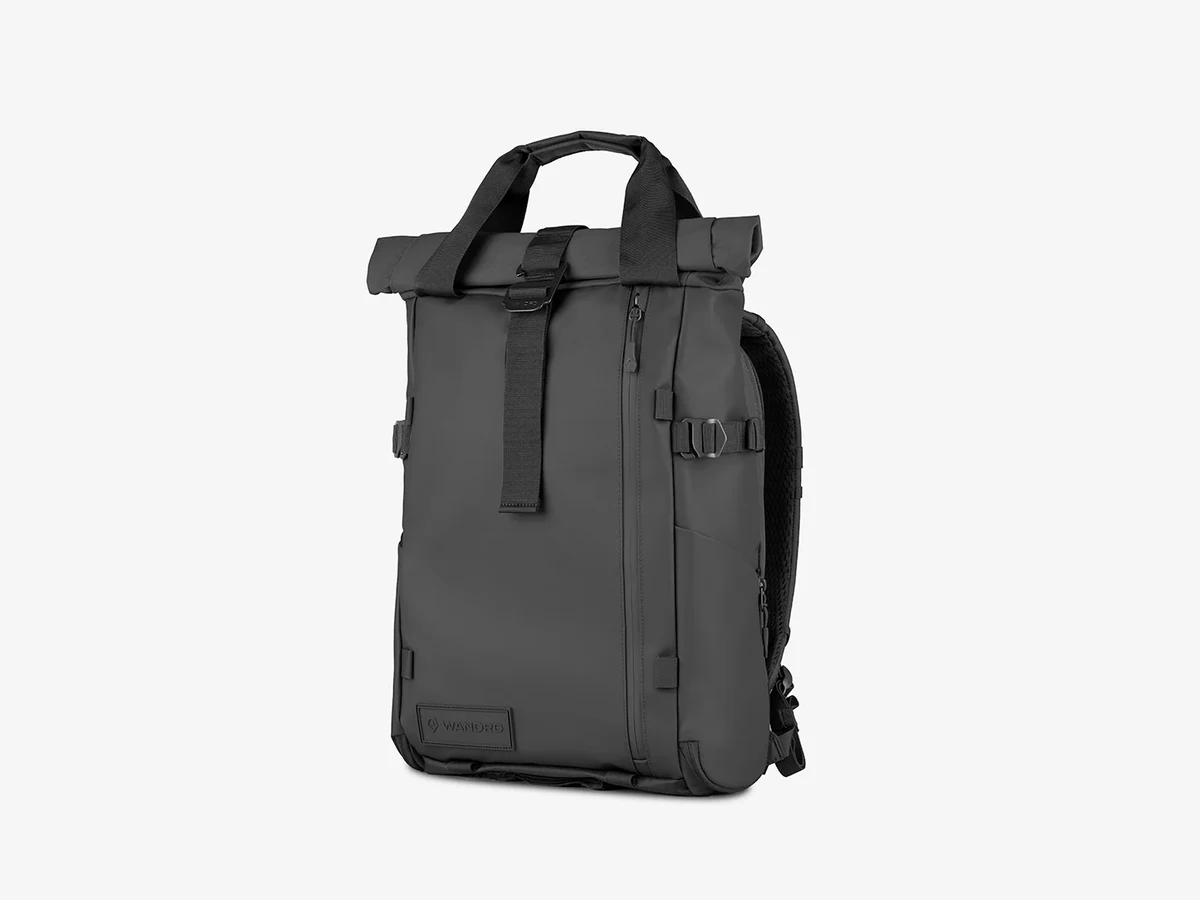
Photo: WANDRD
Best everyday small kit
4. WANDRD PRVKE 21L V4 Photography Bundle
The PRVKE 21L V4 is the same weather resistant, quick access design as the 31L, cut down for a one camera daily kit. It takes a body, two lenses, a mic kit and a laptop with the roll top closed, and it is the pick most likely to slide under an airline seat when a flight gets difficult.
Everything that makes the 31L good is here, smaller. The Photography Bundle includes the Essential Camera Cube and Accessory Straps, and again, that bundle is the version to buy, because Bag Only has no camera protection inside. The side quick draw opening is 22.9 x 13.3 cm, the clamshell back panel keeps packing civilised, and the roll top stretches the bag from 21 to 25 litres for a jacket or an overflow day. Shell materials match the 31L: P900D tarpaulin, N840D ballistic nylon, weather resistant YKK zips, weather resistant rather than waterproof, Rain Fly separate.
Against the loadout, this is the honest compromise pick. Camera, zoom, one spare lens, mic case and drone case fit the cube and top section. The full three lens version of the loadout plus tripod pushes it: the second spare lens competes with the drone for the top space, and the tripod rides in the expandable side pocket. The laptop sleeve is rated to 16 inches like the big bag, though the sleeve itself is narrower, so a thick 16 inch gaming laptop is not the same fit as a slim one.
Buy it for the 80 percent of days when you carry one body and a light kit, especially if you also want a bag that looks like a normal backpack in a cafe. If your standard day is the full loadout, the 31L above is the same idea without the squeeze.
Technical features
- Photography Bundle includes the Essential Camera Cube and Accessory Straps
- Roll top expansion from 21L to 25L, with zippered roll top access on the V4
- Quick draw side access, opening 22.9 x 13.3 cm, and a full clamshell opening
- Laptop sleeve 34.3 x 24.8 x 2.5 cm, rated up to a 16 inch laptop
- P900D tarpaulin and N840D ballistic nylon with YKK weather resistant zippers
- Weather resistant, not waterproof: Rain Fly sold separately
- Hidden passport pocket and integrated AirTag sleeve
- Luggage pass through and magnetic tote handles
- Expandable water bottle and tripod pocket
- WANDRD lists the 21L as within carry-on size
Pros
- Smallest and lightest full featured pick here
- Same access and weather system as the 31L
- Compact enough to pass as an ordinary daypack
- Bundle includes cube and straps, like the 31L
Cons
- Full three lens loadout plus drone is a squeeze
- Rain Fly costs extra
- Narrower laptop sleeve than the 31L version
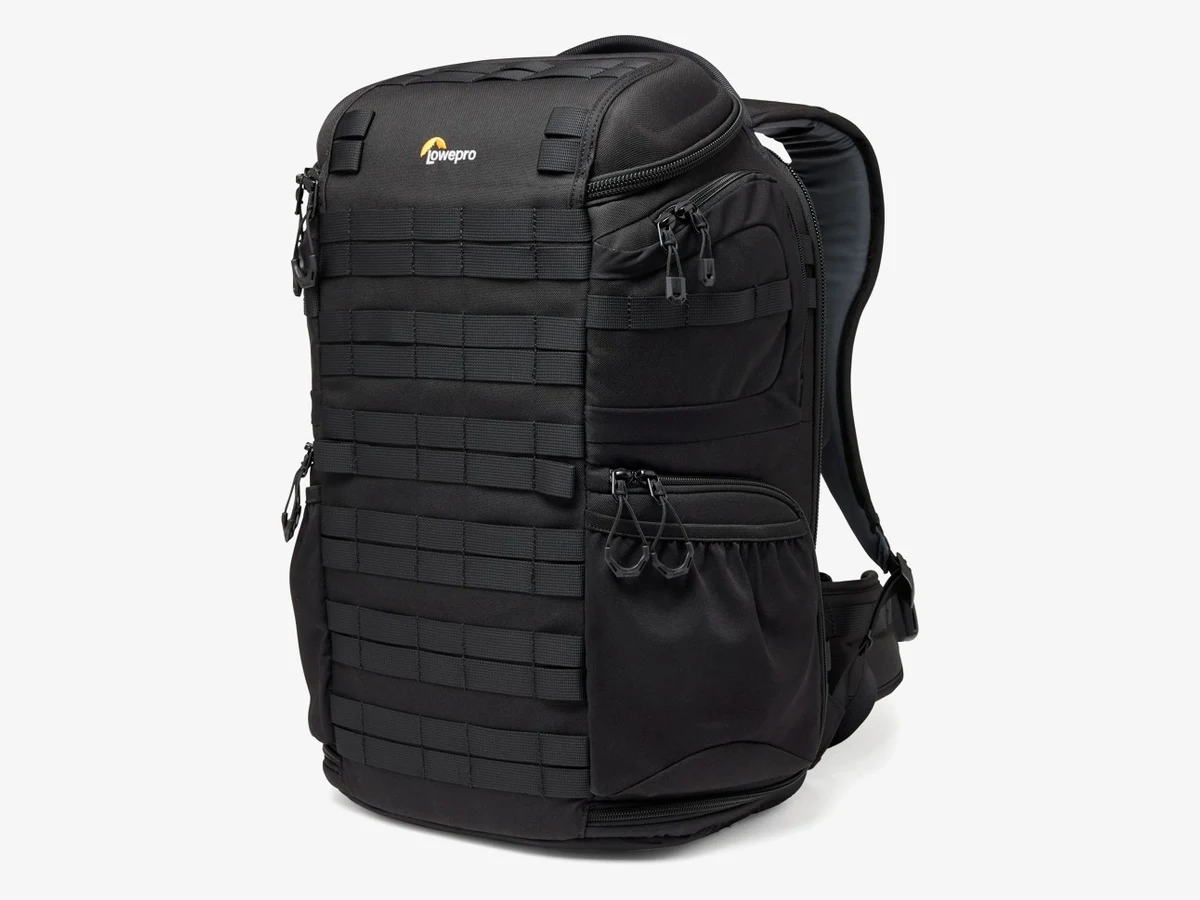
Photo: Lowepro
Best for pro and long shoot days
5. Lowepro ProTactic BP 450 AW III
The ProTactic BP 450 AW III is the working professionals pack: four access points, a modular webbing exterior, a removable waist belt that earns its place on long days, and an All Weather cover included. It is the heaviest bag here and the one that treats a shoot day like a job, because it is one.
This is the third generation of Lowepros tactical camera pack line, and the AW III updates matter, which is why the generation section below calls out the older AW II still sitting in recommendation lists. The access story leads: two side doors, a wide top opening and a full back panel, so the camera, a lens swap and a full repack are all covered by different doors. The molded MaxFit dividers shape a rigid, protective interior, and the CradleFit laptop pocket suspends a 16 inch machine away from knocks.
Against the loadout, it swallows everything with the most organised interior here: body and three lenses in the MaxFit system, drone and mic case in their own bays, laptop in the suspended pocket, and the tripod on the exterior webbing with the included quick straps. The hybrid webbing across the shell is compatible with SlipLock tabs and MOLLE style pouches, so a mic pouch or battery wallet can live outside the bag where your hands expect it. The ActivZone harness and the removable padded waist belt, which doubles as a standalone utility belt, are what make its loaded weight manageable.
The trade offs are bulk and heft. At 2.95 kg empty it starts heavier than the WANDRD 31L does loaded with a light kit, and its squared, tactical look draws more attention than the Peak Design or WANDRD packs. The All Weather cover is a separate piece rather than a built in one, so keep it in its pocket. For creators whose days are weddings, events and client work, those are the right trade offs.
Technical features
- Four access points: dual side doors, wide top access and full back access
- All Weather AW Cover rain cover included as a separate piece
- Molded MaxFit divider system in a 25L device volume, 28L total
- CradleFit laptop pocket for up to a 16 inch laptop, compartment 26 x 37 x 1.8 cm
- Hybrid webbing compatible with SlipLock tabs and MOLLE style pouches
- ActivZone harness with SlideCam sternum strap
- Removable padded waist belt, usable on its own as a utility belt
- Made with 86 percent recycled fabric, 210D nylon ripstop with 600D and 900D recycled polyester
- Stands upright on its own for set down and work out of the bag
- Included extras: zippered pouch, drawstring pouch and two quick straps
Pros
- Most access points and the most modular system here
- Rain cover, pouches and straps all included
- Real waist belt makes heavy days carry properly
- Suspended laptop pocket, stands upright on location
Cons
- Heaviest empty bag here at 2.95 kg
- Tactical styling is the least discreet in the group
- AW Cover is a separate piece to keep track of
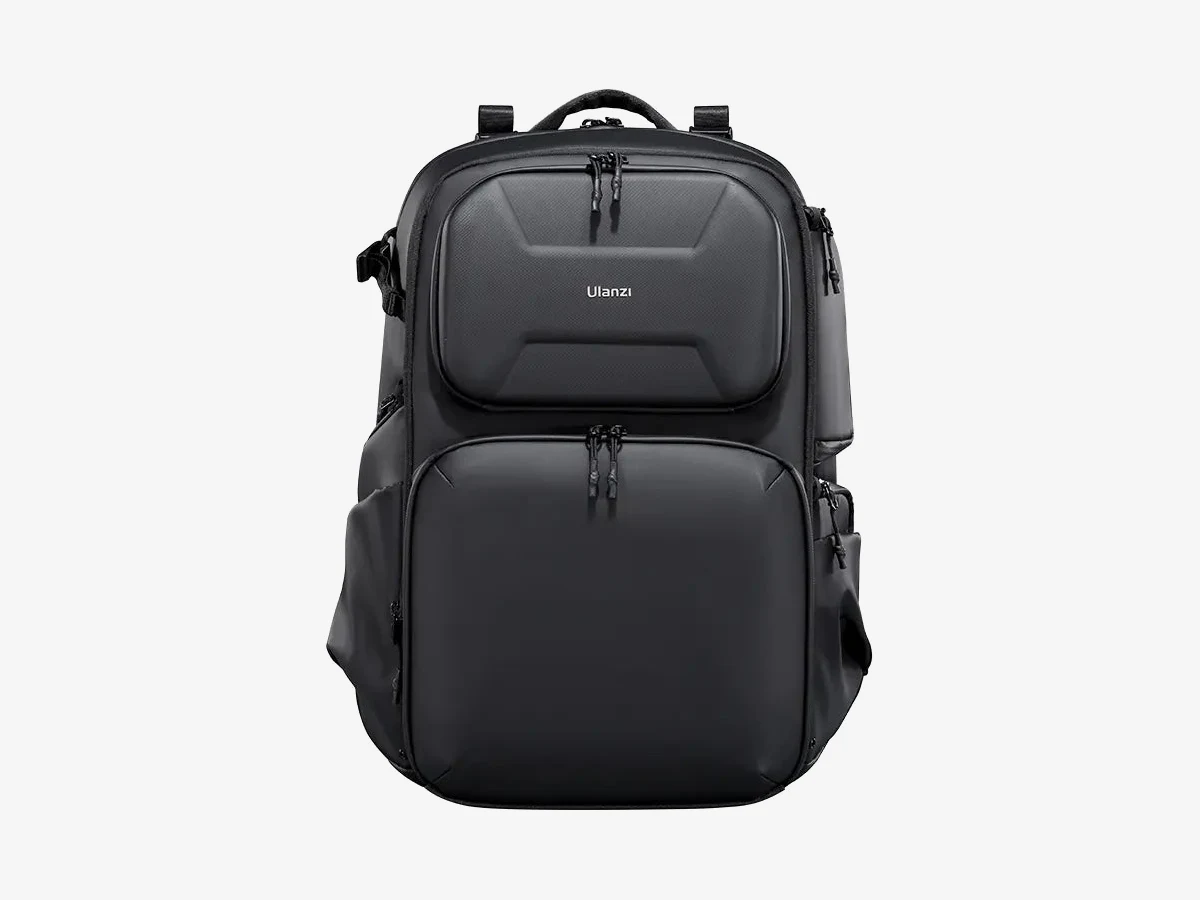
Photo: Ulanzi
Best budget hardshell
6. Ulanzi BP10 Hardshell Camera Backpack 35L
The BP10 is the budget pick with a genuine difference: a rigid hardshell front that protects like a case, dual side access, and a body that expands from 25L to 35L with one zip. It carries the full loadout in expanded form, and it is the bag to buy when knocks worry you more than brand heritage.
The shell is the story. Ulanzis front panel is a three layer structure, an outer hard shell, a cushioning layer and a lining, with a detachable EVA partition inside, so a bag that gets kicked under a cafe table or stacked in a car boot shrugs off what would dent a soft pack. Behind the shell it is a conventional and well sorted backpack: dual side quick access doors, a large rear opening for packing, a laptop and iPad combination compartment, and a padded waist belt with pockets. Ulanzi rates the carry at 15 kg, which is honest headroom for a loaded creator kit.
Against the loadout: at 25L it is a camera, two lenses, drone and mics bag, and expanded to 35L it takes the third lens and the laptop with room to spare. The mic charging case sits well in the front compartment, protected by the shell itself. One sourcing note in the interest of straight dealing: Ulanzi describes the laptop compartment for machines up to 17 inches on its product page, while some launch coverage said 16 inches. A 16 inch laptop is the safe plan either way.
Weather protection comes from the splash proof shell and water resistant zippers rather than a cover, and Ulanzi lists no rain cover with the bag, so all day rain is the gap in an otherwise strong protection story. There is a concealed AirTag pocket, a side tripod pocket with removable bottom straps, and a ventilated mesh back panel, which is a lot of hardware for the budget end of this list.
Technical features
- 25L capacity expanding to 35L through a zippered front expansion
- Hardshell front in a three layer build, with a detachable EVA protective partition
- Dual side quick access and a large rear opening main compartment
- Laptop and iPad combination compartment, described by Ulanzi for laptops up to 17 inches
- Weight 2.087 kg without dividers and straps, 2.647 kg with them, per Ulanzis spec table
- Carrying capacity rated at 15 kg
- Water resistant exterior and zippers with PU coating, no rain cover listed
- Concealed AirTag storage pocket
- Side tripod pocket with removable bottom tripod straps
- Padded waist belt with pockets and a ventilated mesh back panel
Pros
- Hardshell front gives case level knock protection
- Expands from day bag to full loadout size
- Dual side access at a budget price point
- Compact 47 cm height suits overhead bins
Cons
- No rain cover for sustained rain
- Laptop sizing differs between Ulanzis page and launch coverage
- Divider system is simpler than the MaxFit or FlexFold setups
How each pick handles the full loadout
Walked through the same kit: the PGYTECH and Lowepro take everything including a gimbal or a third lens without a fight, the Peak Design and WANDRD 31L take everything except an internal gimbal, the Ulanzi needs its expansion zipped open, and the WANDRD 21L asks you to leave one item behind.
Peak Design Everyday Backpack 30L. At the top MagLatch rung the loadout fits with the tripod in a side pocket. The mic case earns a folded divider pocket of its own, the drone sits on a shelf above the camera, and the laptop sleeve takes the 16 inch MacBook Pro the maker sizes it for. The discipline this bag teaches is vertical packing: everything in one tall space, sorted by dividers rather than compartments.
WANDRD PRVKE 31L. The cube takes camera and three lenses, the roll top takes the drone case and mic case, and the laptop rides against your back. Because the bag starts at 47 cm tall, the packed result is the most compact full loadout carry here, and the one that feels least like expedition luggage in an airport.
PGYTECH OneMo 2 35L. The only bag that improves on the standard loadout instead of merely fitting it. The gimbal goes in the front compartment the maker sized for it, the shoulder bag takes the drone kit as a bag within the bag, and the main compartment still holds camera, lenses and laptop. On a two location day you can pull the shoulder bag out and leave the mothership in the car.
WANDRD PRVKE 21L. The loadout, minus. Camera, zoom, one spare lens, drone, mics and laptop fit properly. The third lens or the tripod then competes for the same expandable pocket, and in practice most owners will choose per shoot. That is not a flaw so much as the definition of a 21 litre bag.
Lowepro ProTactic BP 450 AW III. Everything fits, organised rather than squeezed, with the tripod strapped outside on the webbing and room left for the extras a client day adds: a second body or a lighting panel. Of the six, this is the layout that stays tidy at hour eight, because every item has a door and a bay rather than a pile.
Ulanzi BP10. Zipped closed at 25L it is a two lens day bag. Expanded to 35L it takes the whole loadout including the laptop, with the mic case protected behind the hard front. The expansion is the feature: one bag that is a daypack on Monday and a full kit hauler on Saturday.
One loadout item deserves its own habit regardless of bag: cards and drives. Keep the SSD and your card wallet in the same pocket of the same bag every day, and back up the moment you get home; our workflow for backing up vlogging footage and our explainer on SD cards for vlogging cover the routine that keeps a full bag from becoming a single point of failure.
Filming solo: getting the camera out with one hand
Solo vloggers work one handed, so access is a filming feature, not a convenience. The Peak Designs MagLatch opens with one hand from the top, and every pick here except the PGYTECH offers a side door on both sides or a swing friendly single side, so the camera can come out while the bag stays on one shoulder.
Think about how a vlogging moment actually happens. You are walking, talking to the camera or about to, and the shot changes. The bag swings around on one shoulder, one hand finds a zip, and the camera comes out while the other hand holds the shot or the railing or the coffee. Bags that only open from the back panel force a full stop and a set down, and in a market or on a trail that friction is the difference between filming the moment and describing it later.
Ranked purely on that workflow: the Peak Design leads, because the MagLatch top opens one handed without a zip at all and the dual side zips back it up. The two WANDRD packs and the Ulanzi follow with quick draw side doors built for exactly the swing and grab move, and the Lowepros dual side doors do the same job in a bigger bag. The PGYTECH has one right side quick access, which is fine if you always swing the bag the same way, and its rear opening is for packing, not for moments.
The mic grab matters almost as much. A wireless transmitter lives in its charging case, and if that case is buried, you will film with camera audio and fix it in post, badly. Every card above notes where the mic case sits in that bag. The pattern to copy: mic case in the top compartment or a designated divider pocket, always the same place, so your hand finds it without looking.
Buy the current generation: AW III, PRVKE V4 and the Peak Design code
Three of these six bags are easy to buy wrong. The current Lowepro is the AW III, not the AW II most lists still recommend. The current PRVKE is the V4, not the V3. And the current Peak Design Everyday Backpack is the V2, whatever the code on a retailers shelf says.
Camera bags live for years, so retailers keep selling older generations alongside the current one, often at tempting discounts and with nearly identical photos. The ProTactic line is the clearest case: the AW II was a fine bag and is still widely recommended, but the AW III is the current model, with the updated harness, the CradleFit pocket and the recycled fabric build described in its card. If a listing does not say AW III, it is not this bag.
The PRVKE is the same story one generation further on. The V4 is the current model, with the zippered roll top access among its updates. V3 bags still circulate at retail and in roundups that have not been refreshed. Check the version in the listing title before you check anything else, for both WANDRD sizes in this guide.
Peak Design needs the opposite warning, because here the trap is thinking a newer generation exists. The Everyday Backpack currently sold by Peak Design is the second generation, the V2, the one whose revamped description appears on the makers own store. The makers model code for the 30L in black is BEDB-30-BK-2, and some retailers now print a BEDB-30-BK-3 code for the same bag: a running revision suffix in the retail code, on a product whose black 30L barcode matches the V2. There is no V3 Everyday Backpack on sale from Peak Design. If a listing implies one, you are looking at the V2 with a different code, which is fine, as long as the price knows it too.
Why does the generation matter beyond bragging rights? Warranty support, spare parts, matching accessories like cubes and rain flies, and resale value all follow the current model. And the differences are real: a cube sized for one generation may not fit the next.
What is actually in the box: bundles, cubes and rain covers
The sticker price is not the system price. Across these six bags, the honest comparison is what arrives in the box: camera protection included or sold separately, a rain cover included or not, and straps and pouches bundled or extra.
Camera protection. The Peak Design includes its three FlexFold dividers, the PGYTECH includes its partition system, and the Lowepro and Ulanzi include their dividers. The WANDRD packs are the split case: in Photography Bundle form, the cube and accessory straps are in the box, which is the version this guide links. In Bag Only form, the same backpack arrives with no camera cube at all, and WANDRD itself directs camera carriers to the bundle. A Bag Only price compared against the other five bags is not a saving, it is an incomplete product.
Rain covers. Included: the PGYTECH, with its cover stored in the front pocket, and the Lowepro, with its All Weather cover as a separate piece. Not included: both WANDRD packs, where the Rain Fly is a separate purchase, and the Peak Design and Ulanzi, which answer weather with shells and coatings instead. None of that makes a bag bad, but it changes what the bag costs to own in a wet climate.
The extras that turn out to matter. The PGYTECHs shoulder bag is the standout: a genuine second bag for the drone kit, included. The Lowepro adds pouches and quick straps and a waist belt that works as a utility belt. The Peak Design includes its external carry straps but sells the hip belt separately, which matters on a 30L bag you plan to load fully. Read the box contents the way you read the specs, because that is where the real comparison lives.
Flying with these bags: carry-on sizes in plain terms
Most full size airlines size a carry-on at roughly 56 x 36 x 23 cm, but the number varies by airline and aircraft, so check your own carriers limit before you fly. Against that typical sizer: the two WANDRD packs and the Ulanzi fit comfortably, the Lowepro is close on depth, the PGYTECH is close on height and depth, and the Peak Design fits at its lower MagLatch settings and outgrows the sizer at full expansion.
Work through the six with a tape measure mindset. The PRVKE 31L at 47 x 30.5 x 16.5 cm is the easy yes, and WANDRD states the PRVKE line is within carry-on size. The PRVKE 21L is smaller again and the best under seat candidate here, though personal item limits are tighter than carry-on limits and vary even more. The Ulanzi at 47 x 32.5 x 21.5 cm sits inside the typical sizer on all three axes.
The Lowepro at 51 x 34.5 x 23 cm is within typical carry-on limits but exactly at the common 23 cm depth line, so a bulging front pocket can push it over. The PGYTECH at 54 x 33 x 23.5 cm is the tightest of the six: the maker confirms overhead bin use, and most full size sizers will agree, but budget airlines with shallower bins are where it gets argued about. The Peak Design is the variable case: 52 cm tall at the lowest MagLatch rung, 62 cm at the top, so fly it nipped down and expand it at the destination.
Two travel habits protect the gear regardless of bag. Batteries and the camera itself travel in the cabin, never the hold, and the bag you cannot afford to gate check is the bag you should size against the strictest airline you actually fly. Dimensions in every card here are the makers published figures, because those are the numbers you can plan a trip around.
How to choose the right size and style
Choose by the kit you carry on your longest normal day, not your lightest. Around 21 litres suits a one camera daily kit, 28 to 31 litres is the full loadout sweet spot, and 35 litres is for gimbals, second bodies and client days. Then check access, weather and discretion in that order.
Size first. If you are still building your kit, the loadout discipline in our beginner vlogging equipment guide is the place to start, because bag size follows kit size. Creators who film at home and on location will feel at home in the 31L class. Creators who carry a gimbal daily have exactly one internal carry option in this guide, the PGYTECH, and should start there.
Access second. Decide how you film. Walk and talk creators who swing the bag constantly should weight side access and one handed tops heavily, which favours the Peak Design and the two WANDRD packs. Creators who set up at a location and work out of the bag, including podcast and interview shooters filming away from their desk set up in our video podcast guide, should weight rear and clamshell openings, which favours the PGYTECH and Lowepro.
Weather third. Match the bag to your climate honestly. Occasional showers: the Peak Designs shell or the Ulanzis hardshell and coated zips are enough. Regular real rain: a bag with an included cover, the PGYTECH or Lowepro, or budget the WANDRD Rain Fly into the purchase. No bag in this guide is submersible, and weather resistant never means waterproof.
Discretion last, but not least. A camera bag advertises what is inside it. The Peak Design and WANDRD packs read as ordinary backpacks, the Lowepro reads as professional kit, and the Ulanzi sits between. If you film in public often, the advice in our guide to vlogging in public applies to your bag too: the less it looks like a camera bag, the easier your day gets.
Frequently asked questions
What size camera backpack do I need for vlogging?
For a camera, two lenses, a mic kit and a laptop, look at 28 to 31 litres. A one camera daily kit fits 21 litres, and a gimbal based or two body kit needs 35 litres. In this guide the 31L WANDRD and the 30L Peak Design cover the standard full vlogger loadout, the 21L WANDRD covers the light day, and the 35L PGYTECH covers the gimbal day.
Can one backpack really hold a camera, gimbal, drone, mics, tripod and a laptop?
Yes, but only the PGYTECH OneMo 2 35L does it with the gimbal inside, in a front compartment the maker sizes for gimbals under 490 x 290 x 100 mm. The Lowepro ProTactic takes everything else on that list with the tripod strapped outside, and the Peak Design and WANDRD 31L take the whole list minus an internal gimbal.
Are camera backpacks waterproof?
No. Every bag here is weather resistant, not waterproof, and none is submersible. The strongest rain answers are an included cover, on the PGYTECH and the Lowepro, or a shell built to shed water, like the Peak Designs weatherproof nylon and the Ulanzis hardshell front. WANDRD rates the PRVKE as weather resistant and sells its Rain Fly separately.
How do I carry a tripod on a camera backpack?
Three ways, all represented here. In an expandable side pocket with a strap, on the Peak Design and both WANDRD packs. On exterior webbing with quick straps, on the Lowepro. And in a dedicated side pocket with bottom straps, on the Ulanzi. Compact travel tripods carry best; a full size tripod rides outside on any backpack.
Which of these bags fits as a personal item, and which are overhead only?
Personal item limits are much tighter than carry-on limits and vary by airline. The WANDRD PRVKE 21L is the only pick here with a realistic personal item case at 43.2 x 27.9 x 15.9 cm, and even that depends on your airline. The other five are overhead bin bags, with the PRVKE 31L and the Ulanzi the most comfortable fits against a typical 56 x 36 x 23 cm sizer.
Do I need to buy a camera cube or bundle separately?
Only with WANDRD, and only if you buy the wrong version. The PRVKE is sold as Bag Only, with no camera protection inside, and as a Photography Bundle with the camera cube and accessory straps included. Buy the bundle. The other five bags in this guide include their dividers or partitions in the box.
What is the difference between the Lowepro ProTactic AW II and AW III?
The AW III is the current third generation of the ProTactic BP 450, with the updated ActivZone harness, the CradleFit suspended laptop pocket and a build using 86 percent recycled fabric. The AW II is the superseded model that many older lists still recommend. Check the listing says AW III before buying, because the two look similar in photos.
What changed between the WANDRD PRVKE V3 and V4?
The V4 is the current PRVKE generation, and its headline change for daily use is zippered access into the roll top section, so the top compartment is easier to work from, alongside the established side access and clamshell layout. V3 bags still circulate at retail, so confirm the version in the listing; both picks in this guide are the V4.
Where do wireless microphones and charging cases go in a camera backpack?
Give the charging case a fixed home: a folded divider pocket in the Peak Design, the cube or roll top section in the WANDRD packs, a front compartment bay in the PGYTECH and Ulanzi, or an external pouch on the Lowepros webbing. The rule matters more than the bag: same pocket every day, reachable one handed, never loose at the bottom.
Can I get my camera out with one hand while filming myself?
With the right bag, yes. The Peak Designs MagLatch top opens one handed, and the WANDRD packs, the Ulanzi and the Lowepro all have side doors designed for swinging the bag around on one shoulder and pulling the camera out. Only the PGYTECH limits you to one side, the right, so practise your swing direction with it.
Is 21 litres enough, or will I regret not buying the 31L or 35L?
Twenty one litres is enough for a body, two lenses, a drone, mics and a laptop, and it is the size you will actually carry daily. You will regret it if your standard day is three lenses plus a tripod, or any gimbal. Match the bag to your longest normal day: daily shooters buy the 21L happily, full loadout shooters should start at 31L.
How heavy is a fully loaded creator backpack?
Add the bag to the kit. Empty weights here run from 1.3 kg for the WANDRD 21L to 2.95 kg for the Lowepro, and a full vlogger loadout typically adds 6 to 9 kg of camera, lenses, laptop, drone and support gear. Expect 8 to 12 kg all in, which is why a real waist belt, like the Lowepros or the Peak Designs optional belt, matters on long days.
The bottom line
Buy the Peak Design Everyday Backpack 30L if you want one bag for almost everything. Buy the WANDRD PRVKE 31L for travel, the PGYTECH OneMo 2 35L for a gimbal kit, the WANDRD PRVKE 21L for light days, the Lowepro ProTactic AW III for professional loads, and the Ulanzi BP10 for hard protection on a budget.
Whichever you choose, run the loadout test against your own kit before you order: list everything you carry on your longest normal day, find it in the cards above, and check the makers dimensions rather than the litre badge. And when you are ready to fill the bag, start with the camera itself in our guide to the best vlogging cameras.
This guide is research-based curation: we compared manufacturer specifications, published reviews, and current prices. Read how we choose.