
Last updated: November 2026
A brand does not need your audience to pay you. It needs a believable video of its product, made by someone who can hold a camera steady, talk naturally, and deliver a finished file on time. If you already vlog, you have most of those skills. UGC creation turns them into a freelance job: brands pay you to make short videos they publish on their own channels and run as ads. This guide shows how that job differs from a brand deal, how to build a portfolio from the camera gear you already own, how to price the work in parts, and how to read a contract before you film.
In this guide
- What UGC actually is: the brand buys the video, not your audience
- UGC or a brand deal? Pick the right job
- What vlogging already taught you that UGC pays for
- Build a camera-niche portfolio from gear you already own
- AI portfolios: what is honest and what gets you dropped
- Where the work comes from: marketplaces, direct pitch, and pay-per-view
- Price it in parts: creation, usage, and extras
- Read the contract before you film
- Deliver like a pro, then scale without burning out
- Stay honest and stay hired: disclosure, claims, and credit
- Questions vloggers ask about UGC creation
What UGC actually is: the brand buys the video, not your audience
That one distinction explains the whole job. An influencer is paid for distribution: the brand rents access to an audience, and the creator posts on their own account. A UGC creator is paid for production: the brand buys a video asset, and the brand posts it. Most UGC guides agree on this definition, and it is why a creator with no following at all can still land paid work. Brands judge the portfolio, not the follower count.
What does a brand actually receive? Usually one short vertical video, 20 to 60 seconds long, plus variations: two or three alternate hooks, sometimes raw footage, sometimes a few stills. The brief sets the talking points, the claims you may and may not make, and where the video will run. You film it, edit it, and send the files. The brand may run it organically on its own feed, cut it into paid ads, or both. Those two uses are priced differently, which matters later in this guide.
Why do brands pay for content that looks amateur on purpose? Because it converts. A polished brand ad announces itself as an ad. A believable customer-style video reads as a recommendation, at least for the first few seconds, and that is the window that decides whether a viewer keeps watching. Brands still want clean audio, steady framing, and readable captions. The “amateur” part is the tone, not the craft. Shaky audio and blown-out light do not make a video feel authentic. They make it unusable.
One confusion to clear up early: not everything labeled UGC works this way. Some platforms pay creators to post on their own accounts and earn per view. That is a different job, closer to influencing, and this guide covers it separately in the section on where the work comes from. Classic UGC means the brand publishes your work. When a brief asks you to post on your own feed, price it as distribution, not as a simple UGC delivery.
UGC or a brand deal? Pick the right job
If you already do brand deals, UGC will feel familiar and strange at the same time. The filming is similar. The business is not. In a brand deal, your subscriber count, your average views, and your audience fit set the price. In UGC, none of that appears in the quote. The brand is buying a video it can run, test, and reuse. Your channel never enters the conversation, and in most UGC jobs your name never appears on the published video either.
| Point of comparison | UGC job | Influencer brand deal |
|---|---|---|
| What the brand buys | The video file and the right to use it | Reach to your audience, plus the video |
| Where it publishes | The brand’s channels and ad accounts | Your channels, usually with a posting schedule |
| Followers needed | None required | Usually the main pricing factor |
| How you are paid | Per deliverable, plus usage add-ons | Flat fee, often tied to audience size |
| Who owns the video | You keep copyright and license it, unless the contract says otherwise | Often similar, but posting and exclusivity terms differ |
| Repeat value | Retainers for steady monthly videos | Series deals and ambassadorships |
So which should you take? If a brand found you through your channel and wants your viewers to see the video, that is a brand deal, even if the brand calls it UGC. Price it on reach. If a brand found your portfolio and wants videos for its own ads, that is UGC. Price it on deliverables and usage. If a brief asks for both, posting on your feed and handing over ad rights, quote both parts separately. A single flat fee for both jobs is the most common way vloggers undercharge here.
There is also a practical reason to keep the two apart. Brand deals depend on your channel staying healthy and growing. UGC does not. A vlogger whose channel has a quiet month can still deliver UGC videos that week, because the brand never checks the channel. That makes UGC a useful second income line next to a channel, not a replacement for one. For the full brand-deal side of this picture, see brand deals for small YouTubers and how to make money vlogging.
What vlogging already taught you that UGC pays for
Generic UGC guides start from zero: buy a ring light, learn to talk to camera, learn to edit. You are not starting from zero. The transfer is direct, and naming it helps you pitch. Here is how vlogging skills map to UGC deliverables:
| Vlogging skill you already have | What it becomes in UGC | Why a brand pays for it |
|---|---|---|
| Talking to camera in your own voice | Testimonial and demo delivery without a script read | Believable delivery is the whole product |
| Showing a product in use, not just talking about it | Hands-on demos, unboxings, before and after shots | Viewers trust what they see working |
| Hooking a viewer in the first seconds | Alternate hooks for ad testing | Brands test hooks and pay for variations |
| Clean audio and steady framing | Files a brand can run without fixing | Unusable audio kills an otherwise good video |
| Cutting a long shoot into a short video | 20 to 60 second edits with captions | Ad formats demand tight pacing |
| Publishing on a schedule | Meeting brief deadlines and revision rounds | Reliability gets repeat bookings |
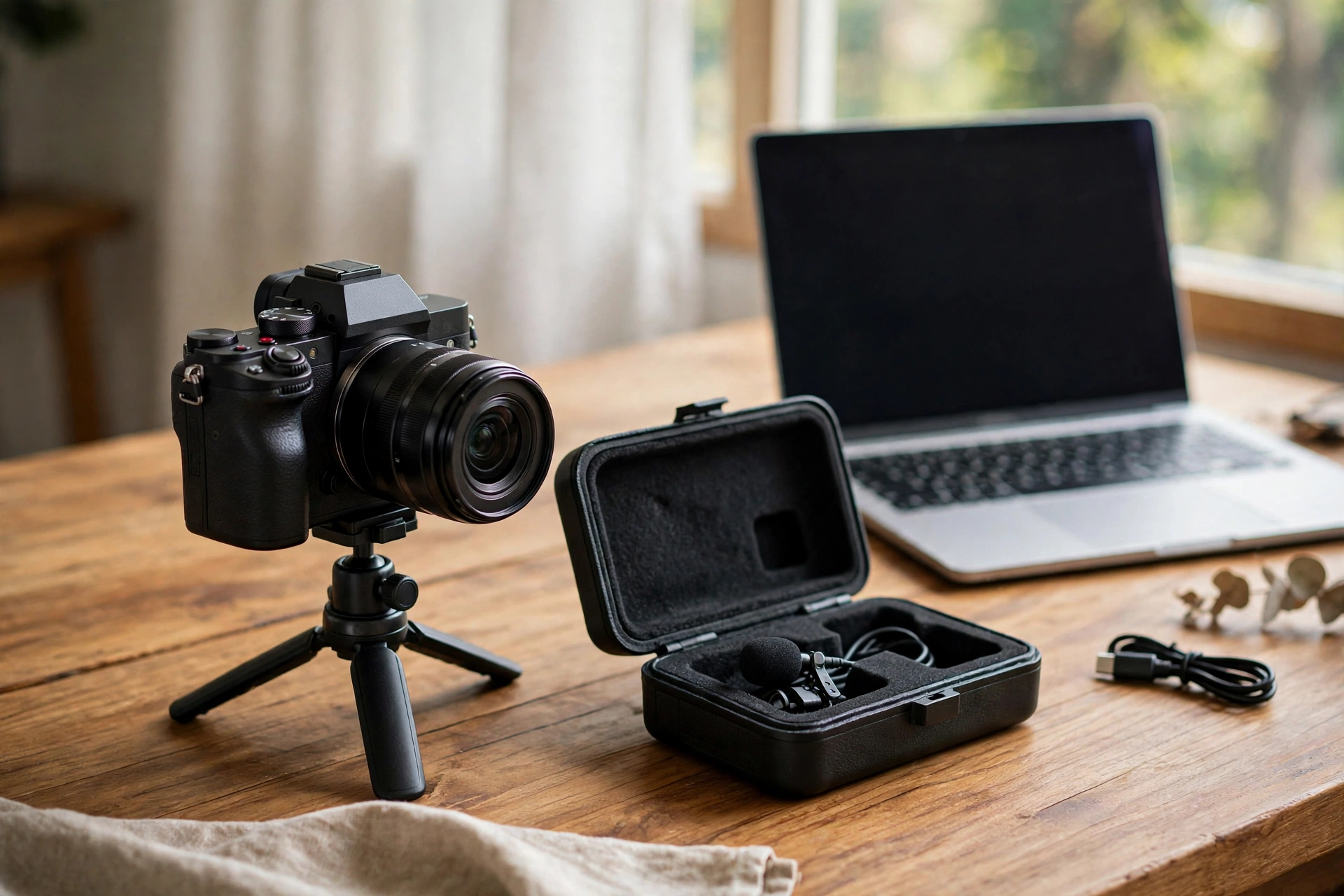
Your gear transfers too, and this is where a vlogger has a real edge over a phone-only creator. A vlogging camera gives you a larger sensor, real optical zoom, and clean HDMI or file output. A lavalier or shotgun mic gives you voice audio a phone mic cannot match in a noisy room. A small LED panel gives you consistent light across a batch of videos, so a brand’s set of five videos looks like one campaign instead of five different rooms. None of this requires buying new gear. It requires showing the gear working in your portfolio, which the next section covers.
One skill does not transfer automatically: brevity under a brief. A vlog can wander for ten minutes and still work. A UGC video has one job in under a minute, and the brief will cut anything that does not serve it. Practice delivering one benefit, one demonstration, and one call to action per video. If a draft needs two benefits, it is two videos.
Build a camera-niche portfolio from gear you already own
Generic guides agree on the portfolio formula and disagree on the count: three to six samples in some guides, eight to twelve in others. The number matters less than the shape. Brands scan a portfolio in under a minute, looking for three things: can this person hook attention, can they show a product working, and can they do it twice in a row without the second video looking like an accident. A scattered portfolio answers none of those questions. A focused one answers all three.
Pick one niche first, and make it the niche you can film without buying anything. For a vlogger, the strongest choice is usually camera gear or the world around it: a camera bag, a mic, a light, a tripod, a memory card, a lens cloth. You already own these, you already know how they work, and you can talk about them without faking enthusiasm. A camera-niche portfolio also advertises your real advantage: you film with a real camera, and the samples prove it.
Here is a six-piece camera-niche portfolio a vlogger can film in a weekend from gear already on the shelf:
- Hook demo (30 seconds): a camera bag, opened on a desk, one problem solved on camera. Open with the problem, not the product.
- Testimonial (45 seconds): a mic you actually use, talking about one recording situation it fixed. One story, one result.
- Comparison (60 seconds): two lights side by side on the same face, same room, same settings. Show the difference, do not just describe it.
- How-to (60 seconds): one setup task, start to finish: balancing a small gimbal, or packing a one-bag kit. Steps on screen, no wasted shots.
- Unboxing (45 seconds): a memory card or small accessory, filmed cleanly, with the first real use in the same video. Unboxings without a use are just packaging.
- Problem-solution (30 seconds): shaky handheld footage, then the same walk with stabilization on. The contrast is the ad.
Label every spec piece as a sample. Brands expect spec work from beginners, and labeling it honestly is a strength, not an apology. A portfolio page needs four things beyond the videos: one line stating your niche, one line stating turnaround time, one contact method, and one rate card or a note that rates depend on usage. Keep the page scannable. A brand that cannot find your contact method in thirty seconds moves on.
Film the portfolio with the same discipline you would use for a paid job: same base light position and audio chain across the set, same export settings, with one exception: the comparison sample, where the lighting difference is the point. Consistency across samples is itself a selling point. It tells a brand that a batch of five paid videos will look like one campaign, which is exactly what a brand buying a set wants to hear.
AI portfolios: what is honest and what gets you dropped
AI now sits on both sides of this market. Brands use AI-generated presenters and product shots for cheap variants. Creators use AI tools to write scripts, generate voiceovers, and cut rough edits. None of that is the problem. The problem is a portfolio sample that pretends to be filmed work when it is not: an AI presenter delivering a testimonial for a product you never held, or AI product shots standing in for a demo you never filmed.
Brands have good reasons to check. A UGC video is bought on trust: the brand is paying for a real person handling a real product. If the sample is synthetic, the brand cannot know whether you can actually film, whether the product handling looks natural, or whether the video will survive platform review. Platforms have tightened synthetic media labeling, and regulators treat AI imagery staged to look like a genuine customer experience without disclosure as a compliance risk. A creator caught passing synthetic work off as filmed work does not get a warning. They get dropped, and agencies talk to each other.
The honest line is simple. Use AI for planning and production help: brainstorming hooks, drafting scripts, cleaning audio, cutting captions, generating b-roll backgrounds that are clearly not the product. Do not use AI for the evidence itself: the presenter, the product handling, and the result must be real footage you shot. If a sample uses any synthetic element, label it in the portfolio. “Script drafted with AI assistance, footage shot by me” is honest and costs you nothing. Silence about a synthetic sample costs you the client.
There is one more AI trap worth naming: AI-built portfolio volume. Tools can generate dozens of polished-looking samples in an afternoon. Brands do not want dozens. They want six samples that prove you can film, and a portfolio padded with synthetic volume proves the opposite of what you need. Six real samples beat sixty synthetic ones, and the six real ones survive the first paid brief.
Where the work comes from: marketplaces, direct pitch, and pay-per-view
Marketplaces are the passive route. JoinBrands, Billo, Insense, and Collabstr let brands search creator profiles and post briefs. Set up a complete profile once: niche, samples, turnaround, and rates. Then check briefs regularly and apply to the ones that fit. Expect the first inquiry to take weeks, not days, and expect marketplace briefs to pay less than direct deals. The marketplace takes its cut in the form of lower rates or platform fees, and you trade control for a steady flow of briefs.
Direct pitch is the active route, and for a vlogger it is usually the faster one. Find brands in your niche that already run creator-style ads, which you can spot in ad libraries and on their own feeds. Send a short message: who you are, your niche, two sample links, one specific offer with a delivery time, and one question asking who handles creator content. Pitch ten brands a week, follow up once after five days, and track replies. The first paid test usually comes from direct pitch, not from waiting on a marketplace.
Pay-per-view platforms are the third route, and they need a warning label. Platforms such as NxtVybe and viral.app pay creators per verified view or per video plus a per-view bonus, with payout thresholds and platform tracking. Some of these jobs ask you to post on your own account, which makes them distribution jobs, not classic UGC. The math is also different: a flat-fee video pays the same whether it flops or flies, while a pay-per-view job pays little unless the video performs, and performance depends on the platform’s algorithm as much as your craft. Treat pay-per-view as a side experiment with capped time, not as the base of your income. If a platform’s pitch sounds like guaranteed income, read the payout terms before believing it.
A practical first-90-days plan ties the three routes together. Weeks one to two: film the six-piece portfolio and build the portfolio page. Weeks three to six: list on two marketplaces and pitch ten brands a week. Weeks seven to twelve: deliver the first paid tests, ask each happy client for a one-sentence testimonial and permission to feature the work, and start collecting testimonials toward a five-delivery milestone, raising your rate card once you reach five paid deliveries, whenever that falls. Most guides put the first paid gig inside four to eight weeks of steady effort. That timeline assumes steady pitching, not steady waiting.

Price it in parts: creation, usage, and extras
Published rate guides disagree widely, which is itself useful information. One marketplace guide puts beginner videos at 150 to 250 dollars and experienced creators above 900 dollars per video. Another 2026 breakdown reports beginners at 75 to 200 dollars, mid-tier creators at 300 to 1,000 dollars, and experienced creators with proven results at 1,000 to 3,000 dollars or more per deliverable. A third source reports most creators earning 150 to 300 dollars per video. Treat every one of these ranges as reported, not promised. Your rate depends on niche, deliverables, usage rights, turnaround, and track record, and no guide can set it for you.
The structure matters more than any single number. Usage-rights guides describe four tiers, and your quote should name them:
| Usage tier | What the brand may do | How it is usually priced |
|---|---|---|
| Organic social | Post on the brand’s own feeds, no ad spend behind it | Often included in the creation fee for a limited term, commonly 3 to 6 months |
| Paid ads | Run the video as a paid ad, including TikTok-style Spark Ads, where the ad runs from a creator-style post | Monthly add-on, commonly reported at 20 to 30 percent of the base rate per month |
| Website and email | Use on product pages, homepages, and newsletters | Monthly add-on, commonly reported at 15 to 25 percent of the base rate per month |
| Buyout or perpetuity | Use forever, everywhere, with no further payment | A large premium, priced as a multiple of the base rate, and rare |
A simple formula ties the parts together: total fee equals base creation fee plus base fee times usage percentage times months. As an illustration only, a 200 dollar creation fee with paid-ad usage at 25 percent per month for 3 months adds 150 dollars, for a 350 dollar total. When a video runs in two paid places at once, the percentages add, so paid ads plus website means both add-ons apply, and organic use beyond its included term is not free: agree a monthly rate for the extension before the term ends. That illustration is not a rate recommendation. It shows why quoting one flat fee fails: the same video handed over for a brand to run as a paid ad for a year is a different sale from a video posted organically for three months, and beginners who quote one number for both are undercharging on the second sale without realizing it.
Extras belong on the rate card as separate lines: extra hook variations, raw footage delivery, whitelisting (ads run from your account), exclusivity (you will not film for a competitor for a set period), and rush delivery. Whitelisting and exclusivity deserve special care, because both hand the brand something beyond the video itself: access to your account or a restriction on your future work. Price both explicitly, set a term, and never grant either by default. A buyout, rights in perpetuity, should be the rarest line on your card and the most expensive. Once you sell a video outright, you lose all future earning from that asset.
Raise rates on evidence, not hope. After five paid deliveries, raise the creation fee. After twenty delivered videos with testimonials, raise it again. When you are booked weeks ahead, you have found your market rate, and the next raise writes itself. Guides that promise fixed monthly incomes from fixed video counts are selling a dream. Three videos a week at a given rate only produces a given income if the bookings actually arrive, the revisions stay bounded, and the usage terms are priced. Count bookings, not projections.

Read the contract before you film
Most UGC disputes are not about talent. They are about a term nobody wrote down: how many revision rounds, where the video may run, for how long, and when payment arrives. Walk through this checklist on every brief, even a friendly one, and get the answers in the brief or the agreement itself:
- Deliverables: exact video count, lengths, formats, hook variations, stills, and whether raw footage is included. Raw footage is a separate deliverable with its own price.
- Revision rounds: how many rounds are included, what counts as a revision versus a new video, and the turnaround for each round. Unlimited revisions is a term to refuse.
- Usage: channels, paid versus organic, territory, and term in months. If the brief says “social media” without a term, ask for one.
- Exclusivity: whether you are barred from filming for competitors, in which categories, and for how long. Exclusivity without a fee and a term is a gift.
- Payment: amount, method, and timing. Marketplace jobs commonly pay 7 to 14 days after approval. Direct brand deals commonly run net 15 to net 30 days, sometimes net 60 for larger companies. Clarify before filming, and invoice on delivery with the project description and due date.
- Ownership and credit: whether you keep copyright and license the work, or transfer ownership. If the contract transfers ownership, that is a buyout and should be priced as one.
- Claims and approval: which claims you may make about the product, who approves the final cut, and what happens if a claim is challenged. Never agree to a claim you cannot stand behind.
- Kill fee: what you are paid if the brand cancels after you have filmed. A kill fee protects the work already done.
- Product handling: whether the product is gifted, loaned, or must be returned, and who pays return shipping. Gifted products are also a disclosure trigger, covered in the final section.
Three clauses deserve a second read every time. First, “in perpetuity” anywhere in usage terms means forever, and forever should cost accordingly. Second, “all media, now known or later developed” is broader than social media, and broader should cost more. Third, any clause that lets the brand edit your video into new claims without your approval hands your face and voice to messages you never agreed to. If a clause is unclear, ask for it in plain language before signing. A brand that will not clarify a clause before you film will not clarify it after a dispute either.
Keep your own records from the first job: every brief, every signed agreement, every delivered file list, every invoice, and every usage term with its expiry date. When a brand asks to renew usage after six months, your records are what turn a free extension into a paid renewal. The creators who earn most from UGC over time are rarely the ones who film best. They are the ones whose paperwork survives contact with a busy brand.

Deliver like a pro, then scale without burning out
Delivery is where repeat bookings are won. Send files in the format the brief asked for, named so the brand can find them without asking: brand, product, format, hook number, and version. Include a short delivery note listing what is in the folder, which revision round it is, and the usage term the delivery covers. If a revision comes back, handle the first round fast and precisely. Brands remember the creator who turned a revision in a day far longer than the creator whose first cut was slightly better.
Batch your filming the way vloggers batch theirs. One light position, one audio chain, and one export preset across a week of videos keeps a brand’s set consistent and keeps your hours down. Keep a simple template for the repetitive parts: a brief checklist, a shot list, a caption style, and a music library you have rights to use. When volume grows past about fifteen videos a month, an editor becomes worth considering, because editing is usually the first bottleneck. Until then, your own edit workflow is the business.
Scale through retainers, not through more one-off pitches. A brand that liked three videos will usually buy five a month on a retainer if you propose it with a clear monthly scope: video count, formats, revision rounds, and usage terms. Retainers smooth income, cut pitching time, and let you plan filming weeks instead of chasing briefs daily. Say no to bad-fit briefs once you are booked. A product you cannot talk about honestly, a deadline you cannot meet, or usage terms that give away a year of rights for a one-video fee all cost more than the fee pays.
Watch for the burnout pattern UGC guides rarely mention: filming other people’s products all week while your own channel goes quiet. If your channel matters to you, protect a fixed weekly slot for it. UGC income that eats the channel that made you hireable in the first place is a bad trade. The healthiest setup for a vlogger is UGC as a steady second line, with the channel still publishing, because the channel is also your long-term portfolio.
Stay honest and stay hired: disclosure, claims, and credit
Disclosure rules follow the money and the free product. Regulators treat a material connection as money or free or discounted products, and disclosures must be easy to notice and understand, placed with the endorsement itself rather than buried at the end or mixed into hashtags. If you post UGC-style content on your own account, disclose the brand relationship in the post itself and use the platform’s commercial content setting where one exists. If the brand publishes the video on its own channels, the brand carries the ad disclosure, but your contract should still state the relationship plainly so nobody has to guess later.
Claims discipline protects you twice. First, a claim you cannot stand behind can be challenged by the brand, the platform, or a regulator, and the creator who said it on camera is the one viewers remember. Second, brands rebook creators whose videos survive review. Stick to the brief’s approved claims, show the product working rather than promising results, and say nothing about a product you have not actually used. The rule most UGC guides agree on: only describe experiences you have actually had with the product.
Credit and ownership honesty runs the other way too. Do not present another creator’s video as your sample, do not quietly reuse a brand’s footage as your own portfolio piece without permission, and do not let a brand present your video as organic customer content when it was paid work. The publisher must label the ad, but your contract should still require that labeling and state the relationship plainly, and your portfolio should make the paid nature of the work clear. Do not rely on the brand to get it right. A portfolio that labels spec work as spec work and paid work as paid work is a portfolio a brand can trust.
For the disclosure rules in full, including how they apply to sponsored videos on your own channel, see sponsorship disclosure for vloggers. The camera craft behind all of this, light, sound, and framing, is covered in how to light your face for videos, how to record better vlog audio, vlogging camera settings explained, and video composition and shot types.

Questions vloggers ask about UGC creation
Quick answers to the questions vloggers ask most about UGC creation, from followers and portfolio size to pricing, contracts, ownership, and getting a first paid job.
Do I need followers to become a UGC creator?
No. Classic UGC pays for the video file and its usage rights, not for your audience, so brands judge your portfolio instead of your follower count. Pay-per-view platforms are the exception, because there your own posting reach affects earnings.
What is the difference between UGC and an influencer brand deal?
UGC sells the video asset to the brand, which publishes it on its own channels. An influencer brand deal sells access to your audience, and you publish on your own channels. If a brief asks for both, quote both parts separately.
How many portfolio videos do I need before pitching?
Six strong samples in one niche is a solid starting portfolio. Guides variously recommend three to six or eight to twelve, but focus matters more than count. Six samples that prove hook, demonstration, and consistency beat twelve scattered ones.
Can I use my vlogging camera for UGC, or do brands want phone footage?
You can use your vlogging camera, and it is an advantage. Brands want believable tone, not phone footage specifically. Clean audio, steady framing, and consistent light across a set matter more than which device shot it, and a real camera delivers all three.
How much should I charge for my first UGC video?
Published guides report beginner ranges from roughly 75 to 250 dollars per video before usage add-ons, with wide variation by niche and deliverables. Quote creation, usage, and extras as separate lines, and treat any single published figure as a reported range, not a rate you must accept or charge.
Who owns the video after I deliver it?
By default you keep copyright and license the video to the brand for agreed channels and a set term. If a contract transfers ownership outright, that is a buyout, and it should be priced as one. Read the ownership clause before signing, not after delivery.
What is whitelisting, and should I agree to it?
Whitelisting means the brand runs paid ads from your social account rather than its own. It is valuable to the brand because your account lends credibility to the ad, so price it as a separate monthly add-on with a set term, and never grant it by default.
Do I have to post the video on my own account?
Not for classic UGC, where the brand publishes. If a brief asks you to post on your own feed, that is distribution work, closer to influencing. Price it separately, disclose the brand relationship in the post, and use the platform’s commercial content setting where one exists.
Can I use AI tools in my UGC portfolio?
Use AI for planning, scripting help, audio cleanup, and caption cutting. Do not present AI-generated video as footage you filmed. Label any synthetic element in a sample, because one fake sample discovered by a brand ends the relationship and can create disclosure problems for the brand too.
How do I get my first paid UGC job?
Film six spec samples in one niche, build a one-page portfolio with a contact method, list on two marketplaces, and pitch ten brands a week with a short specific offer. Most guides put the first paid gig inside four to eight weeks of steady pitching, not steady waiting.
This guide is research-based: we compared published guidance and creator resources.
Keep exploring
Paid video work starts with the skills you already have. These guides cover pricing, contracts, and landing the next job.
- Freelance Videography for Creators: Turn Vlogging Skills Into Paid Client Work
- How to Get Brand Deals as a Small Vlogger in 2026
- How to Film Tech Reviews: Disclosure, Screens, and Real-World Tests
- Selling Presets, LUTs and Courses as a Creator
- Sponsorship and Disclosure Done Right: FTC and ASA Rules for Vloggers
- Taxes for Creators: What Vloggers Need to Track
- How to Make Money Vlogging in 2026: 7 Income Streams, Beyond AdSense Alone
- Vimeo for Creators: The Solo Vlogger’s Guide
- How to Record Better Audio for Vlogs in 2026
- How to Film Yourself: Talking-Head Tips for Vloggers in 2026
- B-Roll Ideas Every Vlogger Should Steal in 2026
- How to Collaborate with Other Creators on YouTube in 2026