Last updated: November 2026
Live shopping looks like easy money from the outside: a creator holds up a product, viewers tap, sales roll in. For a small vlogger the reality is slower and more useful than that. Done right, a live shopping show is a trust exercise with a buy button attached. Done wrong, it is a sales pitch that costs you the audience you worked to build. This guide is written for the small vlogger: the gates you must actually clear, the three platforms compared as a creator, a show format built around gear you already use, disclosure rules that keep you safe, and honest expectations for your first month.
On this page
- The short answer: one platform, gear you already use, and patience
- What live shopping actually is for a vlogger
- The eligibility gates, stated honestly
- TikTok Shop vs YouTube Shopping vs Amazon Live for a creator
- The vlogger show format: use it, do not pitch it
- Picking products and saying so: disclosure done right
- Realistic expectations: what small shows actually earn
- After the show: replays and shoppable Shorts
- Your first month: a plan with keep and drop rules
- Mistakes that kill a small shopping show
- Questions vloggers actually ask
The short answer: one platform, gear you already use, and patience
Start on one platform, as an affiliate, with products you already use in your own vlogs. Expect your first shows to sell little or nothing. Judge the format after a month of regular shows, not after one evening.
That short answer disappoints anyone who came here for a shortcut, and that is the point. Every brand-facing guide about live shopping assumes you have stock to sell, a budget to spend, and an audience ready to buy. A small vlogger has none of those three yet. What you do have is something brands pay for: gear you already own and use, and an audience that trusts your taste because they watch you use things in real life. Live shopping works for a vlogger only when it protects that trust and borrows from it lightly.
Three decisions carry the whole plan. First, pick the platform where your audience already is, not the one with the biggest headline numbers. Second, sell only things you can demonstrate from real use, because a live demo exposes a fake recommendation in seconds. Third, treat the first month as a test with written rules for what keeps going and what stops, so a quiet first show does not feel like a verdict on the format.
The rest of this guide gives you those three decisions in full: the gates, the comparison, the show format, the disclosure rules, the honest numbers, and the month-one plan.
What live shopping actually is for a vlogger
Live shopping is a live video where viewers can buy a featured product without leaving the stream. For a vlogger it is a demo with a buy button, not a shop you open and staff.
The mechanics are the same on every platform. You go live, you load a small set of products into a shopping bag or carousel before you start, and you pin one product at a time while you talk about it. Viewers tap the pinned product, see the price and details, and check out inside the app. The stream keeps running while they buy. That is the whole trick, and it is a good one: the moment of highest curiosity is also the moment of purchase.
There are three ways a vlogger earns from that mechanic, and they suit very different stages. As an affiliate, you promote other sellers’ products and earn a commission on each sale. You hold no stock, you ship nothing, and you answer no delivery questions. As a seller of your own products, usually merch, you keep the full margin minus the platform’s referral fee, but you also own inventory, shipping, and returns. As a hosted seller for a brand, a brand pays you to run a show around its products, which is a brand deal with a live audience attached, and it belongs in the same careful category as any sponsorship.
For a small vlogger, the affiliate route is the honest starting point. It needs no stock, no upfront spend, and no customer service operation. It also teaches you the only skill that matters here: whether your audience will buy anything from you at all, and if so, what kind of thing. If the answer turns out to be yes, own products and brand-hosted shows become options later, from evidence rather than hope.
One more distinction matters. Live shopping is not the same as posting shoppable videos. A shoppable video works while you sleep; a live show works only while you are on camera, answering comments in real time. The live show converts better per viewer because it is interactive, but it scales worse because it costs your evening every time. The smart system uses both: the show builds trust and finds the winning products, and short shoppable clips cut from the show keep selling after you log off. The replays section below shows how to cut them.
The eligibility gates, stated honestly
Every platform has a gate, and the gates are not the same. TikTok Shop affiliate access starts at 1,000 followers with a capped pilot below 5,000. YouTube Shopping needs Partner Program membership plus 500 subscribers, for your own products and for affiliate tagging alike, since YouTube dropped the separate 10,000-subscriber affiliate gate in March 2026. Amazon Live needs an Influencer Program storefront or a registered brand.
Guides that say “anyone can start today” are skipping this section, so here it is in full. Read your own row first, then the playbook below the table, because the below-the-gate playbook is where most small vloggers actually live for months.
| Route | Gate | What it gives you |
|---|---|---|
| TikTok Shop affiliate (US) | 1,000 followers, 18 or older, US-based, identity check passed | Affiliate marketplace access, shoppable videos, shopping LIVE |
| TikTok Shop affiliate, under 5,000 followers | Same as above, plus automatic pilot enrollment | Same access, but capped: only shops with a high performance score, up to 3 shoppable videos a day, up to 3 shoppable LIVEs a week, no campaigns |
| TikTok Shop seller, own products | No follower minimum to open a shop; going LIVE still needs 1,000 followers and 18 or older | Sell your own products only; no affiliate marketplace access from that account |
| YouTube Shopping, own products | Partner Program member, 500 subscribers, connected approved store, no active strikes | Product shelf, store tab, tags on videos, Shorts, and live streams |
| YouTube Shopping affiliate | Partner Program member with at least 500 subscribers, based in an eligible country | Tag other brands’ products from the Affiliate Hub and earn commission |
| Amazon Live | Amazon Influencer Program storefront, or a Brand Registry seller account, or a vendor with an approved store | Live streams with a shoppable product carousel on Amazon |
Three honest notes on that table. First, TikTok’s pilot for creators under 5,000 followers is a training period, not a punishment. Three shoppable videos a day and three shoppable LIVEs a week are plenty to test products and formats, and the restriction to high-scoring shops protects you from promoting a seller who ships late. You graduate to full access at 5,000 followers after at least 30 days in the program. Second, YouTube has announced higher Partner Program thresholds for new applicants from February 2027, so the subscriber numbers in this table, the comparison table, and the FAQ are the pre-change numbers: check the current Partner Program page before you plan around them. Third, Amazon’s gate is application-based rather than follower-based: the Influencer Program judges your existing presence, so there is no follower number to chase, only an application to make once your content is consistent.
Below the gates, you still have useful work. Under 1,000 TikTok followers, grow toward the gate with the vlog content your audience already likes, and practice the show format as ordinary live videos without shopping attached, so your first shopping show is not also your first time live. Under 500 YouTube subscribers, build the same habit with ordinary links in descriptions (not Shopping tags, which the gate blocks), with disclosure, while you work toward Partner Program membership. On Amazon, if you are not in the Influencer Program yet, your storefront application is the task, not a workaround. Chasing a gate by buying followers or engagement risks getting the account flagged, and a flagged account loses the shopping access it was chasing.
One more gate that guides skip: account standing. Strikes, unresolved policy violations, and revoked e-commerce permissions block shopping access on every platform here, and TikTok’s affiliate rules also require age confirmation within two months of registering for marketplace access. Keep the account clean before you need the gate, because cleaning it up after a rejection takes far longer than the application did.
TikTok Shop vs YouTube Shopping vs Amazon Live for a creator
Pick by where your buyers already are. TikTok is discovery: strangers find your show. YouTube is search and loyalty: your own audience finds your products again. Amazon Live is buyer intent: shoppers already plan to buy something.
The three platforms are not three versions of the same thing. They differ in who watches, why they are there, what they pay you, and what a show costs you. The table below compares them on the points that change a creator’s choice, then each platform gets its own honest paragraph.
| TikTok Shop | YouTube Shopping | Amazon Live | |
|---|---|---|---|
| Who watches | Discovery feed strangers plus your followers | Your subscribers plus search traffic | Amazon shoppers with buying intent |
| Small-creator gate | 1,000 followers for affiliate LIVE | 500 subscribers plus Partner Program for own products and affiliate alike (the separate 10,000-subscriber affiliate gate was dropped in March 2026; see the February 2027 note in the eligibility section) | Influencer Program storefront or registered brand |
| How you earn as a creator | Commission set per product by the seller | Commission on affiliate tags; full margin minus fees on own products | Commission on qualifying purchases through your storefront and streams |
| Typical commission shape | Varies by category; electronics lower, beauty and fashion higher | On YouTube Shopping affiliate tags, commission rates vary by product, so check the rate on each product before you plan around it. | Set by Amazon’s category rates for the program |
| Platform fee on a seller’s order | Referral fee on each order, most categories around 6 percent, with a rise to 8 percent reported in August 2026 | Store and payment fees depend on your connected platform | Standard Amazon selling and referral fees apply to sellers |
| Replay value | Clips and shoppable videos carry the show further | Highest: the video, the shelf, and the Shorts sticker keep working | Streams stay on your storefront and can surface on product pages |
| Biggest small-creator trap | The pilot caps and the temptation to promote anything for commission | The country list, which still keeps creators in many countries out of the affiliate program | An audience that came to shop, not to meet you, so loyalty is thin |
TikTok Shop is the best first platform for most small vloggers, for one reason: discovery. A TikTok show can reach strangers who never followed you, which is exactly what a small account needs. The trade is that the audience is impulsive and price-sensitive, and the pilot caps mean your early shows are deliberately small. Treat TikTok as your testing ground: find which products your viewers actually buy, then carry the winners elsewhere.
YouTube Shopping is the best second platform, and the best long-term one for a vlogger whose audience already watches long videos. A product tagged in a vlog keeps selling from search traffic months later, and a Shorts sticker cut from a live demo works while you sleep. The trade is the gate: you need Partner Program membership, which starts at 500 subscribers, before you can tag anything at all. That is far lower than the old 10,000-subscriber affiliate gate, which YouTube dropped in March 2026, but a brand-new channel still has to earn its way in. If your channel is under that line, YouTube Shopping is a reason to grow, not a reason to wait.
Amazon Live is the odd one out, and that is its strength. Nobody discovers a new favorite creator on Amazon Live; shoppers arrive already holding a wallet. For a vlogger whose niche is gear, that is a powerful room to walk into: a camera, a mic, a light, demonstrated by someone who uses them daily, with the buy button one tap away. The trade is that loyalty is thin, because the shopper’s relationship is with Amazon, not with you. Use Amazon Live as a sales room for gear you genuinely use, not as your home base.
For a vlogger who films on all three platforms already, the sane order is: test on TikTok, build the durable version on YouTube, and open the Amazon room for gear shows once the Influencer Program accepts you. One platform at a time, with the winners carried across, beats three half-run shows.
The vlogger show format: use it, do not pitch it
A vlogger shopping show is a normal vlog segment with a buy button: pick three to five products you already use, demo each one in action, pin it while you hold it, and answer comments between demos. Sixty to ninety minutes is plenty for a first show.
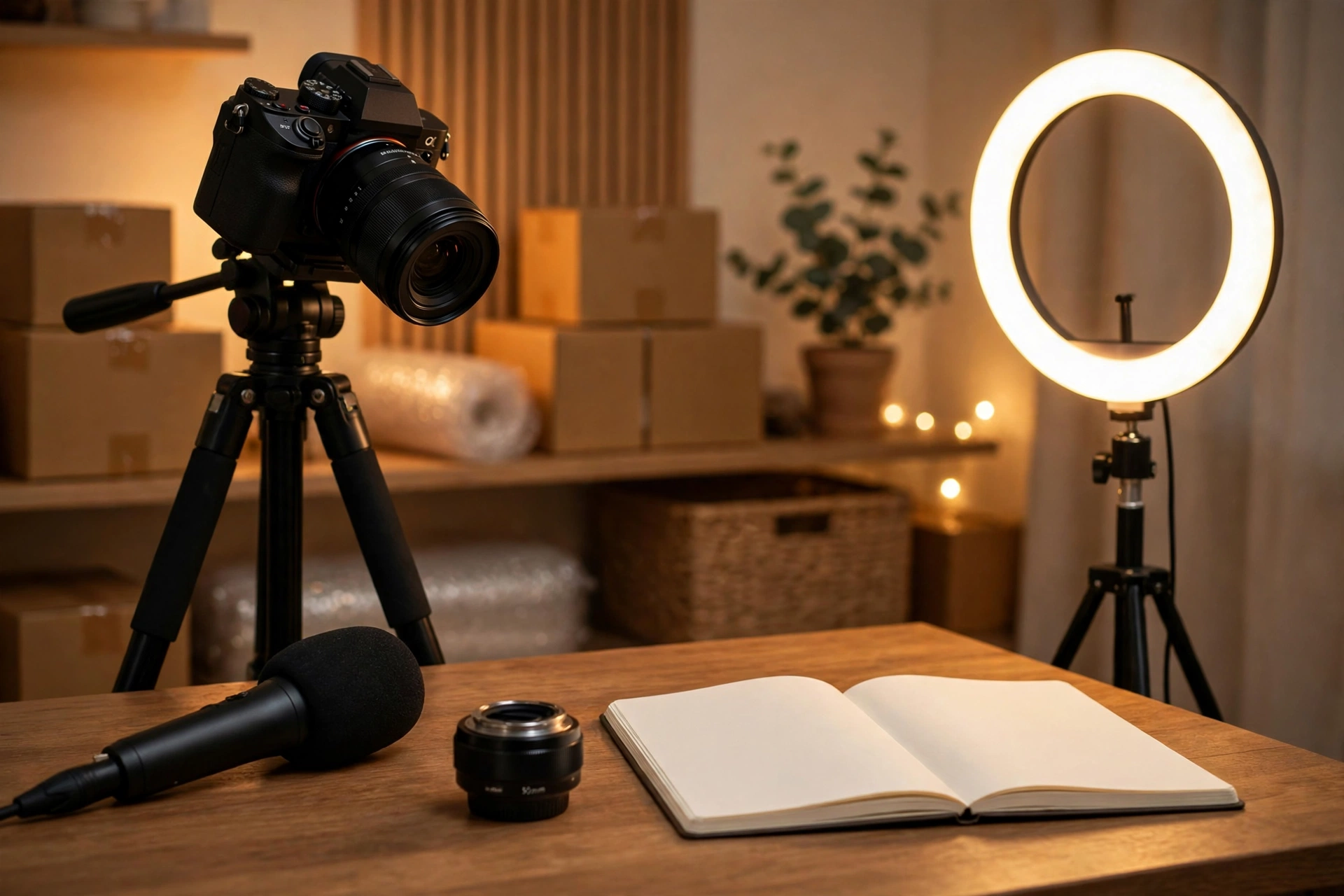
The format below is built for a vlogger, not a brand. Brands run shows around a catalog. You run a show around a shelf you already own: the mic you record with, the light you film under, the bag you carry. That constraint is the whole advantage. Every product has a story you can tell without notes, because you lived it, and a live audience can tell the difference between a story and a script within a minute.
Pick three to five products for a first show, no more. One hero product gets about half the airtime: the thing you use most, or the thing your comments ask about most. Two or three supporting products complement it, and one low-priced impulse item gives first-time buyers an easy yes. Lay everything within arm’s reach before you go live, with the hero product closest to your hand. Fumbling off camera for a product while viewers wait is the fastest way to lose a small room.
Run the show in this shape. Open with a hook, a welcome, and one deal tease in the first five minutes, then ask the room a simple question so comments start moving. Spend the next stretch on the hero product: use it on camera, show what it does, answer the two or three objections buyers always have (whether it is worth the price, whether it will work with what they already own, and what happens if it breaks or disappoints), and pin it the moment you pick it up, telling viewers exactly how to buy it. Take an engagement break for questions, run one short flash offer if you have one, then rotate through the supporting products in shorter demos of a few minutes each. Close by recapping the best offers, thanking buyers by name, and naming the date of the next show. Viewers join throughout, so repeat the buy instruction every few minutes as new people arrive.
Two production rules keep a small show watchable. First, demonstrate, do not describe. Saying a mic sounds good is weak; recording a sentence through it on camera and playing it back is proof. Second, keep the setup simple: phone on a tripod at eye level, ring light behind the phone, lapel mic clipped on, products on the table, second device for reading comments if you have one. A polished studio impresses nobody on a platform that rewards authenticity, and a shaky, dark, echoing stream loses viewers faster than any product choice will win them back.
Niche angles are where a vlogger beats a brand at this format. A travel vlogger’s show is “everything in my carry-on, used on yesterday’s shoot.” A cooking vlogger’s show is “the three tools I actually reach for.” A camera vlogger’s show is “the kit I filmed this week’s vlog with, and what I would change.” Each angle gives the show a reason to exist beyond the discount, and each one writes its own title, its own teaser clip, and its own next episode.
Picking products and saying so: disclosure done right
Pick only products you have used, tested, or owned, and disclose every paid relationship out loud, on screen, and in writing. Disclosure is not fine print; it is part of the show.
Product selection has one rule that covers most cases: if you have not used it, do not sell it live. A live demo is a truth machine. Viewers ask questions you cannot script for, they ask to see the thing from another angle, they ask what goes wrong with it. A product you own answers all three. A product you picked from a catalog for its commission rate answers none of them, and the audience learns that about you in one show. Samples change the rule slightly, not fundamentally: if a brand sends you a product to try, use it properly first, off camera, and only bring it to a show if you would genuinely recommend it. If you would not, say so to the brand privately and leave it off the show.
Disclosure follows a simple test that regulators use: if knowing about the relationship would change how a reasonable viewer weighs your recommendation, disclose it. Affiliate commission counts. A free product counts, even if the brand asked for nothing in return. A flat fee for hosting counts. A discount code that pays you counts. On a live show, disclosure has to survive viewers dropping in halfway through, so do it three ways: say it out loud at the start and repeat it when you pin each product, keep a short disclosure line visible on screen during the show where the platform allows it, and put the same disclosure in the stream description and on any clipped version. Vague wording fails the test: “linked below” says nothing, and a hashtag buried among twenty others says less. Plain wording works: “I earn a commission if you buy through this link, at no extra cost to you.”
Two more disclosure traps catch small creators. First, a gifted product you praise without mentioning the gift is an undisclosed endorsement even when you mean every word of the praise. Second, if you sell your own product, say plainly that it is yours, and be clear about returns and support. Viewers forgive a creator who earns money openly. They do not forgive one they catch hiding it, and a platform strike for deceptive promotion costs more than any single show could earn.
The sponsorship disclosure guide covers the wider rules for brand deals and gifted products, and this article’s disclosure rules sit inside that same standard: say the relationship, say it early, say it plainly.
Realistic expectations: what small shows actually earn
Expect your first shows to sell little or nothing. A solid TikTok LIVE turns a small share of viewers into orders, and most small shows start with a handful of viewers, so the honest first-month goal is learning, not income.

The brand guides quote monthly revenue tables that assume an audience you do not have. Ignore them. Work from conversion instead, because conversion is the number you control. Beginner guides put a solid TikTok LIVE conversion rate at a small share of viewers into orders, with higher rates counting as excellent. Clicks are not sales: only a fraction of viewers who click a product tag go on to buy, so judge a show on orders, not clicks. Put those two facts together with a first show that draws twenty viewers, and the honest math is zero to one orders. That is not failure. That is a normal first show.
The sample economy makes the point sharper. Treat the first month as a test: the question is whether your audience will buy anything at all, and if so, what kind of thing. The creators who do sell tend to be smaller ones posting several videos about the same product, not big names posting once. The lesson for a vlogger is direct: volume of honest attempts beats one polished attempt. Three shows about products you use, plus the clips cut from them, teach you more than one big launch show ever will.
Costs split by route, and the split matters. As an affiliate, you pay nothing per sale: TikTok’s referral fee comes out of the seller’s side, not yours, and your costs are your time and your equipment. If you sell your own products, the costs change: TikTok takes a referral fee on each order, most categories around 6 percent with a rise to 8 percent reported in August 2026, and the referral fee, the product cost, shipping, and returns all come out of your margin before you see a profit. That is why the affiliate route is the right first step: the worst case is a quiet evening, not a loss.
Judge the format on a fixed schedule, not on feelings. Commit to fifteen shows before you decide whether live shopping works for you. At two shows a week, that is about two months. Track five numbers after every show: viewers, orders, conversion rate, average watch time, and which product sold. If conversion sits below 1 percent, the problem is usually the demo, the offer, or the product fit, in that order. If watch time sits under two minutes, viewers are leaving during your opening, so fix the first five minutes before you change anything else. If one product keeps selling while the rest sit still, build the next show around it.
After the show: replays and shoppable Shorts
Do not re-upload the whole show and call it content. Cut the best demo into a short vertical clip, tag the product first, and let the clip sell while the show rests.
A live show has a second life, but only if you cut it properly. The full replay has value on platforms that keep it: TikTok replays can keep drawing viewers, and Amazon streams stay on your storefront. But a sixty-minute replay is not a video anyone discovers and finishes. The working unit is the clip: one demo, one product, one promise, cut to vertical, with the product tagged and the buy instruction spoken on camera.
Cut one clip per product from each show, and cut them the next day while the show is fresh. The hero demo becomes the longest clip, up to a minute of real use with the result visible. Each supporting product gets one short clip of its single best moment: the sound test, the before and after, the thing it fixed. If the impulse item earned no questions and no sales, leave it out of the clips. If you already turn long videos into short ones, the same cutting discipline applies here, and the repurposing guide covers the wider workflow. Tag products in the order that matters: on YouTube Shorts, the first product you tag becomes the on-screen sticker, so the product in the clip goes first, always. Mention it out loud in the clip, so viewers hear the product name while they see it on screen. Keep the disclosure on the clip too: the same plain line, in the description and spoken where it fits.
Two rules keep replays honest. First, never present a recording as live. TikTok treats looping recorded videos and slideshows as low-quality content and can mute or restrict the stream, and viewers who discover the trick stop trusting the next real show. A replay labeled as a replay is fine; a replay dressed as live is not. Second, do not re-upload the same clip unchanged everywhere and expect every platform to reward it. Each platform has its own reuse rules and its own audience, so check the reuse rules for each platform before you build a routine around replays, and re-cut the clip for the platform: a new opening line, a caption written for that feed, and tags that fit that platform’s shopping system.
The loop that results is the real system. The show finds the winning product. The clips sell it for days after. The clip comments tell you what the next show should answer. A vlogger who runs that loop for a month has something no brand guide can hand them: their own numbers, for their own audience, for products they actually use.
Your first month: a plan with keep and drop rules
Week one: apply and practice. Weeks two to four: run two shows a week, cut one clip per product from each show, and review the numbers every Sunday. Day thirty is a checkpoint, not the verdict: keep what sells, drop what does not, and let show fifteen decide the format.

A plan without decision rules is just a calendar. The plan below has both, so you never have to guess whether to continue.
Week one: apply and practice. Apply for the program that fits your platform: TikTok Shop affiliate access, YouTube Shopping setup in Studio, or the Amazon Influencer Program application. While the application processes, pick your three to five products, lay out the table, and run two practice shows with no shopping attached: one for timing, one for comments. Practice mode exists on TikTok and Amazon for exactly this, and a YouTube unlisted test stream serves the same purpose; if your show runs on YouTube, the YouTube livestreaming guide covers the setup. Fix the light, the audio, and the first five minutes before any buyer is involved.
Weeks two to four: two shows a week, one clip per product from each show. Run the same show format twice a week at the same time, so viewers can build a habit around it. Cut one clip per product from each show the next day and post them with the product tagged first. Track the five numbers after every show: viewers, orders, conversion rate, average watch time, and which product sold. Spend Sunday reviewing them, not re-reading comments for encouragement.
Day thirty: checkpoint, not the verdict. Review the numbers. Keep a product if it sold at least once or drew the most questions across the month. Drop a product that drew neither sales nor questions after three shows. Keep the platform if your conversion rate is climbing or your returning viewers are growing, even if total sales are still small. Drop the time slot, not the format, if viewers never show up: try one different evening before you conclude the format failed. The verdict on the format itself comes at show fifteen, not day thirty. Expand to a second platform only when the first one has a winning product and a repeatable show, never because the first one feels slow. Live shopping is one income stream among several for a vlogger, and the wider monetization picture helps you judge where it fits beside ads, memberships, and brand deals.
Mistakes that kill a small shopping show
The fatal mistakes are all trust mistakes: selling what you have not used, hiding the commission, judging after one show, and running marathon sessions that exhaust you and bore the room.
Selling what you have not used. Covered above, and worth repeating because it is the most common one: a catalog picked for commission rates reads as a catalog on camera. Your audience came for your taste, not your storefront.
Hiding the relationship. A disclosure mumbled once at the end, or hidden in a bio, is worse than none at all in one respect: it shows you knew you should have said it. Say it early, say it plainly, say it again when you pin.
Judging after one show. A first show with single-digit viewers and zero sales is normal, and the guides that admit it say so plainly: most creators need two to three weeks of consistent shows before traction appears. The fifteen-show rule exists to protect you from your own discouragement.
Running marathons. Sessions past two hours tire the host, and tired hosts convert worse. Sixty to ninety minutes, twice a week, beats one three-hour marathon every time, and it leaves you enough energy to cut the clips the next day, which is where the second round of sales comes from.
Reading a script instead of answering the room. Live shopping is a conversation, not a broadcast. When you ignore comments, viewers feel they are watching a recording, and they leave as if it were one. Let comments steer the demo: if three people ask about size, show the size. If nobody asks about a product, that product is telling you something too.
Copying a brand’s show. Flash sales, countdown timers, and shouting about deals work for brands with traffic teams behind them. A vlogger with forty viewers looks desperate doing the same routine. Your version of urgency is honest scarcity: the offer that genuinely ends when the show ends, and the product you genuinely use every day.
Questions vloggers actually ask
Quick answers to the questions vloggers ask most before a first live shopping show, from follower gates and commissions to disclosure, replays, and show length.
Do I need 1,000 followers to sell on TikTok Shop?
For affiliate selling, yes, in the US: 1,000 followers, 18 or older, US-based, with an identity check. Under 5,000 followers you start in a pilot program with caps on shoppable videos and LIVEs. Opening your own shop as a seller needs no follower minimum, but going LIVE still needs 1,000 followers, so the practical gate is the same for live shows.
Can I do live shopping with no products of my own?
Yes, through the affiliate route. You promote other sellers’ products from the affiliate marketplace, tag them in videos and live shows, and earn a commission on each sale. The seller handles stock, shipping, and returns. You need no inventory, which is why affiliate selling is the right first step for a small vlogger.
TikTok Shop or YouTube Shopping for a small vlogger?
Start with TikTok if you want discovery, because strangers can find your show. Build on YouTube if your audience already watches your long videos, because tagged products there keep selling from search traffic. The affiliate gate on YouTube is Partner Program membership, which starts at 500 subscribers, so a small channel that qualifies can tag affiliate products as well as its own; channels still building toward Partner Program membership start on TikTok for affiliate selling and add YouTube once they qualify. YouTube’s thresholds are also scheduled to rise for new applicants from February 2027, so check the current Partner Program page before you plan around the numbers above.
How much commission do creators actually earn?
It varies by category and by who sets the rate. On TikTok Shop, each seller sets its own commission per product, with electronics typically lower and beauty and fashion typically higher. On YouTube Shopping affiliate tags, creator guides put commissions at rates that vary by product, lower for electronics. Treat any single number a guide quotes as a snapshot, not a promise, and check the rate on the actual product before you plan around it.
Do I have to disclose free samples?
Yes. A free product sent for review is a material connection even if the brand asked for nothing in return, and regulators expect it disclosed clearly and conspicuously. Say it out loud on the show, keep it visible where the platform allows, and put it in the description. If you would be uncomfortable saying it on camera, reconsider the product.
Can I re-upload my live show as a regular video?
You can publish the replay labeled as a replay, and you should cut short clips from it with the product tagged. What you must not do is present a recording as if it were live: TikTok treats looping recorded videos as low-quality content and can restrict the stream. The clips, not the full replay, are what keep selling after the show.
What if nobody buys during my first shows?
That is normal, not a verdict. With a handful of viewers and a small conversion rate, zero orders is the expected outcome of an early show. Run fifteen shows before you judge; at two shows a week, that is about two months. If conversion stays below 1 percent, fix the demo, the offer, or the product fit, in that order, before you change platforms.
Can I go live on Amazon without a big following?
Amazon Live does not publish a follower threshold. Access comes through the Amazon Influencer Program, which judges your existing content, or through a Brand Registry seller account or an approved vendor store. A small vlogger with consistent, genuine gear content can apply; the application, not a follower count, is the gate.
Does YouTube Shopping hurt a video’s reach?
Shopping tags on their own are not what hurts a video. What can hurt a video is a bad product fit: viewers who bounce from an irrelevant tag send the same weak engagement signals as viewers who bounce from anything else.
How long should a live shopping show be?
Sixty to ninety minutes is the right length for a beginner show: long enough for a hero demo, supporting products, and questions, short enough to hold energy. Past two hours, host fatigue sets in and conversion drops. Consistency matters more than length, so a regular sixty-to-ninety-minute show twice a week beats a rare marathon.
Live shopping rewards the vlogger who treats it as a format to learn, not a tap to turn on. Start small, sell only what you use, say plainly how you earn, and let a month of real numbers tell you whether to keep going. The audience that trusts you enough to buy once is the same audience that will come back for the next show, and that is worth more than any single evening’s sales.
Keep exploring
Ready to plan your first shopping show? These guides cover live video, the platforms, and earning from your audience.
- How to Go Live on TikTok as a Vlogger: Formats, a First-Month Plan, and Keeping Access
- How to Livestream on YouTube in 2026: A Vlogger’s Setup and Settings Guide
- How to Stream on Twitch for Beginners: A Vlogger’s Guide to Going Live
- Live Production for Vloggers: OBS, Encoders, Bitrate and Backups
- Dual-Format Livestreaming: How to Stream Vertical and Horizontal at Once in 2026
- How to Make Money Vlogging in 2026: 7 Income Streams, Beyond AdSense Alone
- How to Get Brand Deals as a Small Vlogger in 2026
- Sponsorship and Disclosure Done Right: FTC and ASA Rules for Vloggers
- TikTok for Vloggers: How to Grow a Vlog Account That Sends Viewers to YouTube
- YouTube Shorts Growth Strategy for Vloggers: A System That Builds a Channel, Not Just Views
- Selling Presets, LUTs and Courses as a Creator
- How to Get Your First 1,000 Subscribers on YouTube: A Vlogger’s Milestone Playbook